Acting Navy Secretary Faces Sharp Criticism Over Mental Health and Iran War
Acting Navy Secretary Hung Cao drew fire from Democratic lawmakers for downplaying the psychological toll of the Iran war on sailors during a contentious Senate confirmation hearing.
By Yuki Melnyk ·
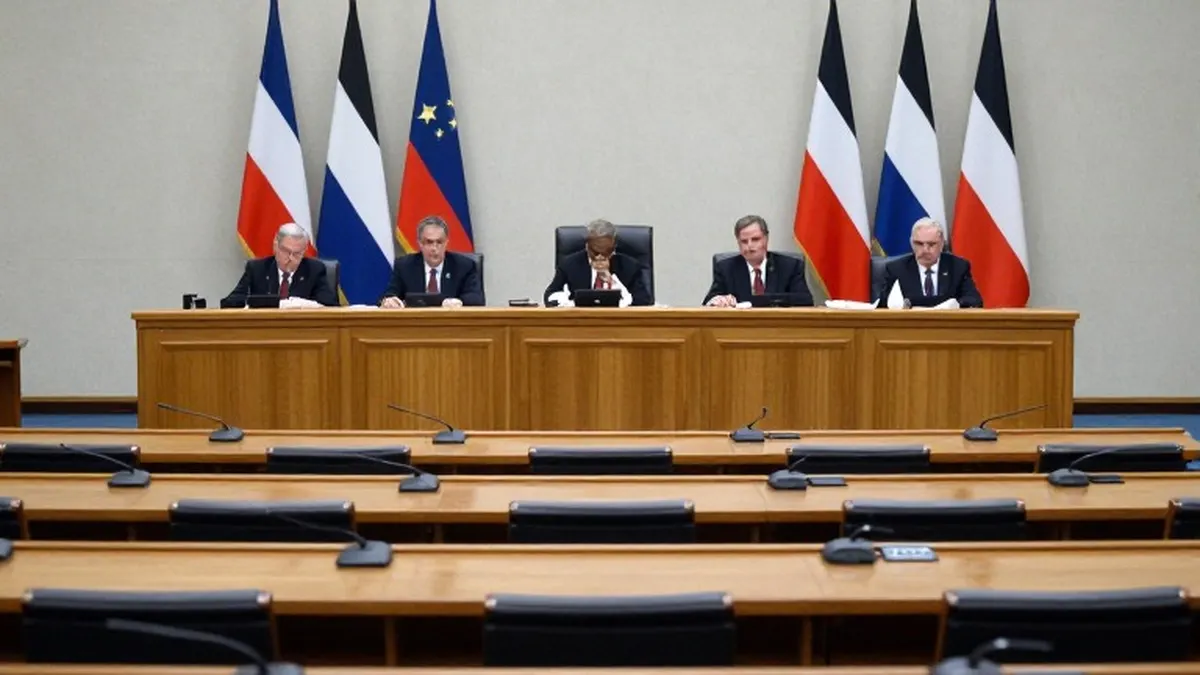
Acting Secretary of the Navy Hung Cao faced intense scrutiny from Democratic lawmakers on Tuesday as he appeared before the Senate Armed Services Committee. The hearing, held during the final days of Republican control in the Senate, served as a preview of the challenges ahead following the Democratic victories in the midterm elections earlier this month. Lawmakers accused Cao, a Trump appointee seeking confirmation, of being a compliant subordinate who minimized the impact of the Iran war on the mental well-being of service members.
The focus of the criticism centered on the conditions aboard the Abraham Lincoln carrier strike group. Reports indicated that eight suicide attempts had occurred on the aircraft carrier, highlighting a significant mental health crisis. While Cao defended the Navy's response to these incidents, his explanations were met with strong objections from Democratic senators who felt the severity of the situation was being understated.
Senator Kirsten Gillibrand, a Democrat from New York, pressed Cao on the incident of a sailor who went overboard. Cao stated that the sailor was not attempting suicide and had admitted to using a life preserver. Gillibrand challenged this account, asking rhetorically what the sailor was trying to do, such as swimming to Guam. She described Cao's response as inhumane and inadequate, arguing that he was minimizing the mental health strain experienced by the troops.
Republican Representative Rob Wittman from Virginia introduced Cao as a remarkable American story, noting his background as a Vietnamese refugee who served in the Navy for 25 years. Cao explained that he sought the position to ensure sailors were not sent to war without adequate protection, such as armored vehicles and sufficient body armor, as was the case in Iraq. However, Senator Angus King, an Independent from Maine who caucuses with Democrats, pointed out the irony of appointing a refugee's son as head of the Navy while the administration cuts refugee admissions. King noted that under current policies, Cao's family might not have been allowed into the country.
The hearing also touched on the broader strategic aspects of the conflict. Cao did not directly answer questions regarding the cost of the US naval blockade on Iran or the damage sustained by Navy headquarters in the Middle East. Republican Senator Tom Cotton of Arkansas defended the Navy's condition, asking if the picture painted by Democrats was so bleak, how the Navy had reached its recruiting goals three months early. Cao agreed that the Navy would not have met those goals without the current leadership.
Senator Jack Reed, a Democrat from Rhode Island, raised concerns about recruitment quality, citing data that suggested many new recruits required waivers for standard qualification requirements, including mental health screenings. He asked if the Navy was sacrificing quality for quantity, a notion Cao denied. Notably, Cao himself requires a waiver for confirmation because he retired from the Navy in 2021, which is less than the required seven-year cooling-off period for a civilian leader.
The political context of the hearing reflected growing voter dissatisfaction with the war. A recent Reuters/Ipsos poll showed that a majority of Americans want the newly elected Democratic-controlled Congress to end the conflict with Iran. The war has settled into a stalemate focused on securing the Strait of Hormuz. The Navy has played a critical role by imposing a blockade and delivering strikes, with a third carrier entering Middle East waters this week to replace one of the two currently present.
Tensions peaked when Senator Tammy Duckworth, a Democrat from Illinois, asked if Cao had ever challenged Defense Secretary Pete Hegseth over the war strategy. Cao replied that it was not within his purview. Duckworth responded sharply, asserting that it was within his purview and calling the situation a failure of leadership by President Trump and the unqualified yes-men he had installed. The hearing highlighted the growing divide between the administration's military leadership and the incoming Democratic majority in Congress.