Aliens, Dinosaurs and Grief: Saito Kisin's Surreal Debut 'Kefi' Premieres in Tokyo
Cinematographer Saito Kisin's first feature, a genre-bending film about three sisters and the death of their estranged father, plays in the Nippon Cinema Now section of the Tokyo International Film Festival.
By Elena Greco ·
Described as possibly the strangest film at this year's Tokyo International Film Festival, "Kefi" is the first feature from cinematographer Saito Kisin. The surreal work blends several short stories and a range of visual styles in an effort to process the emotions tied to his complicated relationship with his late father. It screens in the festival's Nippon Cinema Now section.
The film does not take a conventional route to its subject. Aliens, dinosaurs and dream affairs all appear within its compact running time. Saito says the project began with a different structure in mind. "Initially, I wanted to do four series of short films and put it together, and that would become a feature," he says. Each of the four would have its own theme: ethics, hypocrisy, discrimination, and life and death.
The youngest of three brothers, Saito planned to link the project loosely to his own family, though the shorts would follow three sisters. In 2024, he learned that his father had died, and that news shaped the finished film. Its opening features the absent father speaking about his daughters in narration, like an echo from beyond the grave. Soon after, the sisters, Kyo, Asumi and Kino, hear that he has died. As with Saito's own father, theirs had been separated from the family since their parents divorced.
Saito is candid about his reaction. "To tell you the truth, when my father passed, I didn't feel sad," he says, explaining that his parents divorced about 10 years ago and that he had not seen his father in roughly that time. The film's listing in the Tokyo program says it explores the complicated feelings that follow a loss, including numbness, and Saito approaches that through the offbeat humor running through much of the film.
He describes himself as an optimistic person and his father as a very funny man. He had expected to see and talk with his father again soon, but the death came suddenly. "I realized that not everybody goes through grief when they lose their loved ones," he says, adding that he wanted to show that perspective through the three sisters.
The sisters spend most of the film apart rather than in a shared dynamic. "Just because you're family, you're not always together," Saito says. He adds that siblings lead separate lives but, in the end, often think the same way. One episode finally brings them together.
Those differences are reflected in the film's shifting look, which moves between vivid color and monochrome and between chaotic handheld shots and steadier camerawork. Saito says he did not assign the styles along thematic lines. "It's only because I wanted to test and try different approaches," he says, though he notes the variety let the imagery carry different nuances and keeps viewers attentive.
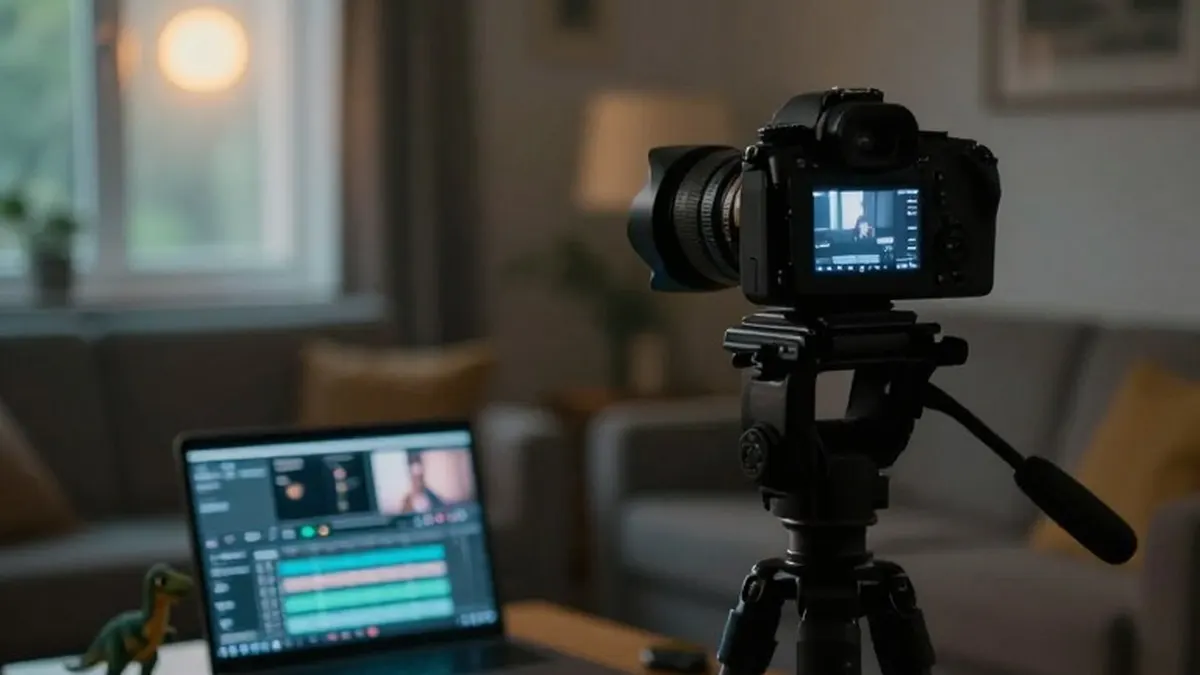
The experimentation reflects his hands-on way of working. Saito is credited as director, writer, cinematographer, gaffer and editor, which he says is simply the method he knows. He shoots with a single-lens reflex camera, edits in iMovie and casts friends as actors, as he does for his YouTube work, while also working behind the camera on larger productions. On big sets, he says, not everyone is looking in the same direction, which can become noise, so he wanted to make a film only with people he truly trusts.
Saito also hopes to widen the international view of Japanese cinema. He says people abroad often picture anime or mainstream films, which he finds a shame, and he believes there are more interesting, funnier and more unique Japanese people to show. "I just want to prove that Japanese films are not only about those classic filmmakers like Ozu or Kurosawa, but there are more modern people like Hamaguchi, or even myself," he says. "That is my aspiration."
Source: Variety
More News · National news · Report a business · Got a Story?