Five New England states seek offshore wind data from Nova Scotia
Governor Maura Healey and Nova Scotia Premier Tim Houston announced a joint effort to assess wind potential in Canadian waters and transmission routes to the regional grid.
By Elena Greco ·
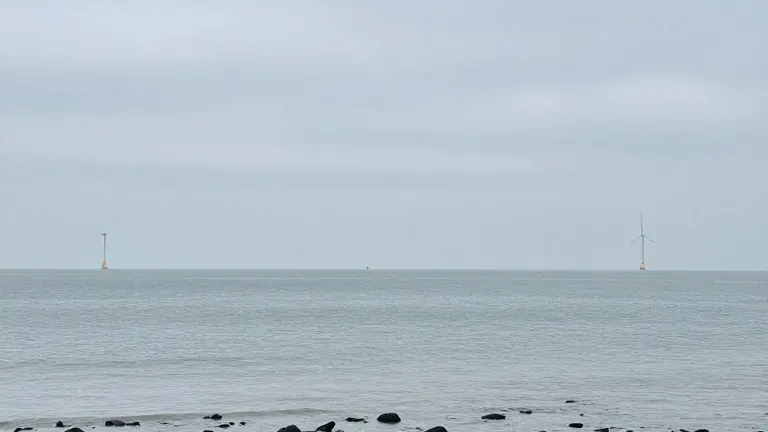
The Healey administration is shifting its focus to Canadian waters after facing resistance in Washington. Governor Maura Healey and Nova Scotia Premier Tim Houston announced a formal collaboration on Thursday to gather data on wind generation resources off the coast of the Maritime provinces. The initiative aims to determine how power generated in that region could be delivered to the New England grid.
Energy Secretary Rebecca Tepper is leading the effort for the United States. She announced the news alongside Premier Houston at the New England-Canada Business Council’s annual energy conference at the Seaport Hotel in Boston. The partnership involves Massachusetts, Connecticut, Rhode Island, Vermont, and Maine. These five states are issuing a joint request for information to the energy sector.
The move follows a period of stalled projects in U.S. federal waters. The Trump administration, which took charge in 2025, has shown reluctance to issue permits for newer offshore wind developments. This federal hesitation comes after the completion of the region's first two commercial-scale farms south of Martha’s Vineyard. Revolution Wind and Vineyard Wind are now operational, providing power to nearly 800,000 homes.
Canadian officials have recently committed funds to support similar development. Last month, Canadian energy minister Tim Hodgson pledged 100 million Canadian dollars to advance offshore wind in Nova Scotia. The investment targets private sector participation in the Wind West initiative, which plans to build multiple wind farms. A portion of the funds, specifically 5 million Canadian dollars, is allocated for deploying buoys to measure wind speeds and ocean conditions.
The relationship between the two governments began building in September 2025. At that time, Tepper traveled to Nova Scotia to meet with local officials. The current collaboration seeks to gauge industry interest in developing wind farms in Canadian waters. Officials are also asking companies to evaluate commercially viable options for transmitting electricity to New England.
The request for information poses specific questions to industry players. Respondents must address timing, permitting requirements, and the capacity of industrial ports. A central issue is the method of power delivery. Companies are being asked to weigh the pros and cons of building a new undersea transmission line against routing power over land through New Brunswick and Quebec.
The project mirrors the New England Clean Energy Connect transmission line. That project, completed last winter, brings hydropower from Quebec into New England. However, the new effort focuses on creating a new energy resource in Canada rather than simply importing existing power. The governments note that rising electricity demand and decarbonization mandates are driving the need for additional generation capacity, particularly during winter peak periods.