Houthi Rebel Advance in Yemen Raises Fears for Global Economy
The Iran-backed rebels' seizure of Yemen's Red Sea coast and the Bab al-Mandab Strait threatens a vital shipping chokepoint and could deepen the economic fallout from the US-Iran war.
By Yuki Melnyk ·
Yemen's Iran-backed Houthi rebels, who seized much of the country in 2014, have forced the army of the internationally recognised government to withdraw from the Red Sea coast in order to defend the interim capital, Aden. The advance bodes ill for the legitimate government, its Saudi backers and, by extension, much of the rest of the world.
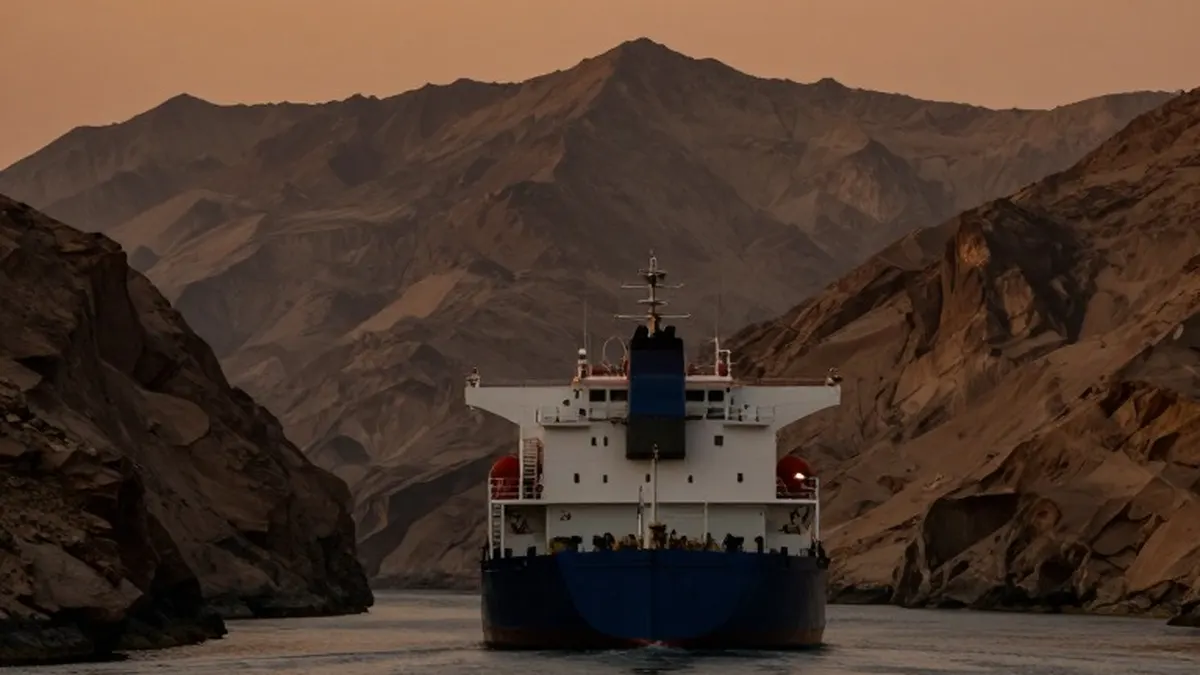
A mountainous, heavily armed, intensely tribal and largely impoverished nation, Yemen sits at the far south-western corner of the Arabian Peninsula and has two coasts. One faces the Indian Ocean, home to the once-prosperous trading port of Aden. The other faces the Red Sea and, most importantly, the narrow chokepoint at the southern exit of that waterway, the Bab al-Mandab Strait, known in English as the Gate of Tears.
Whoever controls that strait can threaten maritime traffic passing between the Mediterranean, the Red Sea and the Indian Ocean. In normal times the route accounts for around 12 percent of global trade, with anywhere between 70 and 150 ships making the transit each day.
Although the Houthis say they are no threat to maritime traffic, they are at war with Saudi Arabia, making it extremely hazardous for the Saudis to send their oil tankers past the now rebel-controlled coast. The stakes rose sharply in February, when the US and Israel started a war with Iran and Tehran responded by choking off much of the oil trade flowing out of the Gulf through another narrow chokepoint, the Strait of Hormuz. That sent oil prices soaring, boosted inflation and hurt economies everywhere.
The Saudis had a Plan B, pumping crude overland through their East-West Pipeline to an export terminal on the Red Sea at Yanbu rather than past the dangerous Iranian coast, where tankers risked being droned or mined by Iran's Islamic Revolutionary Guards Corps. It worked for a while. But in July a cold truce between Saudi Arabia and the Houthis broke down, the pipeline was hit by drones and the rebels began firing missiles and drones at targets all over the kingdom.
On land, the Houthis seized the initiative with a lightning dash down the Red Sea coast that sent the Yemeni army into headlong retreat. A brief counter-offensive appears to have failed, and the rebels are now reported to be in full control of the Bab al-Mandab Strait and the nearby offshore islands.
Nicholas Hopton, a former British ambassador to both Yemen and Iran and now director-general of the UK-based Middle East Association, said the government's decision to prioritise the defence of Aden at the expense of other areas "suggests that the war is not going well for the Saudi-backed [Yemeni] government. And the rest of the world should be worried." He warned that if Aden, a city of roughly 1.25 million inhabitants, were to fall, it "would undoubtedly precipitate a further escalation in the regional crisis and further fragility in the global economy, catalysed by the US-Iran war."
Not all observers expect the city to fall. Mohammed al-Basha, the Yemeni founder of the US-based risk advisory firm Basha Report, said the Houthis would struggle to capture the heavily fortified city. "Any attempt to seize a densely populated city like Aden would come at a significant human cost," he said, adding that advancing across the flat coastal plains would expose Houthi forces to air power. "For now, the Houthis appear to be seeking a negotiated surrender," he said, hoping to exploit infighting among southern factions without a costly urban offensive.
It is conceivable the war will settle into a less dramatic but deeply unsatisfactory stasis, with casualty figures subsiding yet the country split between the Houthis, Iran's Shia allies, and the disparate, often poorly motivated forces of the Saudi-backed army. Col Iain Smailes, a former British defence attache to Yemen, warned the advance could trigger a spike in oil prices, as happened when the Houthis seized the strait in September, with knock-on effects far beyond Yemen. "By extending their control over the western coastline, the Houthis will increase their ability to smuggle weapons and ammunition from Iran, the Horn of Africa and elsewhere," he said. "This control will enable both Iran and the Houthis to extend their influence in East Africa and beyond."