How ancient dots over a kiss complicate the story of Esau and Jacob
A rabbinic analysis examines the textual markers in the Torah regarding the reunion of the brothers and the historical reality behind the Hanukkah holiday.
By Yuki Melnyk ·
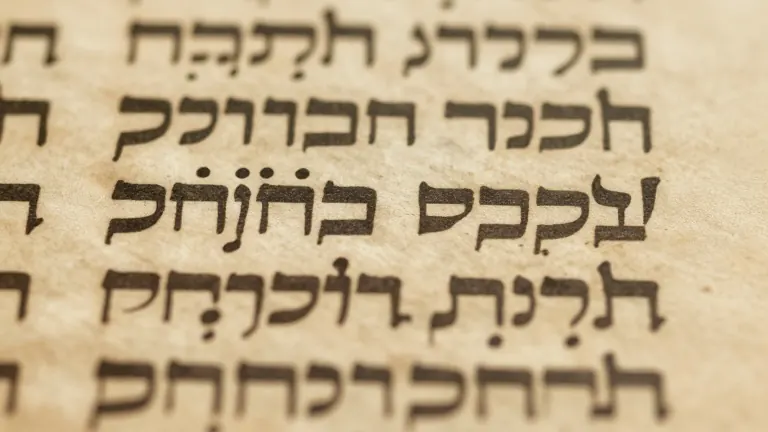
The Torah text contains a specific anomaly in the account of Esau and Jacob's reunion. The word describing the kiss between the two brothers is marked with six dots in the Sefer Torah. Rashi, the medieval commentator, cites a debate in the Sifrei regarding the meaning of these marks. One view holds that Esau did not kiss his brother with his whole heart. Rabbi Shimon bar Yochai counters that while Esau harbored hatred, his compassion overcame it in that moment, making the kiss sincere. Both opinions agree that the underlying tension remained.
This interpretation ties into a broader discussion about the mitzvah of removing the sciatic nerve, known as gid ha-nasheh. This is the only prohibition found in the Book of Genesis. The Mishna in Chulin states the rule applies to kosher animals, though Rabbi Yehuda argues it applies to all animals because it was originally commanded to the sons of Jacob. The Chachamim maintain the law was given at Sinai, linking the commandment to the moment Jacob was injured during his wrestling match.
The placement of this law in the text creates a chronological puzzle. The mitzvah is located in Parshat Vayishlach, yet it is part of the Torah given at Sinai. Similar discrepancies appear with other commandments, such as the red heifer, which is described in Numbers but must have been taught before the construction of the Tabernacle. The text serves as a record of when the laws were taught to the people, not necessarily when they were first revealed to Moses.
The historical context of Hanukkah presents a similar complexity. The Maccabean victory occurred in 3622 according to the Hebrew calendar, or 138 B.C.E. For the next 26 years, no foreign nation ruled in the land, but battles against the Greeks continued. Yehuda HaMakabi ruled for six years before his death, followed by his brother Yonatan for another six. Shimon then ruled for eight years until he and his wife were killed by their son-in-law Ptolemy, the ruler of Egypt.
Roman control over the land increased gradually over the following 180 years until the destruction of the Second Temple. The Hasmonean dynasty, including Yochanan Hyrcanus, was marked by internal conflict and the killing of elders. The period was not a stable era of peace but a rocky time of shifting power. The establishment of the eight-day holiday of Hanukkah with full Hallel each day reflects a decision to give thanks for the renewed dedication to Torah and mitzvot, despite the imperfect outcome of the revolt.
The modern State of Israel, nearly 80 years old, parallels this historical trajectory. Sovereignty has been restored, but the situation is not without problems or flaws. The tradition encourages gratitude for positive steps toward redemption, even when the circumstances are not ideal. The dots over the word for the kiss and the historical record of the Maccabees both suggest that sincerity and stability are often more complicated than they appear on the surface.