Quantum Technology Reshapes Global Defense and Military Strategy
Quantum sensors and computers are transforming military navigation and encryption as nations race to secure an advantage in an era of increased GPS jamming.
By Justin Barnes ·
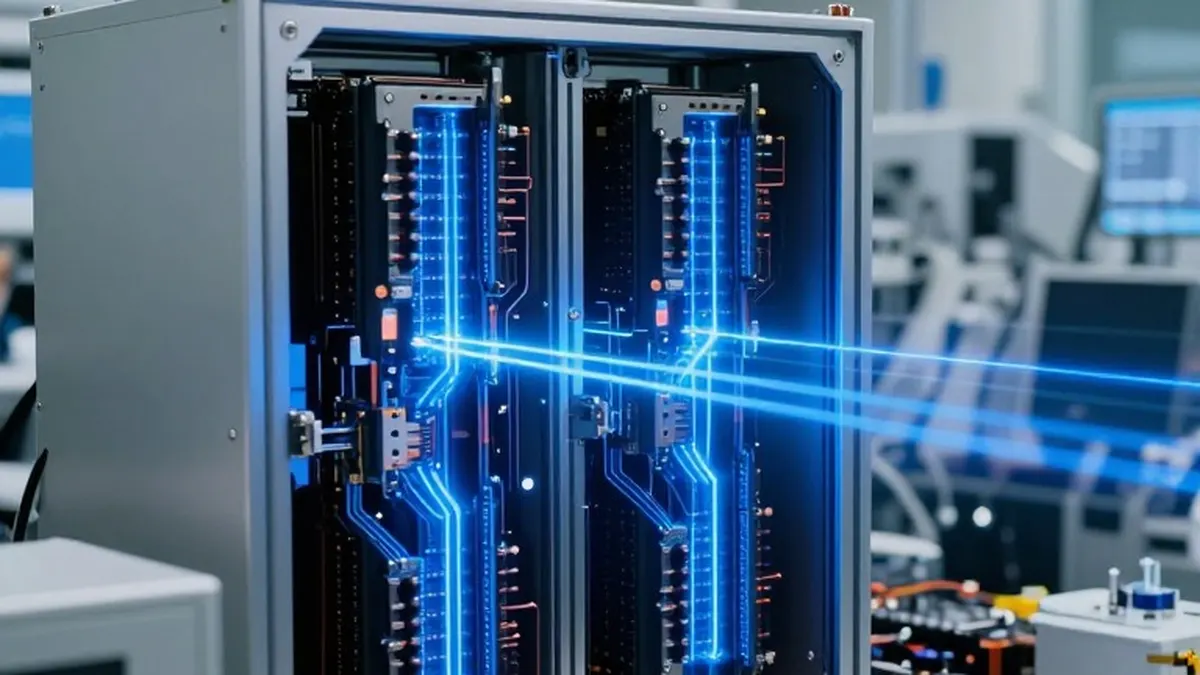
The vulnerability of global positioning systems has become a central concern for military planners worldwide. With approximately one million GPS jamming and spoofing incidents recorded in the first quarter of 2026, primarily across the Middle East, Russia, and Ukraine, the reliance on satellite navigation is increasingly viewed as a strategic weakness. Israel has also employed signal jamming over its own cities to disrupt incoming threats, a tactic that highlights the fragility of conventional navigation methods. This growing insecurity is driving a rapid shift toward quantum technology, which offers robust alternatives to current systems.
The initial practical application of quantum technology in defense is expected to be in navigation rather than in the development of large-scale quantum computers. Quantum sensors function as highly sensitive instruments capable of detecting minute variations in the Earth's magnetic field and gravitational pull. These variations act as unique geographical fingerprints. By matching sensor readings to detailed maps, aircraft and ships can determine their precise location without relying on satellite signals. This capability renders the system immune to jamming, as it relies on planetary data rather than external transmissions.
The accuracy of these new systems significantly outperforms conventional backup navigation. According to Nesta, a British innovation foundation, traditional backup systems can drift by more than a kilometer within an hour. In contrast, quantum systems can travel 700 kilometers while maintaining accuracy to within four meters. Australia's Q-CTRL recently began selling the first commercial quantum navigation system for defense and aerospace applications in February. Beyond navigation, these sensors could detect hidden assets such as submarines or low-flying drones that have disabled their radio transmissions, fundamentally altering battlefield visibility.
While the technology is promising, challenges remain in miniaturizing and hardening sensors for field deployment. The United States Department of Defense recently announced up to $200 million in funding for rugged quantum sensing to address these issues. Simultaneously, the field of encryption is undergoing a quiet but critical transformation. Current encryption methods rely on mathematical problems that sufficiently advanced quantum computers could eventually solve. Although such machines do not yet exist, adversaries are believed to be collecting encrypted data now, a strategy known as harvest now, decrypt later, in preparation for future computational breakthroughs.
To counter this threat, military and critical infrastructure organizations are moving toward post-quantum algorithms. This transition requires a comprehensive audit of sensitive data and the upgrading of communication and command systems. The process is complex because military hardware often remains in service for decades and may not be designed for easy updates. Further down the line, quantum key distribution offers a physics-based security layer where keys are transmitted as single particles of light. Any attempt to intercept these particles disturbs them, revealing the presence of an eavesdropper. These two methods are expected to work in tandem to secure future communications.
Quantum computers also hold the potential to solve complex logistical problems that overwhelm conventional machines. For example, they could optimize the engagement of multiple interceptors against a swarm of incoming rockets and drones in a matter of seconds. Additionally, quantum simulation allows for the atomic-level design of new materials, potentially leading to lighter armor and more efficient fuels for military vehicles.
Israel has established itself as a significant player in this emerging sector. A report by the Israel Innovation Authority indicates that Israeli quantum companies raised nearly $500 million in 2025, placing the country fourth globally behind the United States, Britain, and Canada. The nation is home to more than 20 companies covering various aspects of the field. Last week, Intel announced the acquisition of the Israeli software firm Classiq for approximately $2.2 billion, marking the largest acquisition in the quantum computing industry to date.
The Israeli government is also investing heavily in the sector. In July, a tender was issued for a national quantum computing infrastructure worth 100 million shekels. This project aims to combine multiple processor types and involve local universities and companies. Israeli startups such as Quantum Art, Quamcore, and Q-Factor are focusing on new architectures to scale quantum machines beyond current limitations. The combination of public funding and private investment has created a dense ecosystem that supports diverse approaches to quantum development.
Defense companies are now establishing dedicated quantum teams to integrate this technology into their products, recognizing that quantum capabilities will soon be embedded in navigation units, radars, and cyber security tools. The scarcity of quantum experts is a global challenge, prompting governments to develop national talent pipelines through university programs and retraining initiatives. The next five years are expected to be critical in building the workforce that will determine leadership in the field over the next two decades.
A quantum divide is beginning to form between militaries. A small number of nations are expected to field quantum navigation and secure communication systems within ten years, while others will lag behind. This gap, built on years of research and talent development, will not close quickly. Countries that fail to invest early may find themselves dependent on others for critical technology. As the direction of military advantage shifts, the ability to navigate under jamming and maintain secrecy will become decisive factors in future conflicts.