Miami Move: The 836 Commute Test
Relocants are urged to test Tuesday morning traffic and check flood maps before signing leases or buying homes.
By Elena Greco ·
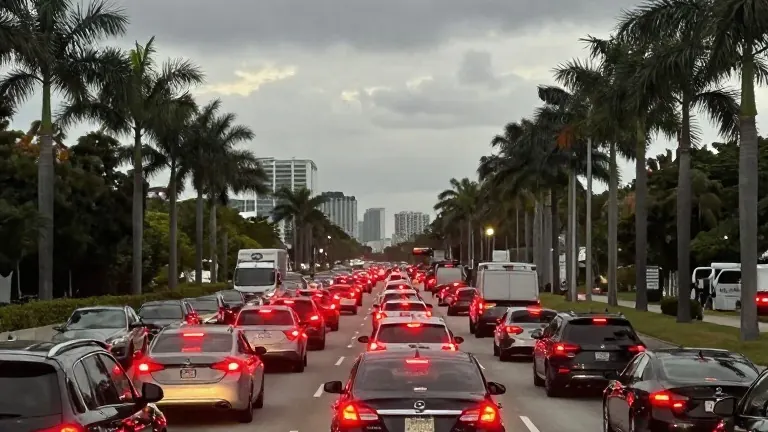
An hour of brake lights on the 836 is the primary risk for people moving to Miami, according to local guidance for relocants. The metro area is long and thin, hemmed in by the Everglades on one side and the Atlantic on the other. This geography leaves few routes between any two points. When I-95 or the Palmetto backs up, drivers have no clever side street to escape the congestion.
The difference between living in two neighborhoods four miles apart can mean the difference between a fifteen-minute commute and an hour-long drive. Experts advise that the commute decision matters more than the apartment view. Before falling for a listing, potential residents should drive the route to their office at 8:15 on a Tuesday. A Sunday afternoon test does not reflect the reality of the work week.
Living along the Metrorail line offers an alternative to car-only travel for those commuting to Brickell or Downtown. Neighborhoods like Coconut Grove, South Miami, and Dadeland provide this rail option. If a person works remotely, the traffic constraint disappears and housing options widen. Proximity to water drives real estate prices more than square footage does. A two-bedroom in Edgewater with a bay view can list for similar money as a three-bedroom house twenty minutes inland in Westchester.
Waterfront living carries practical costs that newcomers rarely price in. These include higher insurance, flood zone designations that affect mortgages, and salt air that damages cars, air conditioners, and metal hinges. Relocants are advised to read the flood zone map before signing anything. The city functions as a collection of small areas with distinct personalities. Brickell is the densest financial district, featuring glass towers and a walkable grid. Parking is a recurring expense and argument for residents there.
Coconut Grove offers an older, leafier environment with a village feel, attracting families and long-time residents who value shade. Coral Gables is strictly zoned with Mediterranean architecture and a reputation for good public schools. Residents are often surprised by the rules governing what they can paint on their houses. Miami Beach is a separate city across the bay, where every trip to the mainland requires a causeway crossing. South Beach is loud, while North Beach offers ocean access without the crowds.
Wynwood and the Design District are converted warehouse areas focused on art and dining. These areas suit those who want to be out constantly but may be less ideal for quiet weekends. Kendall, Doral, and the Western suburbs provide space, newer construction, and backyards. The trade-off for this space is the drive. If coming from out of state, experts recommend renting for a year. Miami's micro-geography is unforgiving, and a block can change character or a building can have a difficult HOA.
A year of living in the city reveals issues that research cannot, such as a street flooding after a heavy August rain. Older condo towers across South Florida have been reassessing their reserves and structural budgets in recent years. Special assessments can land with little warning, making it important to learn which buildings are well managed before buying. Hurricane season runs from June through November, with late-summer storms most likely to disrupt moving schedules. Summer heat and afternoon thunderstorms make loading trucks difficult, while the window from December through April is cooler and more predictable.
Most Miami condo buildings require advance notice for move-ins, a reserved service elevator, and a certificate of insurance from the moving company. Many also require a damage deposit. Buildings enforce these rules strictly, and showing up without paperwork means being turned away at the loading dock. Working with an established local company can smooth the process because they know what each management office requires. They can produce the certificate of insurance before move day rather than scrambling for it on the morning.
Source: Yonkers Times