PennFuture releases model stream buffer rules
The environmental group published a legal template for towns to adopt, aiming to manage stormwater from new warehouses and data centers.
By Yuki Melnyk ·
Pennsylvania is seeing a rapid expansion of large-scale industrial and tech infrastructure. In response, a local environmental group has released a new legal tool for municipalities.
PennFuture published a model ordinance for riparian buffers last week. The document is designed for towns to adopt as local law. It provides a standardized approach to protecting waterways from the runoff generated by new developments.
The need for the ordinance stems from the physical footprint of modern projects. Warehouse expansions and hyperscale data centers often cover hundreds of acres with paved surfaces. These impervious areas send thousands of gallons of stormwater into local water systems during rain events.
Brigitte Meyer, a staff attorney at PennFuture, stated that projects of this scale have a massive impact on water resources. She explained that the group wanted a universal solution rather than reacting to each new land use individually. The ordinance serves as a working document that towns can modify to fit their specific community needs.
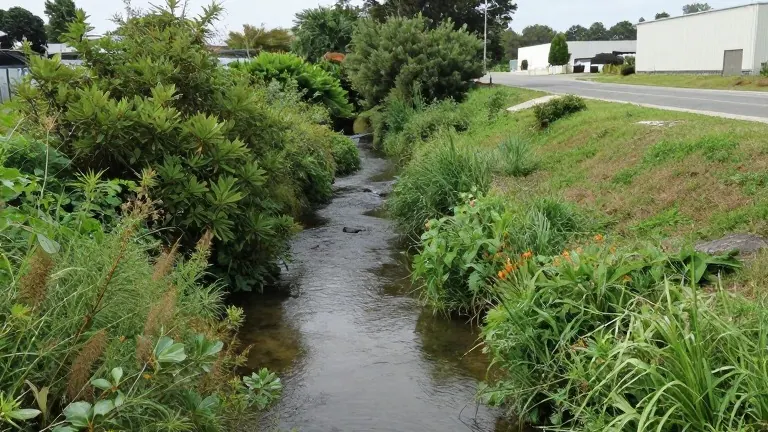
Riparian buffers are vegetated areas along waterways. They serve multiple functions. They mitigate flooding, remove sediment from runoff, and provide habitat for wildlife. Meyer noted that these buffers create corridors for animals to move between larger natural areas. This movement helps diversify populations.
The model ordinance applies to any Pennsylvania town. It includes specific provisions for buffers along wetland borders. Meyer acknowledged that some municipalities are already using this concept, while others are unfamiliar with it.
Murrysville officials have implemented riparian buffers in the past. Emily Mallisee, the community development director, cited a project at Murrysville Community Park. She described it as a dual-purpose initiative. The town improved the area along Farm Road for recreation while protecting the headwaters of Steele’s Run.
Financial considerations play a role in these decisions. Municipalities in the state’s Municipal Separate Storm Sewer System program receive annual targets from the Department of Environmental Protection. They must prevent specific tons of sediment from reaching waterways. These targets are largely unfunded mandates. Projects that meet these requirements without high maintenance costs benefit the town budget.
Mallisee said riparian buffers help meet these state goals. They also mitigate flood risk in areas that experience frequent heavy rain. Raegan McKelvey, program coordinator for the Jacobs Creek Watershed Association, added that buffers require less maintenance than mowed lawns. She observed that many residents cut grass right to the stream banks, but letting wildflowers grow creates a buffer with lower upkeep.
The mechanics of the buffer involve slowing water flow. A rough, vegetated surface slows runoff and increases contact with the ground. Plant roots create channels in the soil, allowing water to seep in. Mallisee said Murrysville typically looks for 30 to 50 feet on either side of stream banks for these projects.
PennFuture suggests wider buffers for greater effectiveness. The model ordinance recommends 100 to 150 feet on either side of a waterway. In some cases, it ranges up to 300 feet. Oakmont is currently repairing an older buffer along Plum Creek in Dark Hollow Woods. Phyllis Anderson, assistant borough manager, said the work addresses stormwater erosion and invasive species. This repair is part of the town’s master plan for the park.
Meyer explained that state law only requires buffers in certain situations. Local governments must fill the gaps. PennFuture acknowledged that buffers reduce the amount of developable land. Meyer said the ordinance scales buffer size based on the total size of the development to strike a balance. Towns are not required to adopt the ordinance, but the group made it available to show officials a proven method for protecting streams and groundwater. The full text is available at PennFuture.org.
Source: Pittsburgh Tribune-Review