USS Enterprise commissioned 65 years ago as first nuclear carrier
The 1,123-foot vessel remains the longest naval ship ever built, according to historical records.
By Yuki Melnyk ·
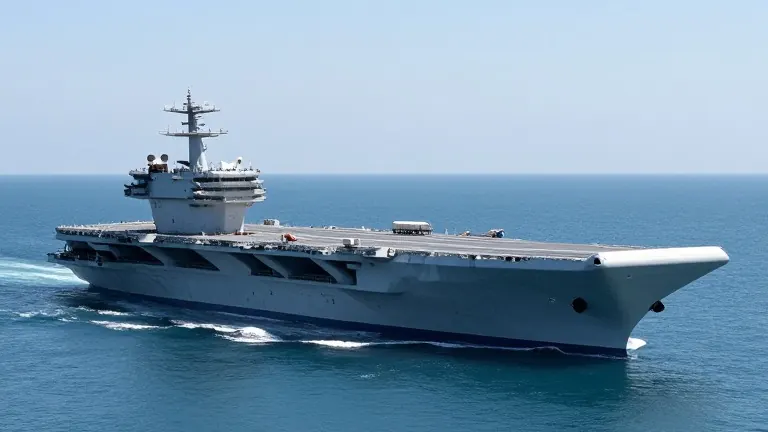
The USS Enterprise entered service on November 25, 1961, becoming the first aircraft carrier in the world to use nuclear power. The U.S. Navy commissioned the ship that day, marking a new era in naval engineering and combat capability.
The vessel measures 1,123 feet, or 342 meters, in length. It holds the distinction of being the longest naval vessel ever constructed, a record that persists more than six decades after its launch. The ship’s nuclear propulsion system allowed it to operate without the need for refueling, extending its operational range compared to traditional oil-fired carriers.
The carrier’s commissioning occurred during a period of intense Cold War tension. The Navy prioritized nuclear propulsion to maintain a persistent presence in global waters. The Enterprise served as a testbed for new technologies and tactics that would later influence the design of subsequent nuclear-powered carriers.
Historical records note that the ship remained in active service for 24 years before decommissioning in 1986. Its retirement concluded its role as a frontline combat asset, though its structural legacy endured. The ship’s size and power output set benchmarks that naval architects continue to reference when planning new fleet components.
Other major events have occurred on this date throughout history. In 1783, the last British troops evacuated from New York City, concluding the Revolutionary War’s military presence in the former colonies. In 1963, the body of President John F. Kennedy was buried at Arlington National Cemetery after a funeral procession through Washington, D.C., with an estimated one million spectators lining the route.
In 1986, President Ronald Reagan and Attorney General Edwin Meese revealed the Iran-Contra affair, disclosing that profits from secret arms sales to Iran were diverted to Nicaraguan rebels. The scandal forced a reevaluation of U.S. foreign policy mechanisms in Central America. In 2016, Fidel Castro died at age 90, ending his half-century of authoritarian rule in Cuba following the 1959 revolution.
In 2020, Argentine soccer player Diego Maradona died of a heart attack at age 60. Maradona had led Argentina to the 1986 World Cup title before facing health complications later in life. In 2001, CIA officer Johnny Spann was killed during a prison uprising in Mazar-e-Sharif, Afghanistan, becoming the first American combat casualty of the war.