Whipsnade Zoo names new white rhino calf Mazinda
The 61st calf born under the zoo's conservation program arrived on November 1, weighing 88 pounds.
By Elena Greco ·
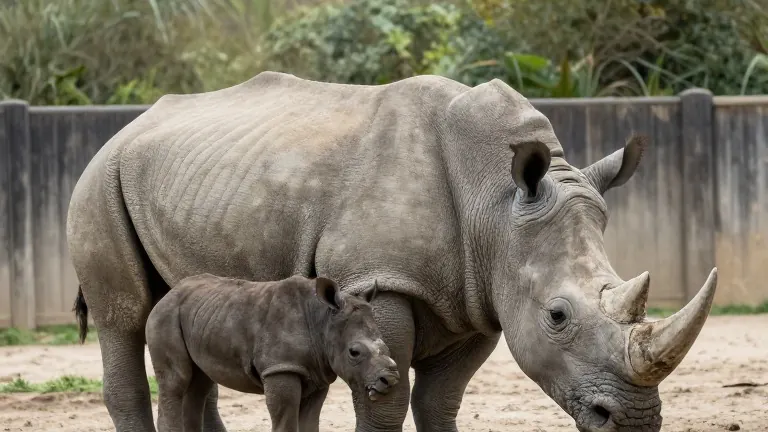
Whipsnade Zoo in Bedfordshire has welcomed a new Southern white rhino calf, marking the 61st birth under a conservation program that began in 1970. The male calf was born on November 1 to mother Fahari and father Sizzle. Zookeepers estimated his weight at 88 pounds, which is 11 times the weight of an average human baby.
Staff named the new arrival Mazinda to honor the first Southern white rhino calf born in Europe. That original calf, also named Mazinda, was born at Whipsnade Zoo on June 24, 1971. The zoo has maintained the breeding program since a herd of white rhinos arrived from South Africa in 1970 under an agreement with the Natal Parks Board.
Mark Holden, the Hoofstock Team Leader at Whipsnade Zoo, stated that the site's open space and breeding expertise made it the ideal location for the program. He noted that keepers were unaware one of the arriving females was already pregnant when she gave birth to the first Mazinda in 1971. Holden described the current mother, Fahari, as a perfect parent who has kept the calf close by in the rhino barn since birth.
Holden added that the new calf has grown stronger and more confident each day. The species faced severe population decline in the wild, with numbers dropping to approximately 20 individuals in South Africa by the late 19th century. Conservation efforts have since helped recover the population, although threats such as poaching and habitat loss persist. Current estimates place the wild Southern white rhino population at around 17,500 across Africa.
The naming of the new calf coincides with the 200th anniversary of ZSL, the conservation charity that operates Whipsnade Zoo. Holden explained that the name recognizes a key part of the zoo's conservation legacy. The first Mazinda is considered a trailblazer for the species as the first white rhino born in Europe, and the new calf continues that lineage more than 50 years later.