Army confirms lead munition detonation in Iowa for Wednesday
Acting Army Secretary Adam Telle announced the controlled explosion will proceed at the Iowa Army Ammunition Plant despite recent political uncertainty and weather delays.
By Yuki Melnyk ·
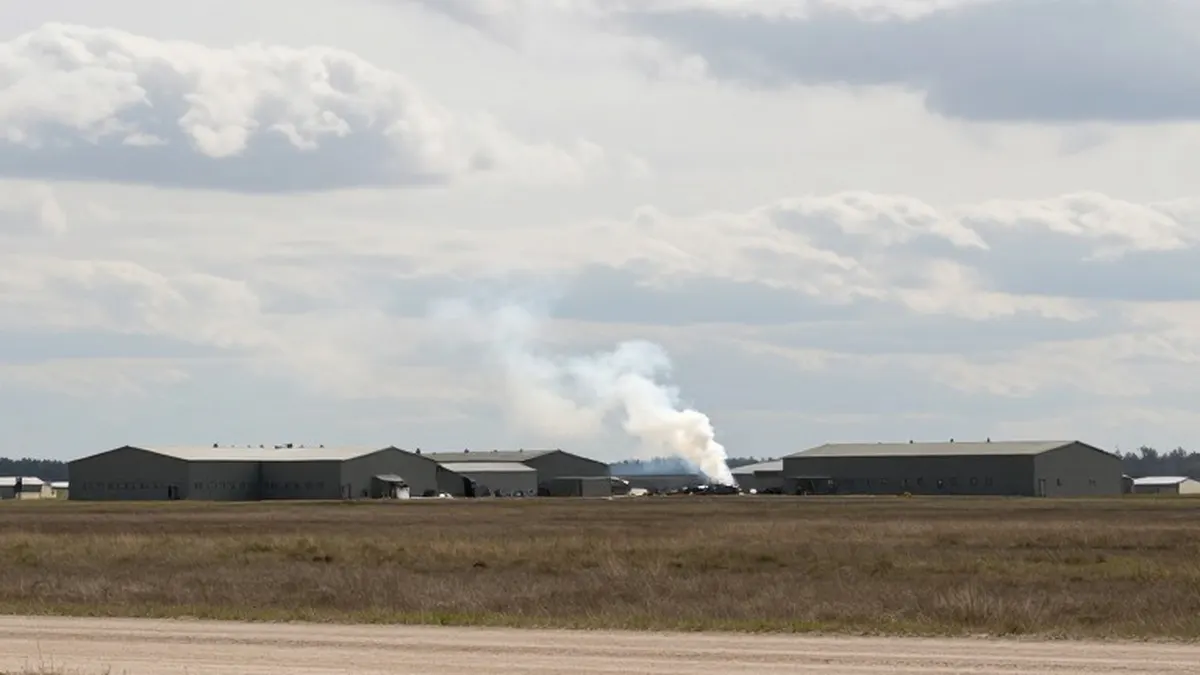
The United States Army has confirmed it will proceed with the detonation of lead containing munitions in Iowa this Wednesday. This decision follows a period of significant uncertainty created by President Donald Trump on Monday, who suggested the operation might require additional approvals before moving forward.
Acting Army Secretary Adam Telle addressed the situation directly in a post on the social media platform X. He stated that the military is moving ahead with the controlled removal process in full coordination with federal, state, and local authorities. Telle emphasized that the primary goal is to ensure the safety of Iowa's citizens, describing the move forward as a consensus decision among key stakeholders.
Telle noted that every relevant expert agency agrees on the necessity of the action. He also pointed out that both the current and incoming Governors of Iowa have indicated that the decision should remain with the technical experts. Additionally, the Army highlighted that a federal appeals court had declined to block an emergency permit for the controlled explosion earlier on Monday.
The controversy began last week when the Army announced its plan to detonate degraded lead azide at the Iowa Army Ammunition Plant in Middletown. The operation was expected to occur within a matter of days and would result in a plume of air containing lead particles. This announcement sparked widespread concern among residents and officials about immediate and long term exposure to toxic substances.
Federal officials have argued that a controlled detonation is the safer option compared to the risk of an accidental explosion of the unstable munitions. However, the situation has also raised broader questions regarding why the ammunition degraded in the first place and how it was stored prior to the discovery.
The detonation was originally scheduled for Monday. On Sunday, the Army announced a postponement until Wednesday to allow for more optimal weather conditions. This delay added to the confusion when President Trump intervened on Monday, stating that the Army would only proceed with the operation if it had agreement from the court and Governor elect Rob Sand, a Democrat.
Governor elect Sand subsequently clarified his position, stating that the decision should ultimately be made by the administration and the experts rather than being a political negotiation. This back and forth highlighted the tension between military operational needs and state level political concerns during the short timeframe before the explosion.
The health implications of lead exposure are a major focus of the debate. According to the Environmental Protection Agency, lead exposure in children can lead to brain damage, nervous system issues, learning problems, and behavioral changes. It can also result in a lower IQ. In rare and severe cases, exposure can cause seizures, coma, or even death.
For adults, the health risks associated with lead exposure include decreased kidney function, heart related issues, and fertility problems. These potential health impacts underscore the urgency and caution surrounding the controlled detonation scheduled for this Wednesday.
More News · National news · Report a business · Got a Story?