Beijing Rejects 20% U.S. Tariff Plan as Trade Tensions Flare
China, Japan, and Singapore formally protested the new duties announced Wednesday, which are set to take effect early next year following a Supreme Court ruling.
By Yuki Melnyk ·
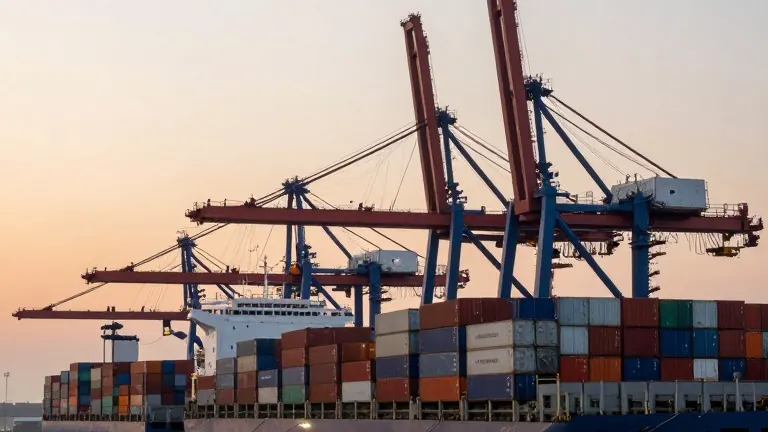
The Trump administration will impose new import duties on 14 economies starting early next year. These tariffs are designed to replace sweeping duties struck down by the Supreme Court in February. The new rates follow a months-long Section 301 investigation into manufacturing practices in those countries.
China, one of the United States' largest trading partners, faces a 20% tariff. Beijing called the concept of overcapacity a false premise. U.S. Trade Representative Jamieson Greer determined that the production practices of the 14 economies are unreasonable and restrict U.S. commerce. If Washington finds that China is not engaging adequately, the tariff rate could double to 40%.
Guo Jiakun, a spokesperson for the Chinese Ministry of Foreign Affairs, addressed a regular press briefing on Thursday. He stated that China opposes the use of the issue as a pretext for political maneuvering. Guo noted that tariff wars and trade wars serve no one's interests. He added that Beijing will take necessary measures to defend its legitimate rights and interests.
Japan faces tariffs of up to 15%. Chief Cabinet Secretary Minoru Kihara told a news conference on Thursday that Japan does not have nonmarket policies or structural excess production capacity. Kihara described the proposed measures as regrettable and said the Japanese government conveyed its position to the U.S. side.
Singapore, which faces tariffs of up to 20%, said it was very disappointed with the proposal. The Ministry of Energy, Trade and Industry issued a statement saying its economic policies do not protect the domestic market or subsidize manufacturing for export.
The United States and China recently extended a trade truce by two months. The current agreement is set to expire on Jan. 10, 2027. The two countries have also agreed to cut tariffs on reciprocal lists of non-sensitive products worth about $60 billion in total.
More Business · Scam Watch · Report a business · Got a Story?