Syrian Christians demand security after jeweler kidnapped in Suqaylabiyah
The abduction of a local jeweler and a massive gold ransom demand have reignited fears among the Christian community in western Syria, prompting church leaders to call for stronger state protection.
By Yuki Melnyk ·
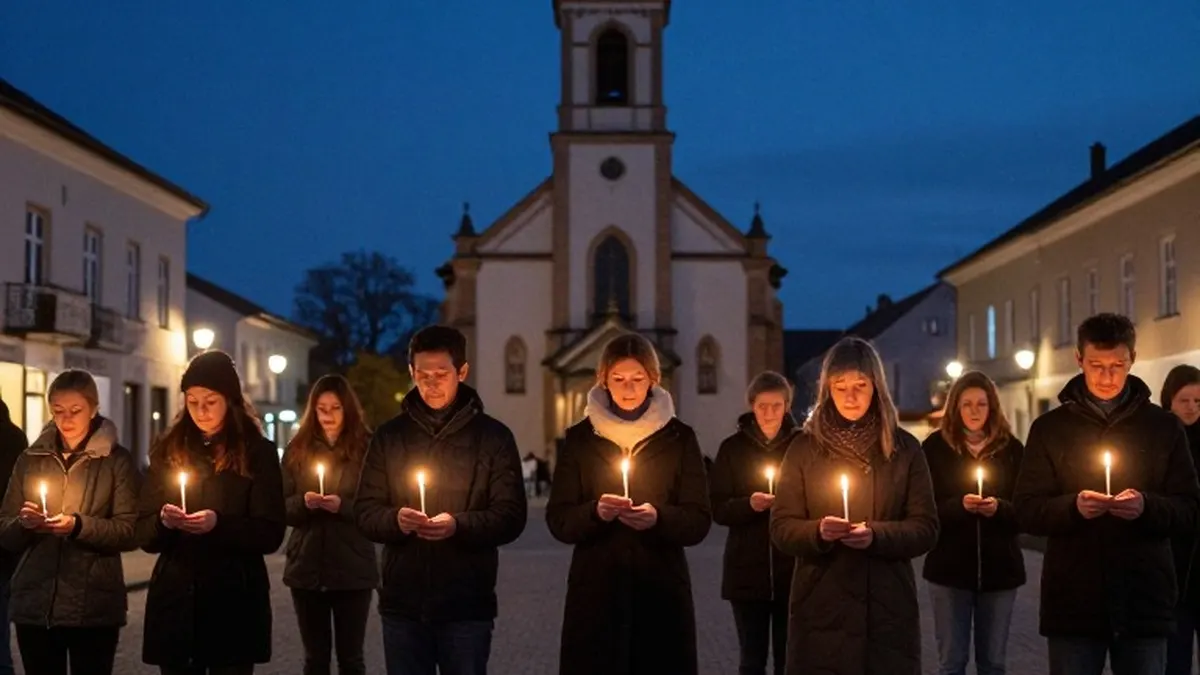
A sense of unease has settled over the Christian town of Suqaylabiyah in western Syria following the kidnapping of Maher Sankari, a 38-year-old jeweler. The incident, which occurred on the morning of October 19, has prompted local church leaders to demand that authorities take decisive action against a pattern of attacks and abductions targeting the region's Christian residents.
Amina, the 75-year-old aunt of the victim, recalled the moment she first noticed the disturbance. Standing in her garden next to Sankari's villa, she heard a crash and initially assumed a motorbike accident had occurred. Upon investigating, she saw a car with tinted windows speeding away while Sankari's motorcycle lay on the ground. She urged his wife to check local hospitals, believing he had been taken for treatment, but the family soon realized the severity of the situation when no trace of him was found.
Surveillance footage captured the car striking Sankari outside his home before assailants dragged him into the vehicle. Relatives stated that the captors contacted the family via the messaging app Telegram, demanding a ransom of 120 kilograms of gold. The kidnappers also sent images of Sankari appearing gagged, shackled, and badly bruised, adding to the family's distress.
Sankari's wife, who is caring for their three and four-year-old children, expressed her hope that he will return safely. Family members have placed their trust in Syrian President Ahmed al-Sharaa, Interior Minister Anas Khattab, and the security forces to secure his release. The family is currently navigating a mix of fear and grief as they await developments.
The kidnapping occurs against a backdrop of fragile security in Syria. Islamist authorities took power nearly two years ago after the ouster of Bashar al-Assad, promising to protect religious minorities. However, more than 13 years of civil war left the country with widespread weapons, competing armed factions, and a population largely plunged into poverty. Last year saw significant sectarian violence in the Alawite coastal region and the Druze-majority Sweida province, alongside a deadly suicide attack on a church in Damascus.
Tensions in Suqaylabiyah have been high since the town celebrated its first Christmas after Assad's departure in 2024. The holiday was marked by shock and anger after hooded fighters torched the town's Christmas tree, leading to protest marches in Damascus. In March of this year, further tensions between local Christians and armed men from neighboring Muslim villages resulted in the vandalism of shops and the burning of cars.
This week, residents of Suqaylabiyah held a candlelit march to show solidarity with Sankari's family and call for his release. Farida Esber, a 62-year-old retired teacher, stated that the state and religious leaders must stand together to free him. She noted that the demanded ransom is an enormous sum, comparing it to the financial capacity of the central bank, and expressed the community's anxiety about the safety of those who leave their homes.
Three Syrian church leaders issued a statement this week condemning the recurring attacks on Christians. They highlighted Sankari's case and noted that an archbishop was recently attacked in Homs, where his office was ransacked. The leaders warned that the lack of tangible results from authorities raises grave questions about the future of Christians in the country. In a related incident, video footage has circulated of another kidnapped Christian in Hama province pleading for his relatives to sell their property to pay a $100,000 ransom.
The Christian population in Syria has shrunk significantly since the civil war began in 2011. Estimates indicate that the number of Christians has dropped from approximately one million to fewer than 300,000 due to displacement and emigration. Local official Souheil al-Farrouh, a 63-year-old tailor, summarized the community's sentiment, stating that people are afraid and simply asking for security and safety.
The events in Suqaylabiyah underscore the ongoing challenges faced by religious minorities in post-Assad Syria. As the community continues to rally for Sankari's return, the pressure on the government to demonstrate its commitment to minority protection remains high. The situation serves as a reminder of the delicate balance of power and the need for consistent security measures to restore confidence among residents.