Crop Price Surge Offers Relief as Diesel Costs Soar in Minnesota
Higher harvest values are offsetting some debt from 2025, but fuel expenses have nearly doubled, creating a mixed financial outlook for producers.
By Yuki Melnyk ·
Corn futures prices have risen by approximately 18% and soybean prices by 27% compared to this time last year, providing immediate financial relief to many Minnesota farmers. This price increase follows a difficult 2025 season that left many operations in the red and raised concerns about widespread foreclosures. The current market shift is driven by global supply disruptions and regional scarcity, though higher diesel costs are eroding a portion of the potential profit.
The international conflict that began in late February initially raised the cost of fertilizer, fueling fears that 2026 would mirror the unprofitable results of the previous year. However, the ongoing conflict has created crop scarcity that is now driving up prices for American harvests. John Griffith, executive vice president at CHS, a large Minnesota-based farming cooperative, noted that attacks on Eastern Europe’s economic infrastructure by Russia and Ukraine have disrupted exports. He stated that this disruption injects fear into the marketplace, which manifests in higher commodity prices.
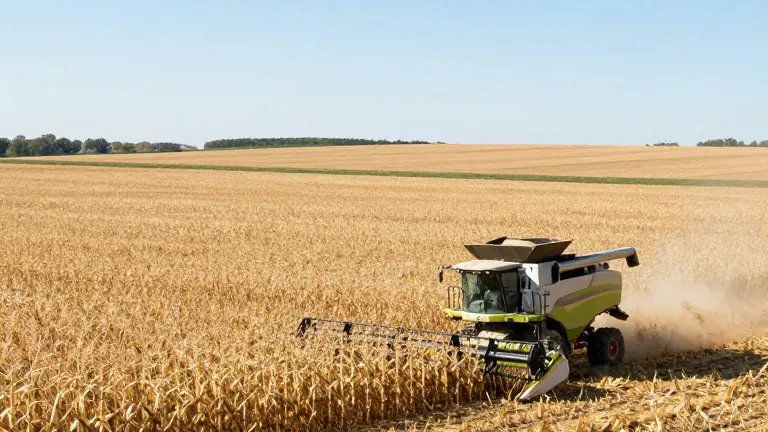
Diesel costs remain a major burden for producers. According to AAA data reported on Oct. 13, diesel prices in Minnesota increased from $3.57 to $6.13 per gallon over the past year. At a farm near Montevideo, a combine harvester consumes 26 gallons of diesel per hour. Megan Horsager, who is purchasing her family’s 1,950-acre operation from her father Marc Stevens, said she filled her diesel reserves about six weeks ago when prices were slightly lower. Stevens believes the rise in crop prices will cover the higher fuel expenses, allowing the farm to maintain financial stability.
Conditions vary across the state. In northwestern Minnesota, severe drought has reduced yields for some growers. Pam Vipond, who manages more than 1,200 acres in Mahnomen County, reported that her soybean crop yielded about half as many dried beans per acre as last year. She noted that rainfall stopped around the Fourth of July, and farmers west of her operation are experiencing even more damage, with some corn plants producing no ears. The U.S. Department of Agriculture reported on Oct. 13 that 61% of the state’s corn and soybean crops are in good or excellent condition, though comparable data for last year was unavailable due to a government shutdown.
Government support for agriculture is expected to increase substantially. The USDA’s Economic Research Service forecasts that total crop revenue will rise in 2026. Concurrently, government support for farmers is projected to grow from $27.9 billion in 2025 to $47.4 billion in 2026. This increase is partly attributed to the Farmer Bridge Assistance program, which was announced in 2025 following a trade dispute with China that threatened U.S. export capabilities.
Dan Glessing, president of the Minnesota Farm Bureau, said the price rise has lifted corn profitability from a loss-making state to a break-even situation. He added that soybean profitability has become stronger, although fuel prices will consume a portion of those gains. Nathan Hulinsky, an agricultural business management educator at the University of Minnesota, observed that many farmers pre-purchased diesel for the harvest earlier this year. He noted that uncertainty remains for future contracts, as it is unclear what diesel prices will be when the next purchasing cycle arrives.
The volatility of recent years has made business decisions more complex for operators like Horsager. She said the uncertainty makes choosing when to buy fuel, fertilizer, and seeds riskier. Stevens, who acquired the farm from his own father, expressed hope that a market driven by supply and demand will eventually reduce the need for government intervention. He believes that if the government stays out of the way, capable farmers will survive while others may struggle.
Source: Boston Herald
More Business · Scam Watch · Report a business · Got a Story?