Iranian Military Threatens US Warships as Trump Considers Next Moves
Tehran asserts it can target American vessels in the Gulf while the White House weighs further strikes or continued economic pressure.
By Aever Bundji ·
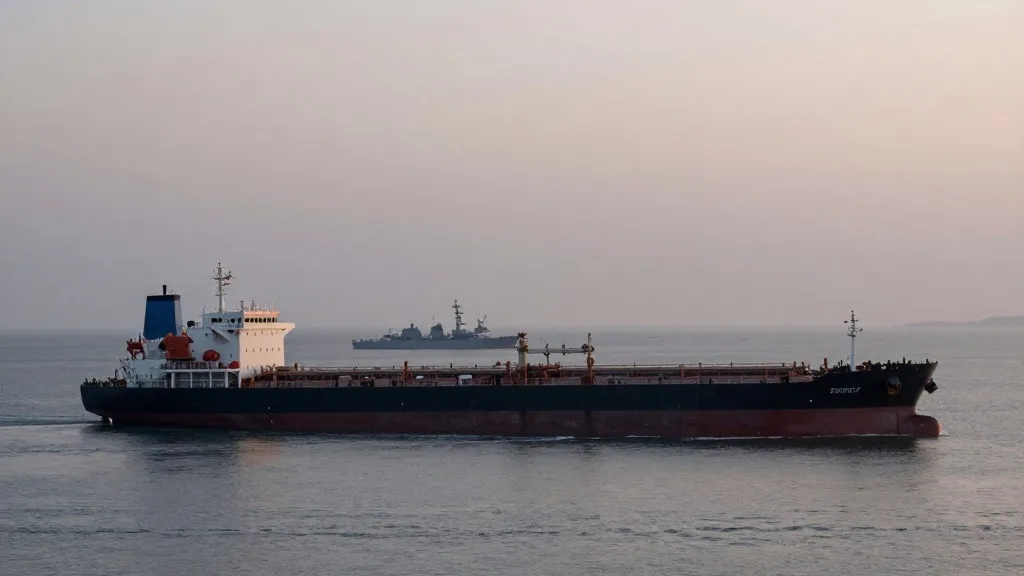
The chief of staff for Iran's armed forces issued a sharp warning on Saturday that American naval vessels cannot reenter Iranian territorial waters. This statement comes as President Donald Trump indicated that the United States has not yet decided on its next strategic move in the ongoing conflict.
President Trump addressed supporters at a rally in Florida on Friday. He suggested that the US military might launch another major bombing campaign. This potential action would be a repeat of the large-scale air strikes known as Epic Fury, which were deployed at the beginning of the war.
The US leadership is currently weighing two primary options for the future of the conflict. The first option involves ending the fighting quickly through massive strikes. The second option is to allow the existing naval blockade and sanctions to continue exerting pressure on Tehran. This decision remains unsettled as the administration evaluates the military landscape.
Ali Abdollahi, the chief of general staff for Iran's armed forces, provided the detailed response in a statement carried by state media. He declared that the US Navy is barred from entering Iranian waters or their surrounding areas. Abdollahi stated that Iranian forces can target any vessel in the region. He added that the US president can only dream of American soldiers entering the Persian Gulf again.
Abdollahi criticized American rhetoric as contradictory. He argued that US claims of destroyed Iranian military capabilities are undermined by the decision to keep aircraft carriers and support ships at a distance. Iranian forces intend to create a quagmire for the US and Israel. This strategy is a direct response to the surprise attack on February 28 that started the eight-month war.
The conflict continues to disrupt shipping and drive up energy costs. Brent crude prices have reached approximately $117, marking the highest level since April. The Islamic Revolutionary Guard Corps reported that seven tankers were attacked or hit mines overnight into Thursday. On Friday, the group claimed two supertankers were also struck by mines. The IRGC stated that its doctrine has shifted toward a more offensive posture.
Active fronts extend beyond the immediate naval conflict. The Iran-allied Houthis in Yemen attacked Riyadh on Saturday. This follows recent strikes on Dammam's international airport and the Shaybah oilfield. In southern Lebanon, Israeli air strikes hit the area around Nabatieh, and artillery fell near Zawtar ash-Sharqiyah. Israeli Prime Minister Benjamin Netanyahu ordered a lockdown of the West Bank after two soldiers were killed in Hebron.
Diplomatic efforts have yet to yield progress. Senior diplomats from Turkiye, Saudi Arabia, Pakistan, and Egypt met with counterparts from Europe in Istanbul on Friday. The US and Iran were not present at the meeting. Turkiye's Foreign Minister Hakan Fidan said a new attack would widen the war. He noted that no one is currently endorsing such a move. The regional ministers backed the Islamabad memorandum of understanding and demanded unrestricted passage through the Strait of Hormuz.
Iranian media and analysts suggest that Tehran has activated a dead hand doctrine. This approach would allow attacks to continue from all 31 provinces if senior leaders are assassinated again. The IRGC has threatened to target seabed internet and communication cables if civilian infrastructure is hit. US intelligence reports indicate that Iran has substantially increased efforts to strike American officials in the Middle East and elsewhere.
Source: Al Jazeera