Israel intensifies strikes on Hamas leadership as ceasefire holds
Israel has intensified targeted airstrikes on Hamas commanders in Gaza, killing several brigade leaders in an effort to disrupt the group's efforts to rebuild its military ranks during the current ceasefire.
By Justin Barnes ·
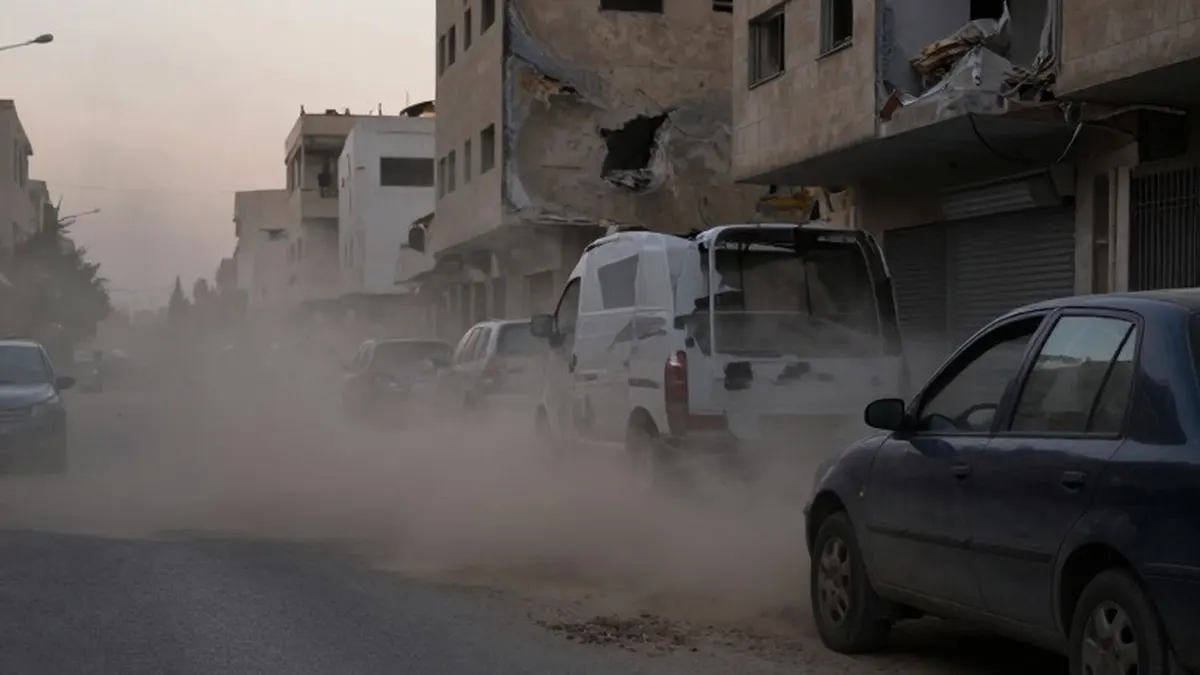
Israeli forces have accelerated a campaign of targeted airstrikes against Hamas commanders and operatives in the Gaza Strip, a move described as an effort to prevent the militant group from rebuilding its military capacity. The latest incident in this series occurred late last Saturday when a drone-fired missile struck a street in Khan Younis, killing Samir Abu Younis. Both the Israel Defense Forces and Hamas confirmed that Abu Younis, who had assumed command of the Rafah Brigade only two months prior, was killed in the attack. Palestinian media reports indicated that two other individuals nearby were injured in the blast.
This strike is part of a broader pattern of increasing frequency in Israeli operations over the past year. Many of the targets have been participants in the Hamas-led attack of October 7, 2023, or senior figures involved in planning the assault. These operations have continued despite the implementation of a US-backed ceasefire in October 2025, which halted major fighting in the region. However, the implementation of President Donald Trump’s peace plan has stalled, with Hamas refusing to disarm and Israel maintaining its presence in parts of the Strip until that condition is met.
The IDF asserts that Hamas has used the ceasefire period to restore its ability to threaten Israel and prepare for future large-scale attacks. Military officials state that recent strikes have focused on operatives rebuilding forces, secret headquarters, and the mechanisms Hamas uses to maintain civil control. An analysis of hundreds of incidents by The Times of Israel reveals a significant rise in strikes in recent months. In September, the army reported killing 19 terrorists involved in the October 7 atrocities or hostage holding, along with 14 top commanders. By comparison, in April, the army killed eight commanders and eight October 7 participants, out of a total of 58 targeted operatives.
Abu Younis was identified by Hamas as a key planner and overseer of the October 7 attack. The IDF noted that he was directing attacks and working to restore the brigade's force buildup. Under the ceasefire agreement, Israel is permitted to strike operatives posing an immediate threat or preparing an attack, while strikes aimed solely at revenge are technically prohibited. Despite the losses, Hamas has demonstrated the ability to replace eliminated commanders, although the IDF assesses that new recruits are less experienced and poorly trained compared to prewar forces.
The killing of Abu Younis follows the death of his predecessor, Nael Abu Obeid, who was killed in September in the same area. Abu Obeid was the second Rafah Brigade commander to be killed during the war, following Muhammad Shabana, who died in May 2025 alongside Hamas leader Mohammad Sinwar. Additionally, days before Abu Younis’s death, Israel struck the Nasser Hospital complex in Khan Younis, targeting Muhammad Abu Ismail, the commander of the Khan Younis Brigade. While neither side has confirmed Abu Ismail’s death, the military stated that at least three other operatives were killed in that strike.
Israel has also continued a dedicated campaign to hunt down perpetrators of the October 7 onslaught. In the last three months, the IDF and Shin Bet have killed over three dozen alleged perpetrators. This retribution campaign is justified by Israeli officials as defensive measures against threats to troops rather than revenge. A special joint unit known as Nili has used facial recognition software on video evidence to identify thousands of Gazans involved in the attacks. Israeli officials have cited the Mossad’s long-term effort to track down the 1972 Munich Olympics attackers as a precedent for this strategy.
According to the IDF, approximately 6,000 terrorists participated in the October 7 attack, with around 4,000 killed to date. Another 300 alleged perpetrators have been captured and await judgment by military tribunals that have not yet been established. Defense Minister Israel Katz stated last month that he instructed security bodies to kill everyone who took part in the onslaught, from senior to junior ranks, without limitation. The military emphasizes that these strikes follow prolonged intelligence work to ensure high certainty of identity and location, aiming to minimize harm to uninvolved individuals.
The continued operations highlight the complex dynamics of the ongoing conflict. While the ceasefire has paused major battles, the targeted elimination of leadership remains a central focus for Israel. Hamas, for its part, continues to appoint replacements for fallen commanders, including in areas where the IDF maintains control. This cat-and-mouse game underscores the challenges in achieving a stable peace, as both sides navigate the terms of the agreement while preparing for potential future confrontations.