Linda Gozali argues Indonesian film market must prioritize quality over quantity at JAFF
The third edition of the market in Yogyakarta features 116 exhibitors and new international partnerships as the industry faces economic uncertainty.
By Elena Greco ·
Linda Gozali, director of the JAFF Market, told attendees in Yogyakarta that the Indonesian film industry needs to define growth through quality rather than sheer volume.
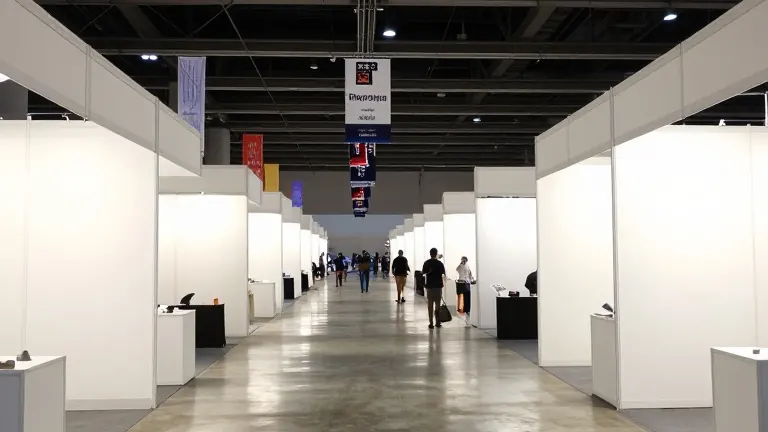
The three-day market opened at the Jogja Expo Center alongside the Jogja-Netpac Asian Film Festival. Gozali noted that the first edition was an experiment to test whether the industry truly needed such a platform, a question that drew an overwhelming positive response from local stakeholders.
The exhibition floor currently hosts 116 exhibitors. Amar Bank serves as the market’s sponsor for the second consecutive year. The JAFF Future Project selection includes 12 projects, ranging from Dhiwangkara Seta’s “Absence” to Rosie Lourde’s “Wreck and Ruin,” which is arriving via a partnership with the Adelaide Film Festival and Malaysia’s mylab.
A new IP Connection strand has opened to international properties for the first time. Four of its ten selections come from overseas, including the comic “Disposable Dolly” from Hong Kong and two South Korean titles brought in through a partnership with Busan’s Asian Contents & Film Market. The remaining six properties are Indonesian, including the animation “Komarong” and the novel “Hati-Hati Ada Dua Hati.”
The market also launched a Producers Exchange featuring 14 producers from countries including Australia, Canada, Mongolia, and South Korea. Sam Chua Weishi of Singapore is participating in the exchange and is also a producer on the co-production “Primal.” A separate program for film writing has enrolled 15 young participants from journalism and academia.
The Indonesia-France Film Lab X MTN Lab is in its third year, run by the French Embassy and the Institut français d’Indonésie. Mentors from Paris film school La Fémis will work with six debut or sophomore features, including “Saltstorm!” and “Super Neli.” The program is supported by the Ministry of Culture’s Directorate of Film, Music and Arts and the Association of Indonesian Film Producers.
Gozali described the current climate as a transitional period where the industry must endure economic upheaval and socio-political instability. “Economically speaking, we are actually in a cautious mood,” she said. Ahmad Mahendra, director general of culture development at Indonesia’s Ministry of Culture, delivered a keynote urging the market to continue strengthening the national film ecosystem. The market was declared open after guests inserted memory sticks into a projector.