London Green Belt: New rules could clear way for 6 billion watt AI buildout
Mayor Sadiq Khan’s draft plan reclassifies low-value land to allow data centers by 2028, but experts warn power grid limits will delay projects.
By Elena Greco ·
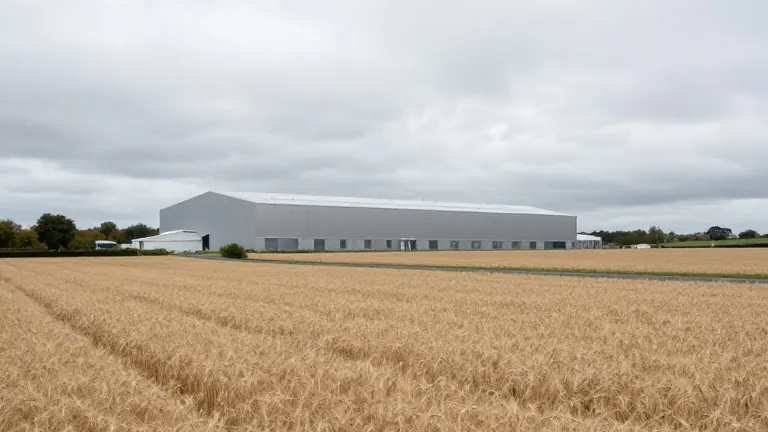
Britain’s data center electrical capacity stands at 2.4 billion watts, but government models project a national network consuming up to 6 billion watts at full power. The gap has prompted London Mayor Sadiq Khan to propose a shift in land use rules that could place major computing facilities on the city’s green belt.
The Draft London Plan, released in November, allows construction of data centers on sections of the green belt designated as "grey belt." These areas are defined by local planning authorities as degraded or possessing little aesthetic value. The proposal opens the door for development as early as 2028, provided the structures meet specific energy efficiency and sustainability criteria.
A concrete example appears in East Havering, where developers propose a facility on 494 acres of green belt land. The site currently grows wheat, barley, rapeseed, beans, and peas. The protest group No to East Havering Data Center argues the project would destroy farmland equivalent to 214 football pitches.
Ian Pirie, coordinator for Friends of the Earth’s Havering branch, stated that the green belt is designed to check urban sprawl and preserve historic character. He told Northeastern Global News that he does not see data centers fulfilling any of those functions. The government’s Department for Business, Innovation, Science and Trade counters in a Draft National Policy Statement that data centers are as fundamental to the economy as railways and electricity networks.
Waleed Iqbal, an assistant professor of data science at Northeastern University London, identifies electrical capacity as the primary barrier rather than land availability. Britain hosts more than 520 data centers, making it the largest market in western Europe, according to government figures. Iqbal noted that while space is a smaller problem, electricity is the binding constraint for meeting national targets.
In Slough, roughly 20 miles west of central London, residents report excessive noise and heat from the high concentration of nearby facilities. Nicola Jones, a local resident, described the sound as comparable to a busy motorway, sometimes louder. Analytics firm Lightcast estimates that building a large data center requires 1,000 to 10,000 workers, but only 50 to 400 permanent employees remain once the site is operational.
Iqbal added that developers prioritize locations near fiber optics, existing grid connections, and London. He warned that if planning is handled poorly, local communities may bear the costs of national AI ambitions while receiving few tangible benefits.
More Business · Scam Watch · Report a business · Got a Story?