Media Literacy: Civil Society Fills Gaps as African Governments Grapple with Disinformation
From mobile theaters in Ghana to fact-checking labs in Nigeria, grassroots groups are working to counter fake news while governments debate the balance between control and education.
By Yuki Melnyk ·
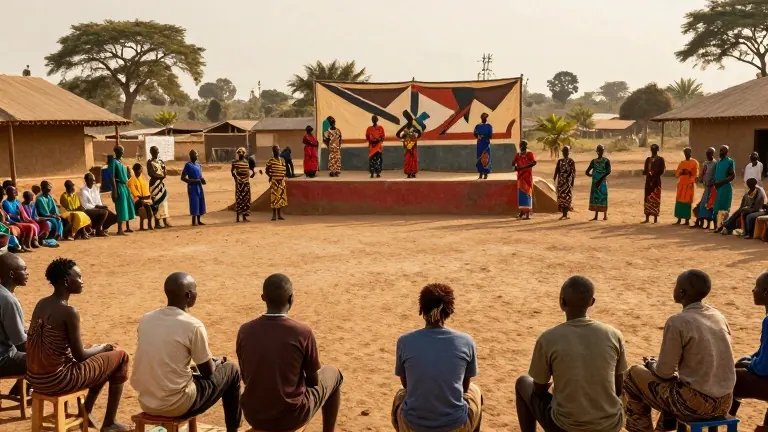
In five districts across Ghana, a mobile campaign called the Caravan of Hope has reached 3,000 people with media literacy training delivered through theater and public discussions in local languages. The initiative, run by the NGO Penplusbytes with support from the German development agency GIZ and DW Akademie, targets rural communities where access to smartphones and formal education can be limited. Rebecca Avusu, who helped develop the project, emphasized that information must be verified before it is believed or shared, particularly for those with limited digital tools.
This grassroots effort operates against a backdrop of mounting disinformation across the continent. Journalism lecturer Dani Madrid-Morales at the University of Sheffield noted that very few African governments are effectively combating the influence of fake news. He identified three main categories of disinformation: financial scams, foreign influence operations, and domestic political campaigns. Madrid-Morales observed that junta governments in the Sahel region, specifically in Burkina Faso and Mali, are most concerned with the third category. In these nations, military leaders have shut down media outlets, prosecuted journalists, and expelled foreign correspondents to control the narrative.
Civil society organizations in South Africa, the Democratic Republic of Congo, and Senegal are filling the void left by state inaction. Groups like Africa Check and Media Monitoring Africa focus on the impact of false narratives during election periods. However, these initiatives often lack funding and sustained engagement outside of election cycles. In Kenya, the Media Council of Kenya supports journalists and fact-checking efforts but operates under laws designed to target false information. These laws have drawn scrutiny for potentially silencing views that oppose the government, prompting calls for independent oversight bodies to protect public expression.
In Mozambique, the media institute MISA launched MISACheck to train young journalists and social activists in fact-checking techniques. Olivia Massango, MISA's vice-president, criticized state authorities for invoking the public interest to protect themselves rather than the populace. She pointed to an internet blackout justified by safety concerns as an example of how combating disinformation can become a tool for controlling opinions and criticism.
Foreign influence also shapes public opinion, according to a study by the pan-African research network Afrobarometer. The study found that over 60% of respondents viewed China's political and economic influence positively, followed by 52% for the United States. In French-speaking countries, only 34% of respondents viewed France's influence positively. Komi Amewonou from Afrobarometer stated that these attitudes often result from governments allowing negative perceptions to persist rather than from targeted propaganda campaigns.
African nations are increasingly looking to Europe for models to fight fake news. Morocco and Senegal are drafting legislation inspired by EU standards. Madrid-Morales stressed that these laws require independent oversight and enforcement mechanisms to function effectively, which are currently absent in both countries. Avusu warned that laws designed to combat disinformation must not become instruments for silencing people who question government decisions or express legitimate opinions.
In 2026, the International Media and Information Literacy Institute opened in Abuja, Nigeria, under the auspices of UNESCO. The government aims to play a leading international role in the fight against fake news, though civil rights groups note that the state often blurs the line between battling disinformation and silencing dissent.