Syrian Government Faces Complex Task of Integrating Foreign Fighters
With the Assad era ending, Syria struggles to absorb thousands of foreign combatants while managing security threats and regional concerns.
By Yuki Melnyk ·
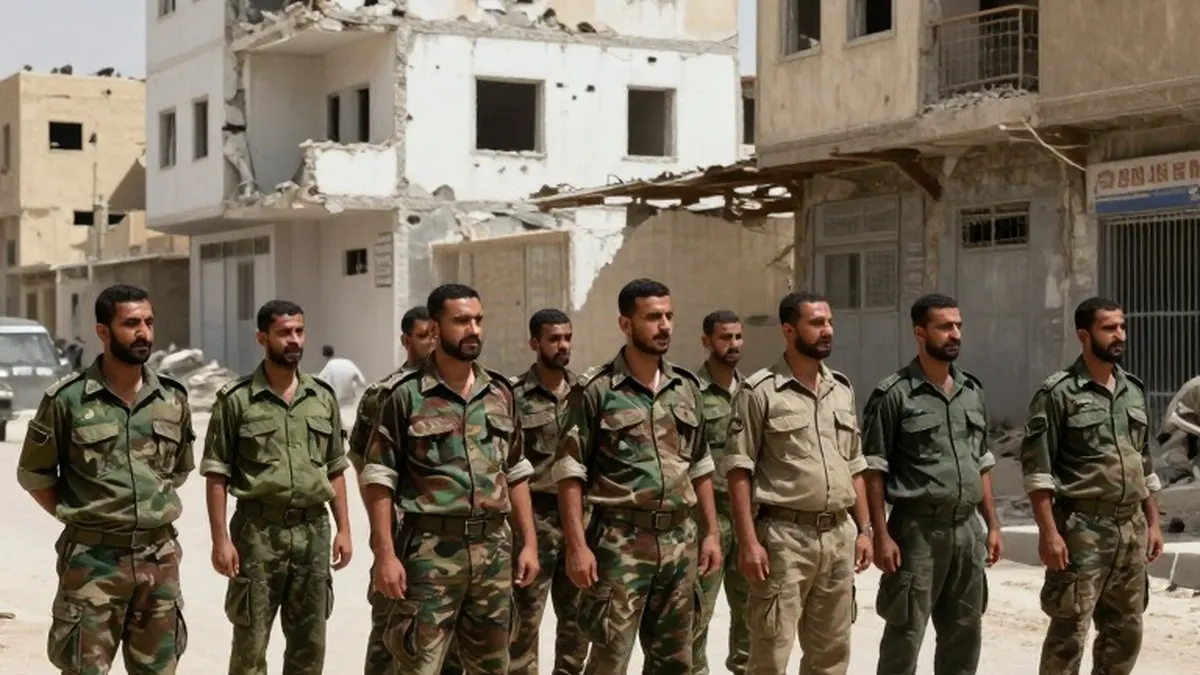
Nearly two years after the collapse of the Assad dynasty, the Syrian leadership is facing significant challenges in integrating thousands of foreign fighters who participated in the civil war. The new government is working to merge these battle-hardened individuals into its armed forces. This group includes substantial numbers of Uyghurs from western China, Uzbeks, ethnic Chechens and Daghestanis, as well as fighters from various Arab countries and Western nations.
Interim President Ahmad al-Sharaa, who assumed power following the ouster of Bashar al-Assad in December 2024, is a former ally to many of these fighters. A significant portion of the foreign combatants prefer to remain in Syria because returning home could result in arrest or rejection by their home governments due to security concerns. This reluctance to return adds a layer of complexity to the post-war stabilization efforts.
Regional observers are also worried about the potential for these fighters to join the Islamic State. ISIS militants have labeled al-Sharaa an apostate and seek his removal from power. Although the extremist group was defeated in Syria in 2019, it maintains sleeper cells across the country that continue to launch deadly attacks against government and Kurdish targets. This presence exacerbates other security issues, such as sectarian clashes that resulted in hundreds of deaths among Alawites and Druze last year.
In the northeast, tensions persist between Arabs and Kurds despite a January agreement that ended fighting between government troops and the Syrian Democratic Forces. The SDF had established a de facto autonomous zone during the conflict, which Damascus has since brought back under central control. The exact number of foreign fighters remaining in Syria is unclear, but Rami Abdurrahman of the Syrian Observatory for Human Rights estimates their peak population was between 18,000 and 20,000.
Most of these fighters are Sunni Muslims, similar to al-Sharaa, and many initially joined insurgent groups like Hayat Tahrir al-Sham, which has since dissolved. While some have successfully integrated into security forces, others have refused. An August report from the Combating Terrorism Center at West Point noted that Syria hosts one of the world’s largest concentrations of foreign fighters, possessing skills in explosives and small-unit tactics that have transnational implications.
The government has begun cracking down on fighters viewed as security threats while the country attempts to begin reconstruction. In October, security forces killed a French militant named Abu Ayman al-Faransi during an enforcement action near a camp for French-speaking fighters on the Turkish border. The militant was one of nearly 70 fighters at the camp who refused to join the security forces. The fighters disputed the official account, claiming he had left the camp to buy food, and expressed anger when Syrian officials hosted a French military delegation for cooperation talks.
Other incidents highlight the ongoing friction. Last year, authorities detained an Egyptian jihadist who threatened President Abdul-Fattah al-Sisi. In May, forces conducted a security sweep against Uzbek fighters in Idlib. Additionally, Syria agreed in November to send fighters to Saudi Arabia to potentially assist in fighting Houthi rebels in Yemen, although Riyadh insisted the contingent consist only of Syrian nationals.
Integration remains a long-term process. Many of the 3,000 Uyghur fighters who fought alongside al-Sharaa’s forces have joined the Syrian army and are now mediating between the government and resistant fighters. Many foreign fighters have also married local women, leaving thousands of children stateless under current Syrian laws that prevent women from passing down citizenship. Social Affairs Minister Hind Kabawat stated that the government plans to amend this law.
Aymenn Jawad Al-Tamimi, a Syria-based historian, observed that groups loyal to the former Hayat Tahrir al-Sham have generally joined the new army without major issues. However, more hardline foreign fighters remain a challenge on ideological grounds. Al-Tamimi warned that foreigners who reject integration will likely continue to face harassment and potential crackdowns from government forces.