Small Island Leaders Demand Urgent Climate Finance at UN Talks
Vice President Alix Sebastien Pillay of Seychelles called global warming a survival issue as new data showed warming progress has stalled.
By Yuki Melnyk ·
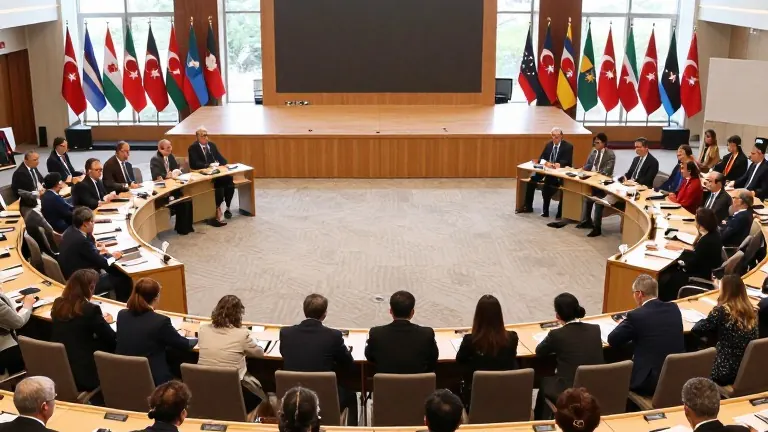
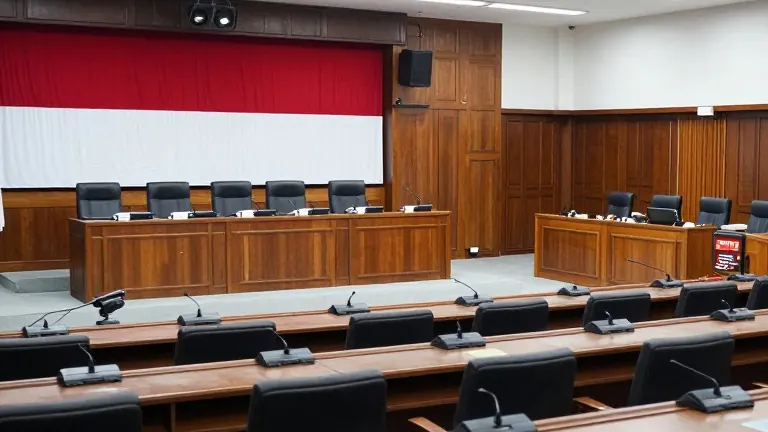
Small island nations told UN climate negotiators in Antalya, Turkey, that they need immediate financial support to survive rising seas and extreme weather. Speaking on the second day of the leaders' summit, Alix Sebastien Pillay, the vice president of Seychelles, described the situation as a matter of life and death for his people.
"It is time to move past the talking," Pillay said. He noted that Seychelles, an archipelago of 115 islands in the Indian Ocean, is suffering millions of dollars in damage despite contributing little to global warming. Pillay argued that a UN fund designed to compensate vulnerable nations needs strengthening to prevent these countries from falling into unsustainable debt.
A report released by the independent Climate Action Tracker on Thursday provided a stark backdrop to the negotiations. The organization found that progress in slowing global warming has stalled for the past five years. In the first five years after the 2015 Paris Agreement, the world cut warming projections by an entire degree Celsius, or 1.8 degrees Fahrenheit. Since then, the report stated, nothing has changed.
According to the data, the world is now headed toward an irrecoverable overshoot of 1.5 degrees Celsius, or 2.7 degrees Fahrenheit, above pre-industrial temperatures. Even if every nation fulfills its current climate promises, the report said the globe will end the century 2.6 degrees Celsius, or 4.7 degrees Fahrenheit, warmer.
Dalton Tagelagi, the prime minister of the Pacific island of Niue, pointed to current conditions as evidence of the risks ahead. He said sea temperatures in the central Pacific are more than three degrees above normal. Tagelagi cited this, combined with the current El Niño warming pattern, as a warning of what will happen if emissions are not cut immediately.
Pakistani Prime Minister Shehbaz Sharif referenced the 2022 floods that submerged over a third of his country, killing thousands and causing more than $30 billion in damage. "Climate change knows no borders. No nation can face it alone," Sharif said. Leaders from these nations emphasized that adequate financing must be available to handle such disasters.
The United States, the world's second-largest current polluter and largest historical polluter, was absent from the summit after President Trump withdrew the country from climate negotiations. A group of US state and local leaders arrived in Antalya to demonstrate their continued commitment to the cause.