US, China, and Russia Leaders Convene for Rare Trilateral Talks in Shenzhen
US, Chinese, and Russian presidents held unprecedented trilateral talks in Shenzhen, focusing on nuclear weapons and global stability during the APEC summit.
By Yuki Melnyk ·
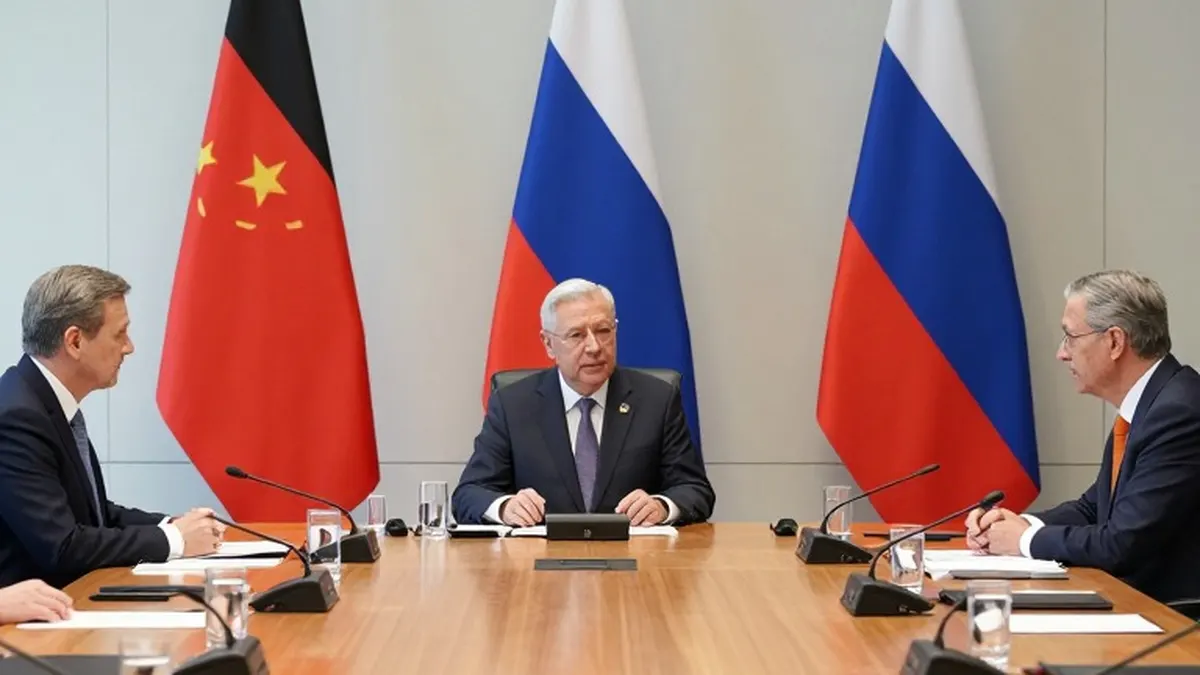
President Donald Trump, Chinese President Xi Jinping, and Russian President Vladimir Putin gathered in Shenzhen, China, for a historic trilateral meeting on the sidelines of the Asia-Pacific Economic Cooperation summit. The leaders posed for a joint photograph on Thursday before entering a closed-door session, marking a rare instance of the world’s three superpowers engaging in direct dialogue.
In his opening remarks, President Xi described the gathering as having groundbreaking significance. He emphasized that global peace is maintained when great powers live in harmony and urged the three nations to collaborate on addressing worldwide challenges. Xi also made a notable statement regarding nuclear strategy, asserting that nuclear weapons should be comprehensively banned and thoroughly destroyed to build a nuclear-free world.
President Trump echoed the importance of the discussion, noting that the three countries are uniquely positioned to address nuclear weapons. He criticized past leaders for avoiding conversations with those with whom they had disagreements, stating that no peace has ever been forged by declining such opportunities. President Putin, for his part, indicated that the war in Ukraine would be the primary focus of his contributions during the closed-door negotiations.
Ahead of the trilateral session, Trump held separate bilateral meetings with both Xi and Putin. During his conversation with the Chinese leader, Trump referred to Xi as a friend and described the relationship between Washington and Beijing as special. He expressed confidence that as long as both leaders remained in charge, the two nations would avoid major problems. Xi responded by affirming his commitment to steering bilateral ties in the correct direction, citing a new definition of a constructive relationship based on respect, fairness, and reciprocity.
Trump highlighted recent progress in US-China relations, including the formation of a Board of Trade agreed upon during their May summit in Beijing. He claimed that this body has brought balance to the relationship and that tariffs between the two countries were split in a fair manner. The bilateral meeting, which lasted approximately one hour, was the third one-on-one session between the two leaders this year.
Earlier in the day, Trump met with President Putin, whom he also called a friend. Trump noted that the two have had a great relationship for many years and suggested that wonderful outcomes could emerge from their discussions. White House videos showed the leaders shaking hands and Trump whispering to Putin, with one clip capturing Trump pointing at the Russian leader and stating that he is his friend.
Yury Ushakov, a Kremlin foreign policy aide, confirmed that the US and Russian leaders discussed the conflict in Ukraine and bilateral relations. According to Russia’s state news agency TASS, Ushakov described the meeting as having gone well and noted that Putin left the talks in an excellent mood. Analysts suggest that while the trilateral talks may not yield major agreements due to deep differences on issues like Ukraine, Iran, and trade, the meeting has already unsettled smaller nations who fear their interests might be overlooked.
The APEC summit in Shenzhen also serves as a platform for broader economic discussions involving representatives from 21 Pacific Rim economies. Al Jazeera’s diplomatic editor James Bays noted that while Trump’s personal role is significant to him, the other two leaders have long tenure in power. Bays pointed out that Putin has led Moscow for 26 years and Xi has been in power for 14 years, whereas Trump has only 26 months remaining in his current term.
Trump also drew attention to the ceremonial aspects of his visit, noting that Xi greeted Air Force One on the airport tarmac upon his arrival on Wednesday. He contrasted this with the more muted greetings typically offered to other leaders. Despite Beijing’s previous objections to nuclear talks involving Washington and Moscow, Trump has insisted that nuclear arms control remain a central topic of the summit discussions.