UK Reset: Burnham seeks deeper EU ties amid trade decline
The Prime Minister argues Brexit failed to deliver promised control and aims to address economic isolation ahead of a Friday summit in Brussels.
By Yuki Melnyk ·
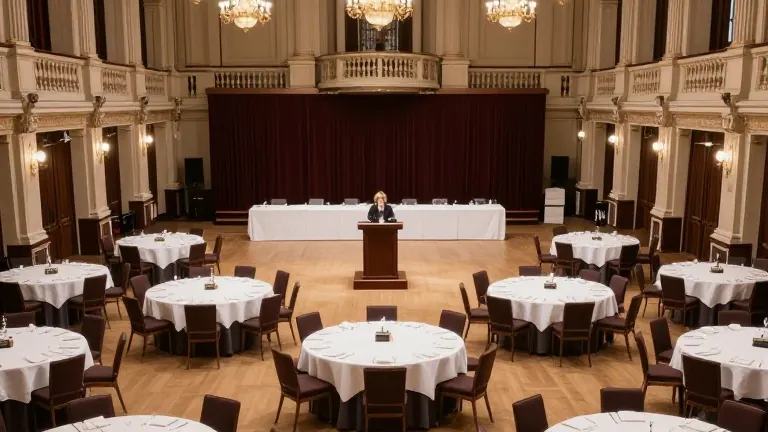
British Prime Minister Andy Burnham stated that the United Kingdom must reset its relationship with the European Union to counter rising global isolationism. Speaking at the Lord Mayor’s Banquet in London on Monday, he described the current state of post-Brexit relations as a failure to deliver on the promise made during the 2016 referendum.
Burnham compared the situation to the Hans Christian Andersen story where no one tells the ruler he is naked. He said, “I do try to say things as I see them. And to be frank, we have lost more than we have gained in the last 10 years. The hard Brexit we were given is not good enough for Britain.”
The remarks precede a UK-EU summit scheduled for Friday in Brussels. Burnham indicated the meeting could produce tangible improvements for residents in regions that have felt neglected. He outlined three criteria for any new agreement: consistency with Labour’s manifesto, alignment with the 2016 vote, and passing his Makerfield Test for ensuring real gains in overlooked areas.
The government expects to finalize a deal on trading food and drink. It also plans to reach agreements on energy, emissions, and a scheme allowing young people to work across Britain and the EU for limited periods. Burnham noted that trade with EU nations has dropped sharply and that economic damage estimates range from 4 percent to 8 percent of the UK’s gross domestic product.
He argued that Brexit acted as the first domino in a global shift toward protectionism. “Brexit was the first domino to fall in a global move towards more isolationism and protectionism. It is exactly what our enemies wanted. Russia wanted disunity within NATO and a weaker Europe,” he said.
Burnham plans to open discussions on a long-term relationship with EU partners soon after the summit. His spokesperson, Tom Wells, stated on Monday that no assumptions are being made and that the British public will determine any outcome. Burnham remains bound by the pledge of his predecessor, Keir Starmer, not to rejoin the EU customs union or single market for goods, services, and workers until the next national election.
The 2016 referendum result split the country closely, with 52 percent voting to leave the EU and 48 percent voting to remain. Burnham is the seventh prime minister Britain has had since that vote, and he seeks to close a decade of political turmoil by positioning the country as a leader in international cooperation.