BepiColombo enters orbit around Mercury after 8-year trip
The joint ESA and JAXA mission will split into two craft next month to study the planet's geology and magnetic field.
By Yuki Melnyk ·
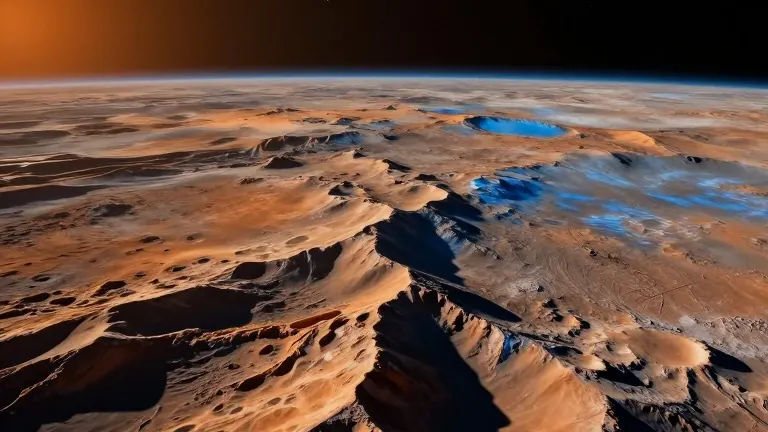
The joint European and Japanese spacecraft BepiColombo entered orbit around Mercury on Saturday after an eight-year journey through the inner solar system. A series of thruster firings slowed the vehicle enough for the planet's gravity to capture it. Flight controllers in Germany, located 94 million miles away, confirmed the orbit after reviewing data streams for several hours.
The $2 billion mission comprises two linked robotic explorers that will separate next month. One craft belongs to the European Space Agency, and the other is operated by the Japan Aerospace Exploration Agency. They will map and study Mercury from different altitudes. This marks the first time a spacecraft has visited the sun's closest planet in more than a decade.
Lead project scientist Geraint Jones stated that the mission will allow for simultaneous measurements by two spacecraft. He noted that the team anticipates new data beginning to stream down in the spring. The dual-craft approach enables a direct comparison of findings from distinct vantage points around the planet.
The spacecraft took a complex route to reach Mercury, launched in 2018. The trajectory included one pass near Earth, two near Venus, and six near Mercury for gravity assists. These maneuvers added more than 6 billion miles to the total distance traveled. The conjoined units separated from their mother ship in September for the final approach.
The mission aims to study Mercury's dense interior, magnetic field, and surface features such as impact craters and mountain ridges. Surface temperatures can exceed 800 degrees Fahrenheit, placing strain on electronic systems. Jones described keeping the instruments cool as a major technical challenge. Space agency officials intend to keep the mission active for at least one Earth year.
Mercury remains one of the least explored planets in the solar system despite its proximity to Earth. Only Uranus and Neptune have received fewer visitors. NASA's Mariner 10 flew past the planet three times in the mid-1970s, and the Messenger spacecraft orbited Mercury from 2011 until it crashed into the planet in 2015.