Breaking: VIX spikes to March highs as AI trade unwinds in fear
The Cboe Volatility Index hit its highest level since the Iran war tensions, signaling a massive momentum unwind and a flight into Treasuries.
By Elena Greco ·
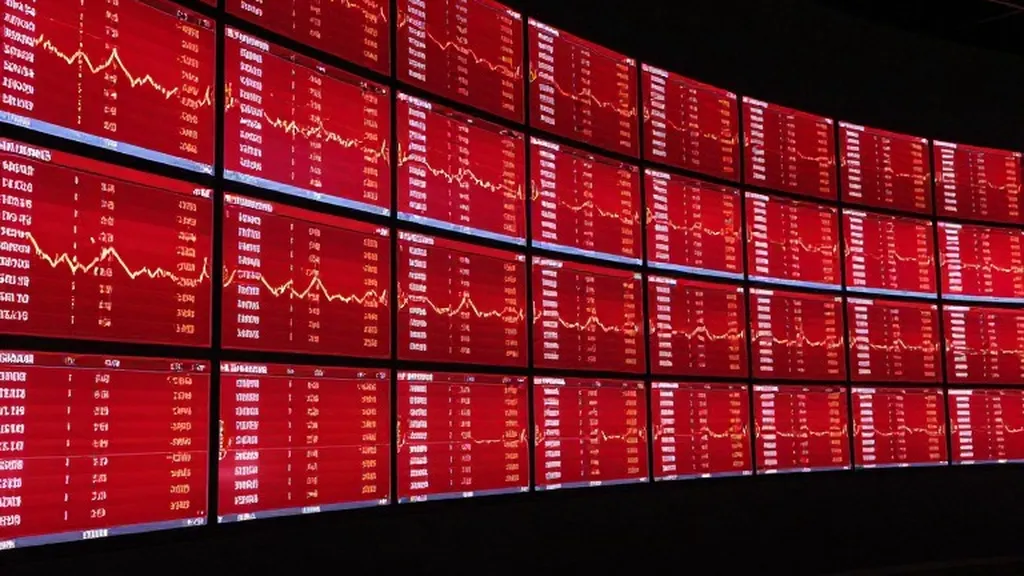
Wall Street closed on Thursday with a sharp decline, marking a significant reversal of the optimism that had built over the previous week. The Dow Jones Industrial Average, which tracks 30 large US companies, fell more than 1,800 points, a drop of 3.4 percent, to close at 51,868. According to The Guardian, this loss erased the gains that investors had made on Wednesday. The S&P 500 was down 4.3 percent, a figure reported by The New York Times and The Guardian, while the BBC noted a slightly different figure of 4.4 percent. This performance marked the worst day for the S&P 500 since April 2025, when President Trump announced sweeping global tariffs.
The selling pressure was not limited to a single sector but spread through every part of the S&P 500, gathering pace as the trading day progressed. The Nasdaq Composite, which is heavily weighted toward technology stocks, fell 5.5 percent. This was its worst day in 18 months. The index closed more than 11 percent below the record it set last month, placing it in correction territory. A correction is defined as a fall of at least 10 percent from a recent high, while a fall of 20 percent is considered a bear market. The BBC cited Dow Jones data to estimate that $2.5 trillion in market value was wiped from the Nasdaq Composite. The Guardian placed the figure at more than $2 trillion.
The so-called Magnificent Seven technology companies, which include Apple, Nvidia, and Tesla, shed about $1 trillion in value in the single trading day, according to the BBC. Nvidia was the biggest faller in the Dow, dropping 9.2 percent and losing more than $400 billion in market value. Goldman Sachs was the second biggest faller in the Dow, down 3.7 percent. In the chip sector, SanDisk fell more than 22 percent, while Western Digital fell 17 percent. AMD and Micron each fell more than 17 percent, and Intel fell 10.3 percent. The Philadelphia Semiconductor Index, which tracks 30 of the largest chip companies, fell more than 12 percent.
The Philadelphia Semiconductor Index has fallen more than 30 percent since the beginning of October and is almost 40 percent below its peak in June, according to The New York Times and the BBC. The iShares Semiconductor ETF, known as SOXX, fell 12 percent, which was its worst day since the breakout from the pandemic in March 2020, as reported by CNBC. Tesla fell nearly 11 percent, and SpaceX fell 8 percent. These moves took more than $300 billion off the value of Elon Musk's companies. Musk had spent nearly $450 million backing Republican campaigns, including at least $45 million in support of Ken Paxton for the Texas Senate seat. Texas went to the Democrats on Tuesday night, according to the BBC.
The primary driver of the day's volatility was a surge in market fear, measured by the Cboe Volatility Index, or VIX. The VIX jumped as much as 5.7 points to above 28 about 90 minutes after the opening bell. This was its highest reading since March 31, 2026, the day after the S&P 500 bottomed during the Iran war tensions. The Guardian reported the VIX was up 61 percent on the day. From its low to its high, the VIX moved more than 11 points, which was its biggest one-day move since April 9. By midday, nearly 800,000 VIX call options had traded, a volume that was 3.5 times the 30-day average, according to Cboe data cited by CNBC.
As stocks fell, investors sought safety in government bonds. The 10-year Treasury yield fell to 4.83 percent, its lowest level since September, as investors bought bonds as a haven, according to The New York Times. In London, the FTSE 100 closed down 46 points, or 0.4 percent, at 10,782.66, after an early rally in Europe fizzled, as reported by The Guardian. The sharp move in options and the rise in volatility suggested that traders were positioning for further downside risk. The volume in VIX call options indicated a heavy demand for protection against further declines in the stock market.
Noel Smith, an options trader quoted by CNBC, described the market action as a liquidation. He said, "My data says to de-risk, but my gut says this is a blowout that could create a dip-buying opportunity." Smith noted that oil and interest rates were relatively unchanged. He added, "The tape looks like a liquidation and that's exactly what it is according to what I'm hearing with regards to a hedge fund." This comment highlighted the role of forced selling in amplifying the day's losses. The mention of a hedge fund liquidation pointed to the possibility that large positions were being unwound, contributing to the momentum unwind seen in the market.
Neil Wilson, an investor strategist at Saxo UK, said a "complete capitulation-level event" was playing out in tech stocks. He stated, "The fear is a total momentum unwind as Democrats pace the frontier and kibosh datacentre buildout ... this looks totally overdone but the nature of 'sell everything' in this market means we need to look for some stability first." The election results had provided the catalyst for this fear. Democrats campaigned on slowing the spread of data centers and AI, and there were dozens of measures on ballots around the country aimed at restricting data center development. Voters rejected data centers in a series of local ballots, as reported by the BBC and The Guardian.
More Business · Scam Watch · Report a business · Got a Story?