Cultural Fusion: Arizona Sake Blends Japanese Craft and Navajo Botany
A small business in Holbrook, Arizona, produces award-winning rice wine that incorporates indigenous ingredients like Navajo tea, challenging the typical perception of the beverage's origins.
By Elena Greco ·
Atsuo Sakurai and his wife, Heather, operate a sake production facility just off Route 66 in Holbrook, Arizona. Their business, Arizona Sake, produces a traditional Japanese rice wine that integrates elements of Navajo culture, creating a distinct regional profile for a beverage typically associated with Japan.
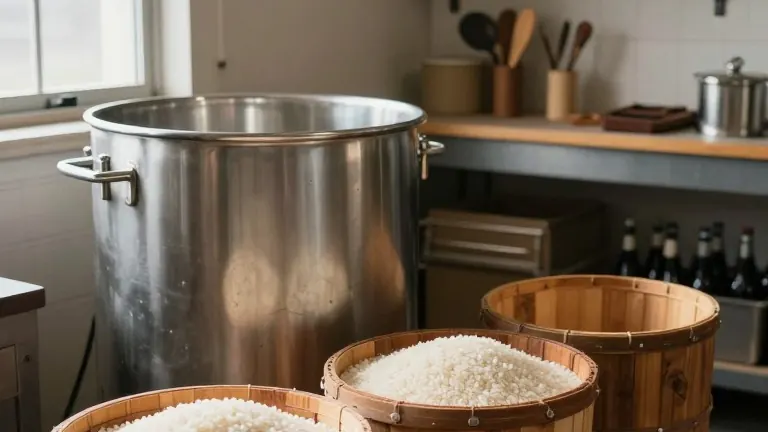
The production process is slow and labor-intensive. Workers wash and heat rice in baskets before transferring it to vats for fermentation. Sakurai stated that it takes approximately three months to produce a single bottle from start to finish. The facility uses a 200-gallon vat for the primary fermentation stage. Once fermentation is complete, the liquid is pressed under pressure to extract the sake.
Sakurai, originally from Tokyo, which is roughly 6,000 miles from Holbrook, worked in the Japanese sake industry before relocating to the Southwest. His wife, Heather, is from the Navajo Nation. The couple merges their respective backgrounds in their product line. One specific variety of their sake incorporates Navajo tea, a local plant.
Sakurai noted that customers are frequently surprised to learn the beverage is produced in Arizona rather than Japan. He recalled that early on, many people doubted the authenticity of the product's origin. He described his initial goal as establishing a sake manufacturing business anywhere in the world, a dream that materialized in Holbrook.
The shop produces both traditional styles and unique local variations. Some of these creations are available exclusively in Holbrook. Sakurai described the aroma of his products as resembling pear or blueberry. One taster identified a distinct prickly pear flavor in one of the sakes, describing it as a uniquely Arizona taste profile.
The business has received recognition in competitions in Japan and internationally. Sakurai emphasized the value of the hands-on process in an era of increasing automation. He expressed a desire to preserve this type of traditional industry. Asked if the business would survive for another century, he responded with cautious optimism, stating he hopes it will.
The location on Route 66 places the business in a historic corridor that has seen changes due to the development of the interstate highway system. Despite these shifts, the couple continues to produce small-batch sake using methods that require significant manual labor and time.
Source: WCAX-TV
More Business · Scam Watch · Report a business · Got a Story?