Google AI Chips Run at Meta
Meta is now running production AI workloads on Google's tensor processing units through a new software stack, marking the first time these chips are sold to an external customer.
By Malcolm Davis ·
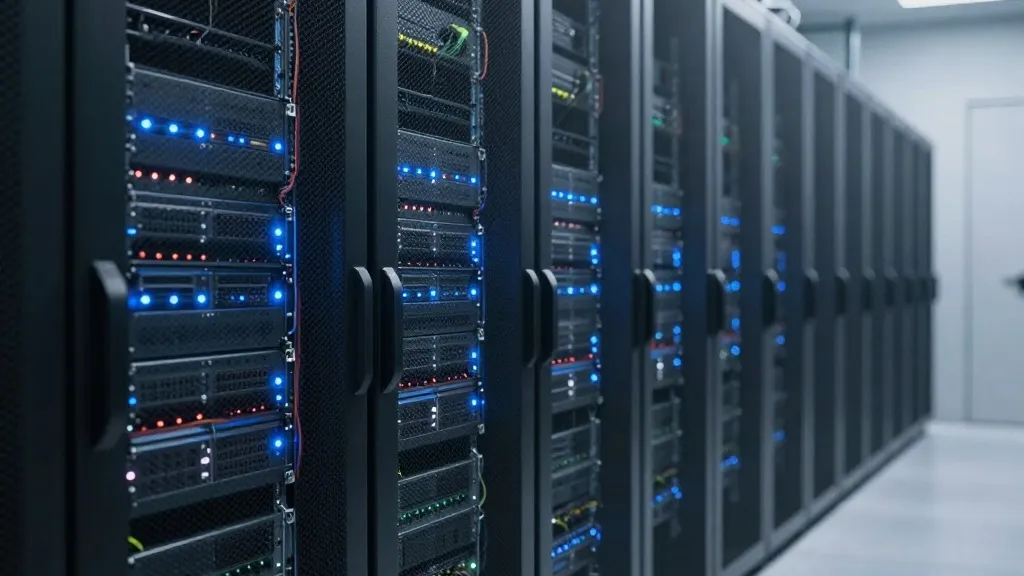
Meta is deploying Google's custom AI processors in its production environment, a shift that could alter how tech giants procure the computing power needed for artificial intelligence. The move signals Google's intent to compete directly for AI hardware contracts, a market long dominated by Nvidia. For consumers, this competition among cloud providers and chipmakers could eventually influence the cost and availability of AI-driven services.
The transition was enabled by a new version of the SGLang inference engine, which is now native to the PyTorch framework and can run on Google's tensor processing units (TPUs) without major code rewrites. A corresponding open-source version of the vLLM inference engine was also released. Previously, running such software on TPUs required the use of Google's own JAX AI framework.
The development of the new software stack was a joint effort. Meta's PyTorch-TPU lead, Zongwei Zhou, stated that SGLang-TorchTPU is running in production at his company following a "close three-way collaboration between Meta, Google, and the SGLang team." The engine provides Meta with "a remarkably mature, PyTorch-native serving stack," he added.
Jana van Greunen, director of PyTorch engineering at Meta, highlighted the strategic importance of this flexibility. "We cannot be constrained by a single hardware architecture," she said in a Google blog post, adding that TorchTPU "enables us to deploy our PyTorch workloads to Google TPUs." Google confirmed it co-developed the TorchTPU software with Meta's PyTorch team.
This initiative follows an earlier, less successful attempt to bring Meta's workloads to Google's chips. According to a report from SemiAnalysis, Meta research teams used a previous bridge between PyTorch and TPUs from 2020 to 2023 before those contracts were canceled. The main obstacle was that Meta did not want to migrate its codebase to Google's JAX framework.
The announcement places Google in direct competition with other cloud providers seeking to offer their own AI hardware. The news came one day after Amazon announced it was open-sourcing TorchNeuron, a native PyTorch backend for its Trainium2 and Trainium3 chips. Both initiatives are designed to reduce developer reliance on Nvidia's software ecosystem for running AI models.
On performance, a tuned vLLM setup on Google's seventh-generation Ironwood TPU reportedly achieved speeds above 700 tokens per second for a single user. This test, conducted by the startup Inferact, compared the performance against a vLLM configuration on 16 Nvidia GB200 chips, which reached 452 tokens per second.
Looking ahead, the SGLang-TorchTPU engine will expand its model support, beginning with DeepSeek V4.1 Flash and Reflection Beam. RadixArk, the startup that built the engine, aims to provide day-zero support for new open models by the first quarter of 2027. Further details are expected at the SGLang Summit 2026, scheduled for Nov. 12 and 13 in San Francisco.
Source: Tom's Hardware