iPhone Duo Launch Day: Limited Inventory Sparks Early Morning Queues
Apple's first foldable smartphone debuted with strict retail caps, forcing customers to wait in line for a chance at scarce stock.
By Brianna Jackson ·
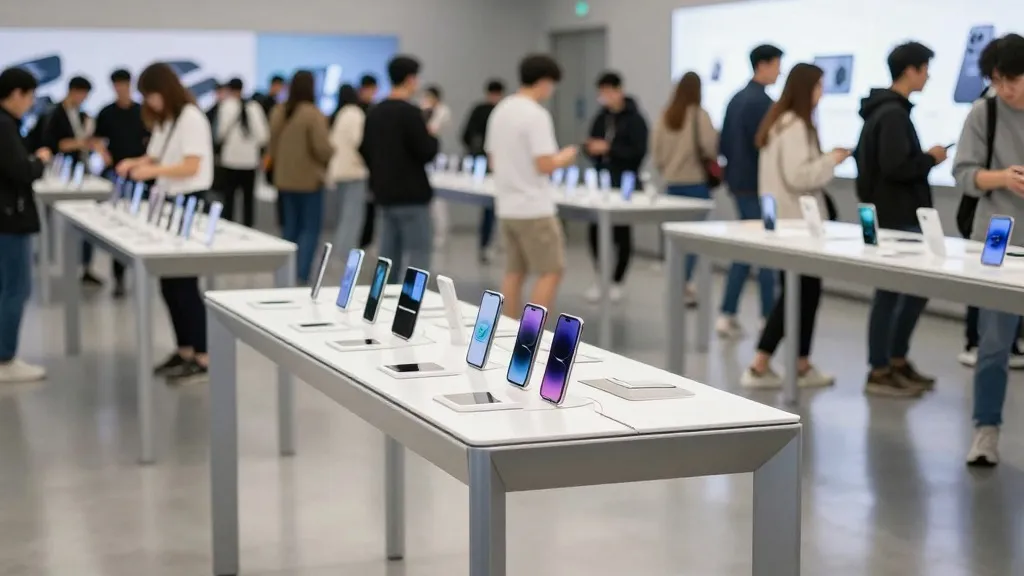
Apple kicked off the global rollout of the iPhone Duo on Friday, October 23, marking the official debut of its first foldable smartphone. The event transformed Apple Store locations into high-traffic hubs, with executives joining customers on the floor to oversee the transition from anticipation to purchase. The company highlighted the moment through a press release featuring imagery from stores around the world, underscoring the scale of the launch and the strategic importance of the new hardware category.
The central claim of the launch is that the iPhone Duo represents a significant leap for the brand, offering consumers their first hands-on opportunity to interact with a foldable device from Apple. Senior Vice President of Worldwide Marketing Greg Joswiak was present at the flagship Fifth Avenue store in New York, working alongside retail executive Vanessa Trigub to manage the crowd. Simultaneously, CEO John Ternus was in Austin, Texas, at the Domain NORTHSIDE location with retail chief Deirdre O’Brien. This dual presence suggests a coordinated effort to project confidence in the new product line, with leadership physically embedded in the retail experience to support team members and engage directly with early adopters.
However, the excitement was tempered by logistical constraints that have already created friction in the buying process. Apple had warned that in-store inventory would be limited, a prediction that proved accurate as long lines formed overnight at various locations. Shoppers hoping to secure a unit without a prior reservation found themselves waiting for hours, only to be told by store staff that stock was nearly depleted. This scarcity has turned what should be a celebratory launch into a competitive scramble for consumers who preferred the immediacy of a walk-in purchase over the uncertainty of online shipping.
For those who missed their chance at the physical store, the path forward is digital but delayed. Apple Store employees advised disappointed customers to check the Apple Store app at 10 a.m. ET the following day for updated in-store inventory details. This instruction indicates that while physical stock is tight, the company is managing the flow through a timed release mechanism to prevent total sell-outs. The decision to gatekeep inventory access suggests that demand is significantly outpacing initial retail allocations, a dynamic that will likely influence restocking strategies in the coming weeks.
The timing of the launch also aligns with other major events, adding layers of visibility to the release. Ternus’s location in Austin coincides with the Formula 1 United States Grand Prix taking place at the Circuit of the Americas this weekend. As the exclusive F1 streamer in the US, Apple benefits from heightened brand exposure during the race, potentially drawing additional attention to the new device. The convergence of these events suggests a calculated move to maximize media coverage and consumer engagement during a peak traffic period.
Open questions remain regarding how quickly Apple can replenish store shelves to meet sustained demand. While the initial launch day was successful in terms of visibility and customer turnout, the limited availability has already generated a sense of urgency among buyers. The company’s ability to balance supply chain logistics with retail expectations will be critical in the days ahead, as the iPhone Duo moves from a novelty item to a standard consumer option.
Ultimately, the launch day served as a stress test for Apple’s retail infrastructure. The combination of high-profile executive presence, strict inventory controls, and timed digital updates reveals a company managing a high-risk, high-reward product introduction. As customers navigate the next steps of the purchase process, the initial success of the debut will be measured not just by sales figures, but by the customer experience during this period of scarcity.
Source: 9to5Mac