Lee Chang-dong's 'Possible Love' probes the trust gap in documentary filmmaking
The new Netflix drama, released Friday, pairs with 'You Can See Everything' to question how much audiences can rely on filmmakers to capture unvarnished truth.
By Justin Barnes ·
Two films running nearly three hours each are challenging viewers to question the integrity of documentary filmmakers, but they approach the subject from opposite angles.
Possible Love, the new drama from acclaimed Korean director Lee Chang-dong, debuted on Netflix on Friday, November 6. The film, written by Lee and Oh Jung-mi, is a fictional story centered on a documentary project. It serves as a thematic companion to You Can See Everything, a new documentary by Lance Oppenheim and Nathan Fielder that questions the reliability of its own director.
In Possible Love, award-winning actress Jeon Do-yeon plays Mi-ok, a working-class woman who befriends documentary filmmaker Lee Ye-ji. Mi-ok agrees to participate in a film about laid-off auto plant workers. Her husband, Ho-seok, played by Sul Kyung-gu, survived a vicious union strike where authorities beat and killed several workers. Many of his colleagues took their own lives after losing their jobs. Ho-seok has grown despondent and reliant on alcohol, making him the central subject of Lee Ye-ji’s project.
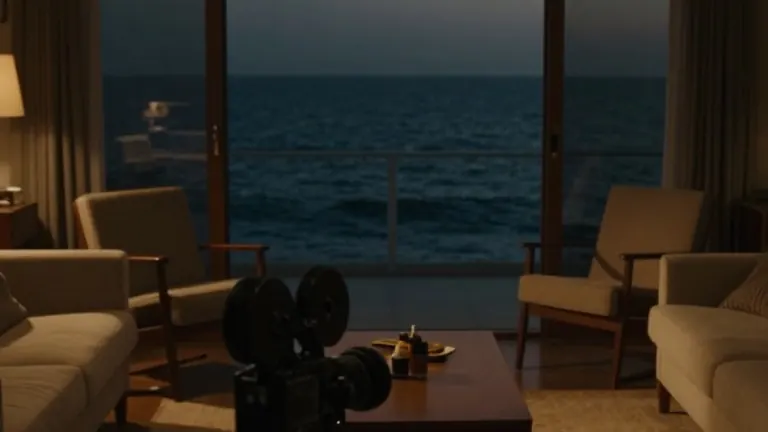
Mi-ok, lonely and seeking connection, is flattered by the attention from Lee Ye-ji and her wealthy husband, Sang-woo, played by Zo In-sung. The couple is generous, inviting the pair to a luxurious coastal home for the weekend. Mi-ok is eager to go, while Ho-seok follows reluctantly. The dynamic is awkward because Lee Ye-ji frequently asks Mi-ok to repeat meaningful conversations on camera.
The friendship appears genuine at times, with the women drinking and laughing together. However, Lee Ye-ji admits to her husband that she is calculating her affection for the sake of the documentary. By the film's end, Mi-ok and the audience recognize that Lee Ye-ji treats them as unequal. When Lee Ye-ji shares personal details, she turns the camera off. When Mi-ok has a breakdown in the woods, Lee Ye-ji hides in the trees to film her vulnerability.
You Can See Everything takes a different approach. Directed by Oppenheim and Fielder, the film focuses on Elizabeth Holmes, a convicted tech CEO fraudster. The documentary intentionally leaves viewers wondering if Fielder developed feelings for Holmes. This uncertainty unsettled many viewers, who took to the internet to debate whether the film qualifies as a true documentary.
Both productions suggest that documentary filmmakers are not neutral observers. They are artists with their own worldviews, ambitions, and biases. Possible Love invites viewers to consider the human lives behind the sob stories captured by cameras. You Can See Everything prompts audiences to question the narrative presented by the filmmaker. Neither film attacks the genre's legitimacy, but both challenge the idea that a camera guarantees truth.
The release highlights a growing skepticism toward the authenticity of documentary work. Whether the filmmaker promises authentic love to the subject or the subject promises transparency to the filmmaker, the dynamic is complex. The films argue that questioning that authenticity is the responsibility of the viewer.