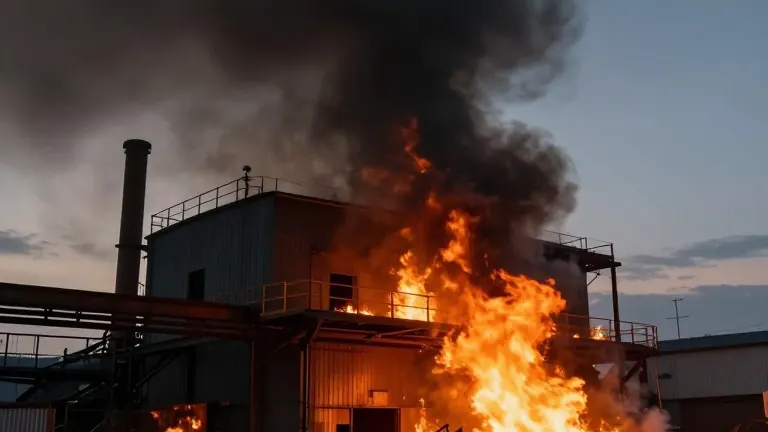
Finland warns of spillover effects as Baltic Sea drone strike hits Russian vessel
Helsinki claims the Ukraine war is expanding into its region after a cargo ship caught fire, while new agreements on drone production and winter housing shortages emerge.
By Justin Barnes ·
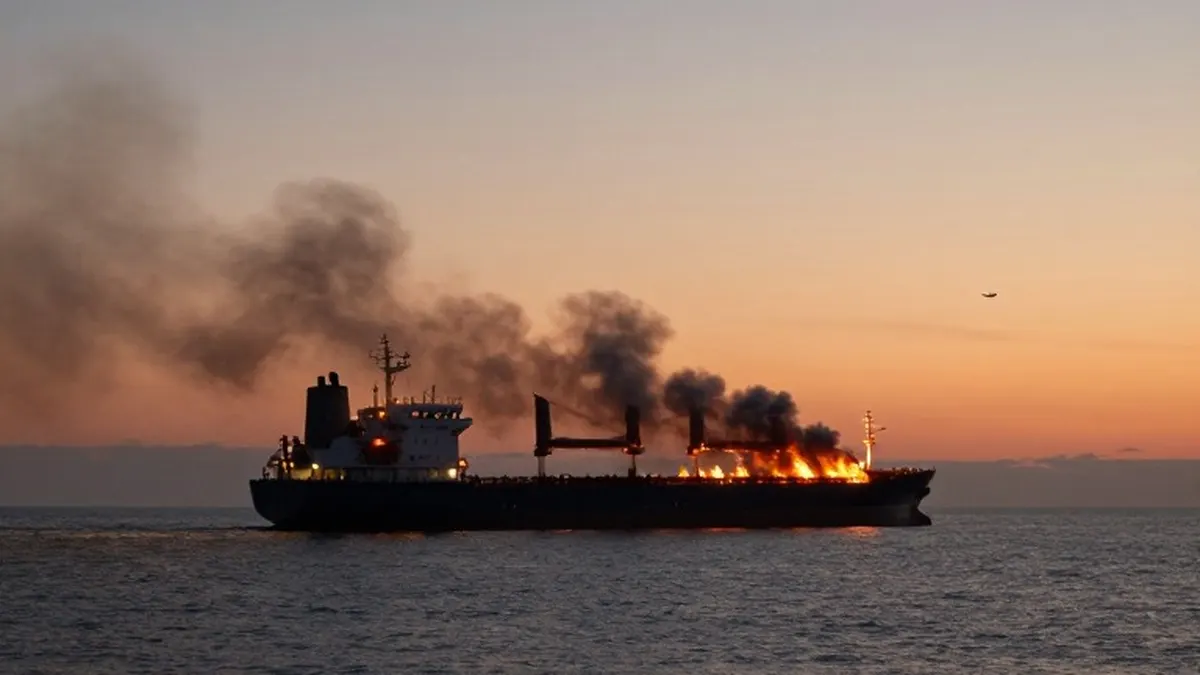
Finland has issued a stark warning that the ongoing conflict in Ukraine is spilling over into its immediate vicinity. This assessment follows an incident on Saturday in which a drone struck a Russian cargo ship, setting it ablaze in the eastern Baltic Sea. Helsinki emphasized that Kyiv retains the legitimate right to defend itself against Moscow's aggression, framing the event as a significant development in the regional security landscape.
Prime Minister Petteri Orpo stated on social media that the war is encroaching on Finland's borders. He noted that Ukraine has the right to fight back against the aggressor, referring to the conflict initiated by Moscow's 2022 invasion. Orpo suggested a direct connection between the maritime incident and the broader geopolitical tension, highlighting the vulnerability of the Baltic region.
Compounding the sense of heightened alert, Finnish Defence Minister reported that a Russian helicopter was suspected of violating Finnish airspace just hours after the ship fire. The minister drew a possible link between the two events, further supporting the narrative that the conflict is extending beyond the Ukrainian front lines.
In a separate development aimed at bolstering Ukrainian military capabilities, Ukraine and the United Kingdom finalized an agreement for the production of long-range and middle strike drones. The Ukrainian Defence Ministry announced late Saturday that these assets would be manufactured on British soil. The deal is designed to accelerate the delivery of proven defensive tools to the Ukrainian army.
Ukrainian Defence Minister Yevhenii Khmara described the partnership as a launch of projects that strengthen both nations. He explained that Ukraine brings effective defense solutions and invaluable combat experience to the table. By combining these strengths with British production capabilities, the two countries aim to scale up assets for the Ukrainian Defence Forces more rapidly.
Meanwhile, the human cost of the conflict continues to manifest in the physical infrastructure of Kyiv Oblast. Tymur Tkachenko, head of the regional military administration, reported that a five-story residential building in the Vyshhorod district was destroyed by an overnight Russian drone strike. The attack left two people injured, prompting a response from State Emergency Service units, psychologists, and emergency medical teams who worked at the scene.
As winter approaches, Ukraine faces a severe shortage of replacement windows due to persistent missile and drone attacks. Residents are left exposed to harsh cold, with temperatures in Kyiv having dropped to minus 20 degrees Celsius last winter. The situation is particularly acute in low-income districts near industrial zones, where replacement costs have soared and skilled installers are scarce.
Government assistance for repairs can take months, exacerbating the hardship for families living in damaged buildings. To address this critical need, the industry is investing in workforce training. A vocational college in Kyiv opened a European Union-funded facility in March to prepare new specialists for the construction sector.
Twenty-six tenth-grade students have begun a three-year program at the new facility to become window, door, and facade installers. This initiative was established after professional associations lobbied the government to formally recognize window installation as a distinct profession. This recognition allows the industry to access grants and create structured training courses.
According to Mykhailo Orlenko, executive director of the Association of Ukrainian Manufacturers of Transparent Structure, graduates can expect starting salaries of around $900. This wage is on par with that of law graduates, a reflection of Ukraine's acute skill drain in other sectors. In diplomatic news, British Prime Minister Andy Burnham met with Dutch Prime Minister Rob Jetten to reaffirm their commitment to supporting Ukraine. The leaders agreed on the vital need to keep pressure on Russia to bring President Vladimir Putin to the negotiation table to secure a lasting peace.