Long Island holds the densest population of threatened northern long-eared bats
State biologists say the island's mild climate supports a critical refuge for a species decimated by a fungal disease.
By Yuki Melnyk ·
Casey Pendergast, a bat biologist with the New York State Department of Environmental Conservation, monitors northern long-eared bats in Nassau and Suffolk Counties. Her research identifies the island as the state's primary remaining stronghold for the species. This concentration is notable because the population has suffered massive declines elsewhere in New York.
The primary threat to these animals is white-nose syndrome, a fungus that originated in Europe. The pathogen grows on the wings and muzzles of hibernating bats. Pendergast explains that the infection suppresses the immune system, leading to very high mortality rates. The northern long-eared bat is particularly vulnerable to this disease.
Long Island offers specific environmental advantages that help these bats survive. The region experiences a smaller temperature range than the rest of the state. Summers are less hot and winters are less cold. Pendergast notes that this stability supports a longer season of insect activity. This provides the bats with food availability throughout the winter months.
Ashley Meyer, another bat biologist with the DEC, emphasizes the ecological role of these creatures. Many people view bats as vermin or disease carriers. Meyer works to share facts about their habits with the public. She describes them as amazing creatures that require understanding.
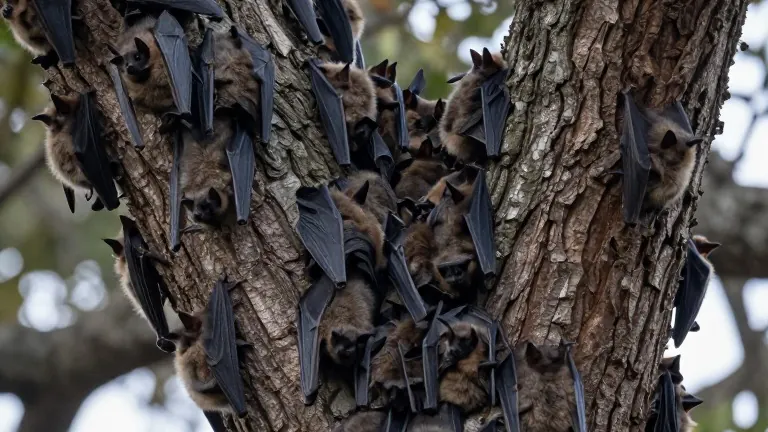
Bats are the only flying mammals on Earth. There are more than 1,400 species globally, making them the second-largest group of mammals after rodents. Nine species live in New York, and six of those are found on Long Island. A single colony of big brown bats, for example, can consume millions of insects each year.
Beyond fungal disease, the species faces other environmental risks. Habitat loss and wind energy development are key concerns. Meyer reports that many bat carcasses are found below active wind turbines. The impact is mostly seen in hibernating bats. The department is monitoring this issue closely.
The DEC advises homeowners to contact a wildlife professional if they find a bat inside. Residents should not handle the animal themselves because it can carry rabies. The agency recommends professional assistance for safe removal and assessment.
Source: WSHU Public Radio