Noaa loses 3,000 staff as historic El Niño approaches
Workforce data shows a 20% drop in personnel at the climate agency since January 2025, just as forecasters warn of intensified winter storms and rising seas.
By Justin Barnes ·
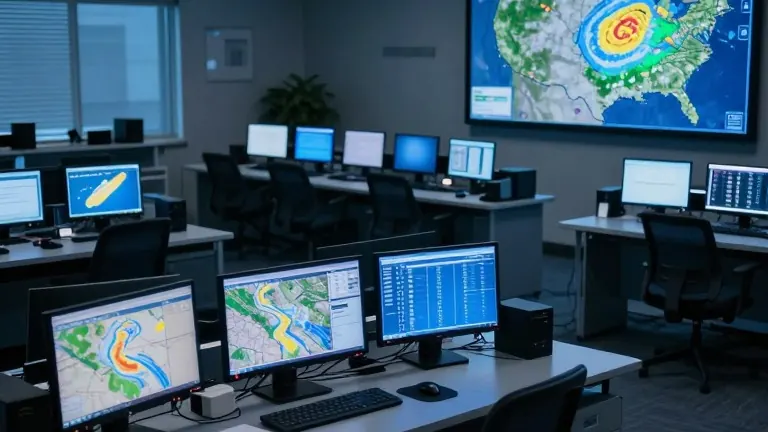
The National Oceanic and Atmospheric Administration has lost more than 3,000 employees since January 2025, a 20% reduction in its workforce that officials say has weakened the agency's ability to forecast extreme weather. This staffing drop coincides with the development of a potentially historic El Niño, a climate pattern expected to intensify across the Northern Hemisphere this winter.
Workforce data from the US Office of Personnel Management, last updated in August, confirms the scale of the attrition. The agency has hired only 525 new staff members in that period, leaving a deficit of 2,500 workers. Rick Spinrad, who served as Noaa administrator under the Biden administration, identifies staffing gaps, operational disruptions, and reduced public engagement as his top three concerns.
The National Weather Service, a key division within Noaa, has felt the impact directly. Hundreds of meteorological and technical positions remain vacant across the agency's 122 forecast offices. To maintain operations, some staff have worked double shifts. Weather stations have delayed data collection and reduced operating hours. The NWS analyzes roughly 6.3 billion observations daily and issues 1.5 million forecasts annually. With fewer people managing this workload, cracks have appeared in the system.
Specific cuts have hit critical departments hard. The public affairs team, responsible for disseminating weather information, was reduced by roughly half. Information technology management staff, who support forecasting and data infrastructure, dropped by 27%. The agency lost more than 500 staff in science positions while hiring only 46 new scientists. Meteorologist and technician numbers fell by 10% heading into autumn, despite recent efforts to refill vacancies.
These reductions have already affected public safety. The Government Accountability Office found that the NWS failed to provide adequate multilingual weather alerts due to funding and staffing cuts. This left 26 million people at higher risk during severe weather events. Earlier this year, limited warnings in rural Alaska contributed to the displacement of more than 1,500 residents by floods. In the Great Plains, delayed weather balloon launches left some communities unprepared for tornadoes.
Beyond staffing, the administration has cut funding for research and infrastructure. Noaa terminated dozens of grants, eliminating more than $28 million in funding for states, cities, and universities. Grant Witness, a tracking organization, reported that climate research grant awards for fiscal year 2026 were 37% lower than the average from 2021 to 2024. The administration also shaved roughly $6 billion off investments in weather satellites, a move the GAO says could create a gap in satellite coverage and disrupt data collection.
The current El Niño brings specific hazards to the United States. It is expected to supercharge storms in the western regions, raise sea levels in California by up to a foot, and increase the risk of debris flows, landslides, and flash floods. Tom Di Liberto, a former Noaa climate scientist and media director at Climate Central, noted that the system has not been tested since the cuts began. He warned that the country's ability to handle coast-to-coast extremes this winter is a major question.
Monica Medina, principal deputy administrator of Noaa during the Obama administration, expressed concern about the agency's capacity to protect the public. She stated, 'I worry about loss of life and about our inability to be protected at a time when we need our government the most.' She added that if this winter serves as a test of a hotter future, the country is likely to fail.
The administration has proposed further cuts for next year. President Donald Trump's budget plan includes a $1.6 billion reduction in Noaa funding, representing a 26% drop. While many of these cuts may not survive the budget process, they signal the administration's view of the agency's essential services. Di Liberto said employees are nervous about speaking out against the administration's anti-climate narrative. He described the challenge of communicating urgent data as incredibly difficult.
Experts warn that the agency is also missing a research opportunity. During the last strong El Niño, Noaa deployed planes, balloons, unmanned aircraft, and a research ship to collect data. This year, only a handful of unmanned watercraft will be deployed into the Pacific. Funding for a decade-long project using autonomous robotic devices to monitor oceans expires at the end of October. Spinrad noted that the agency has never been more capable due to technological advances, but the current actions suggest those capabilities may not be sustained.
Source: The Guardian