Senate Map: 13 Races Define Control for Trump's Final Term
Democrats need a net gain of four seats to retake the chamber, facing a Republican money advantage and new maps in six states.
By Justin Barnes ·
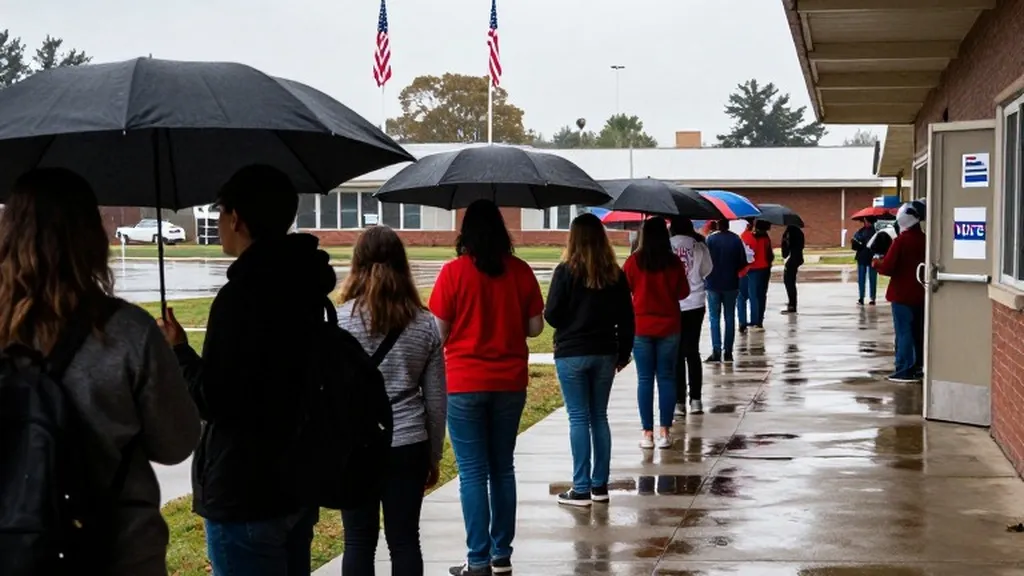
Voters across the United States are casting ballots in what the Associated Press describes as a referendum on President Donald Trump’s second term. The outcome will determine which party controls the Senate for the final two years of the administration. Thirty-five seats are up for election, including 33 regular contests and two special elections in Florida and Ohio. Republicans currently hold 53 seats, while Democrats hold 45, with two independents who caucus with the Democrats.
According to Ballotpedia, Democrats need a net gain of four seats to achieve a majority in the Senate. Republicans can lose only two seats and retain control. Eleven senators are not running for re-election, with seven Republicans and four Democrats stepping down. The winners of today’s contests will begin six-year terms on January 3, 2027, shaping the legislative agenda during a period of heightened scrutiny over the executive branch.
Thirteen races are considered battlegrounds by major rating organizations. Maine is rated a toss-up by all four major groups, including the Cook Political Report and Inside Elections. In Alaska, the race is viewed as a toss-up or lean Democratic, while Michigan and Georgia are seen as leaning or likely Democratic. Iowa and Kansas are rated as toss-ups or tilting Republican. These ratings reflect the tight margins in the 2024 presidential election, where Trump won Maine by 6.9 points for Harris and carried states like Alaska by 13.1 points.
Key matchups include former Governor Roy Cooper against Michael Whatley in North Carolina, where Thom Tillis is retiring after clashing with Trump. In Georgia, Senator Jon Ossoff faces Representative Mike Collins. Ohio features former Senator Sherrod Brown against incumbent Jon Husted. In Michigan, Democrat Abdul El-Sayed is running against Mike Rogers, whose campaign received a notable endorsement from former primary opponent Haley Stevens on Sunday. The Associated Press notes that economic strain and tariffs have made Maine competitive, where Senator Susan Collins faces Troy Jackson.
Republicans face a significant financial advantage in this election cycle. The 2026 elections are expected to be the most expensive in history, with Republican committees out-raising and out-spending their Democratic counterparts. This spending edge is driven by Trump-affiliated groups and support from Elon Musk. Analysis of AdImpact data by the AP shows that 88.1% of Republican general election TV ad spending went to states and districts Trump won in 2024. More than $850 million was spent in areas where he won by 10 points or more, signaling a strategy to lock in safe seats while attacking vulnerable incumbents.
Redistricting adds another layer of complexity to the map. Six states are using new congressional maps after mid-decade redistricting: California, Florida, Missouri, North Carolina, Tennessee, and Texas. Ohio also utilizes a new map. These changes were part of a Republican effort to beat the historical midterm pattern where the president’s party typically loses seats. However, the AP notes that new districts in Florida and elsewhere may not vote exactly as drawn, creating uncertainty for both parties as they campaign in these altered boundaries.
The mood among voters is driven by high prices and anger over an unpopular war with Iran. AP-NORC polling indicates that 35% of U.S. adults approve of Trump’s job performance, while only 25% approve of his handling of the economy. About seven in 10 Americans say the country is heading in the wrong direction, with most blaming the president for high prices. These economic concerns are central to the Democratic argument, which emphasizes cost of living and health care costs in their messaging to swing voters.
Democratic leadership expresses cautious optimism as polls open. House Democratic Leader Hakeem Jeffries has outlined a 100-day agenda focused on the cost of living and oversight if his party gains control. A strong Democratic night would boost potential 2028 candidates, including Gavin Newsom, JB Pritzker, and Pete Buttigieg. Conversely, it could complicate the path for Vice President JD Vance. If Democrats win even one chamber, investigations and possible impeachment proceedings become likely, increasing the pressure on the administration to negotiate on key issues.
Republicans are bracing to lose the House but are fighting to hold the Senate. The AP reports that one or two seats could tip either chamber. National Republican Chairman Joe Gruters stated that everything depends on turnout, emphasizing that winning requires turning out their voters. Democrats, led by DCCC Chair Suzan DelBene, argue that the American people are angry and want change. This narrative aligns with voter sentiment, as seen in comments from James Moore, a librarian in Raleigh, North Carolina, who cited higher taxes and healthcare costs as primary motivators.
Election administration faces ongoing legal challenges that could impact the final count. A federal judge temporarily barred the Trump administration from carrying out a plan to prevent noncitizen voting, a move critics say risks disenfranchising eligible voters. Another judge ordered the administration to stop demanding that California officials segregate ballots cast by people on lists of suspected noncitizens. The U.S. Postal Service has added hours and staff to ensure mail ballots are counted on time, a critical step given that more than 57 million people had already voted by Monday.
The stakes extend beyond Congress to the governor’s mansion, where Democrats aim to hold a majority for the first time in two decades. In the Senate, the balance of power hinges on specific races in states like Kansas, which has become central to the fight for control. The AP notes that Kansas is a reliably Republican state but has become a focal point for Democrats seeking to flip seats. As polls close across the country, the results will determine whether the administration faces a unified front or a divided Congress in its final two years.