Breaking: Election Day is here! Make your selections: to shape Congress and check presidential power
Voters across the nation are deciding the balance of power in Congress, with Democrats hoping to check the administration's influence on prices, health care, and the war in Iran.
By Yuki Melnyk ·
Election Day has arrived, and millions of Americans are casting their ballots to determine who will control Congress for the final two years of President Donald Trump's second term. The Associated Press describes the day as a referendum on the administration, with many citizens struggling with high prices and expressing anger over an unpopular war with Iran. According to AP-NORC polling, 35 percent of U.S. adults approve of the President's job performance, while about seven in ten say the country is heading in the wrong direction. Most of those respondents blame the President for the rising cost of goods and services.
Democratic leaders are framing the day around the immediate financial pressures facing families. Rep. Suzan DelBene, the chair of the Democratic Congressional Campaign Committee, stated that the American people are angry and that they want change. This sentiment is echoed by voters on the ground. James Moore, a 57-year-old librarian in Raleigh, North Carolina, summarized the mood by noting that he is paying more in taxes, more for his health care, and more for everything else. These economic concerns are central to the Democratic strategy as they fight to gain control of at least one chamber of Congress.
The stakes for the House of Representatives are high, as all 435 seats are up for election. Republicans currently hold 218 seats, while Democrats hold 214. Democrats need a net gain of three districts to achieve a majority, a goal that many believe is within reach given the current political climate. Ballotpedia counts 46 battleground districts in the House, with 25 of those currently held by Democrats. If Democrats secure the House, House Leader Hakeem Jeffries would become the first Black speaker and has already outlined a 100-day agenda focused on the cost of living and oversight of the administration.
In the Senate, 35 seats are on the ballot, including 33 regular elections and two special elections. Republicans hold 53 seats, while Democrats hold 45, plus two independents who caucus with the Democratic side. Democrats need a net gain of four seats to take control of the chamber. The Associated Press notes that one or two seats could tip the balance in either chamber. Key matchups are occurring in states like North Carolina, where former Governor Roy Cooper faces Michael Whatley, and in Georgia, where Senator Jon Ossoff is running against Representative Mike Collins.
Governors' races are also a focal point, with 36 governorships up for election. Democrats are hoping to hold a majority of governorships for the first time in two decades. According to Ballotpedia, Democrats would need a net gain of two governorships to achieve a nationwide majority. In Georgia, Keisha Lance Bottoms is running against Rick Jackson, while in Nevada, Aaron Ford is challenging Joe Lombardo. The Associated Press identifies Texas, Florida, and Iowa as competitive governor races that will be closely watched today.
Despite the momentum on the ground, Democrats face significant obstacles, particularly regarding campaign finance. The 2026 elections are likely to be the most expensive in history, according to the Associated Press. Republican committees have outraised and outspent their Democratic counterparts, aided by Trump-affiliated groups and Elon Musk. An analysis of AdImpact data shows that 88.1 percent of Republican general election TV ad spending went to states and districts that Trump won in 2024. This financial advantage is a major hurdle for Democrats, who are relying on strong grassroots turnout to offset the spending disparity.
Redistricting also plays a role in the dynamics of the day. Six states, including California, Florida, and Texas, are using new congressional maps following mid-decade redistricting. Republicans attempted to use these new maps to beat the traditional midterm pattern of losing seats, but the Associated Press notes that the new districts in Florida and elsewhere may not vote as originally drawn. This uncertainty adds a layer of complexity to the races in these key states, where the margins of victory in the 2024 presidential election were often narrow.
The administration has been active in shaping the narrative, with President Trump holding dozens of rallies in the lead-up to today. He ended his recent tour in Salina, Kansas, telling supporters to pretend he is on the ballot. He has also continued to make claims about voting fraud, including that noncitizens vote in large numbers. His administration has sued in Alaska and California regarding the certification of results, leading some Democrats to fear interference and intimidation as the Justice Department threatens to prosecute local election officials.
Voters are turning out in large numbers to make their voices heard. More than 57 million people had already voted as of Monday, surpassing the early vote totals from four years ago in many closely watched states. The Associated Press reports that Republicans are bracing to lose the House and are fighting to hold the Senate, while Democrats are described as cautiously optimistic. The day is about more than just party control, as Wall Street is also watching for signals regarding debt ceiling negotiations and investor concerns about AI spending.
Administrative efforts are underway to ensure a smooth voting process. A federal judge temporarily barred the Trump administration from carrying out a plan to prevent noncitizen voting, a move that critics said could risk disenfranchising eligible voters. The judge also ordered the administration to stop demanding that California election officials segregate ballots from people on lists of suspected noncitizens. The U.S. Postal Service has added hours, staff, and special lines to ensure that mail ballots are counted on time, providing an additional layer of support for voters.
Voters across the country can find their polling place at vote.gov or by contacting their state election office. Polling hours vary by state, so it is important to check local times before heading out. For example, in North Carolina, polls are open from 6:30 a.m. to 7:30 p.m., while in New York, they are open from 6 a.m. to 9 p.m. In states like California and Oregon, voting is largely by mail, but in-person options are also available. ID rules vary by state, so voters should verify their specific requirements before going to the polls.
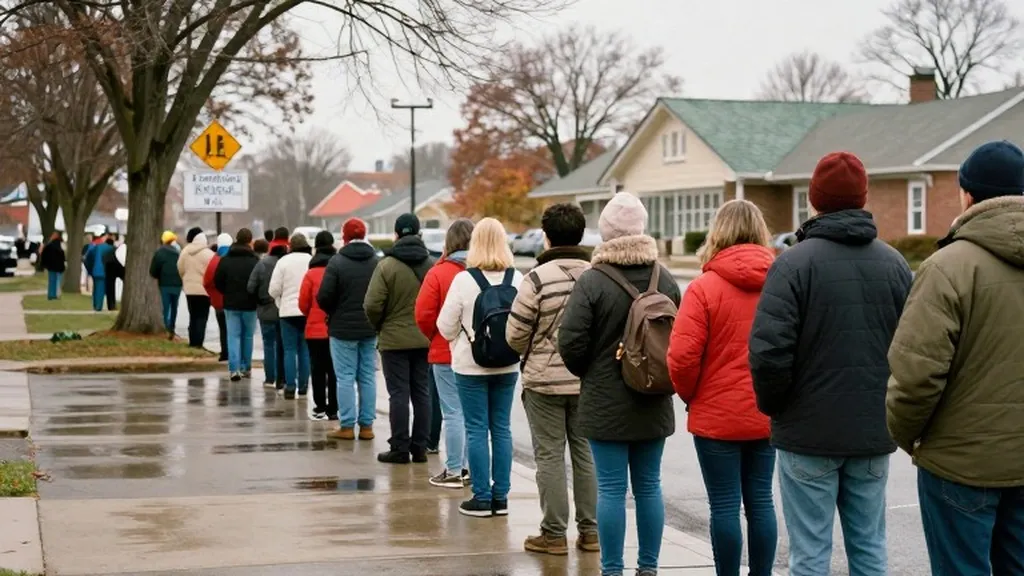
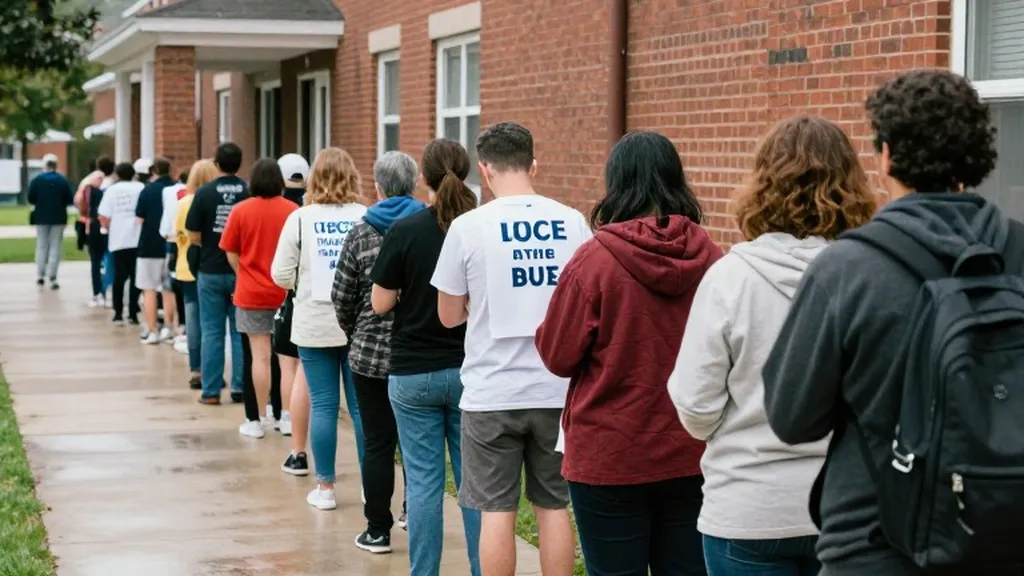
One of the most important rules for voters today is to stay in line. Anyone who is in line when the polls close is entitled to cast their ballot. This ensures that late-arriving voters are not turned away and that every voice is counted. The day is a critical moment for deciding the direction of the country, with voters weighing the cost of living, health care access, and the administration's handling of foreign policy. As the day progresses, the nation will see which party gains the leverage needed to shape the final two years of this presidential term.