Trump's Midterm Gamble: Rallies, Fraud Claims, and Distance
As polls open, the president's low approval ratings and aggressive rally schedule contrast with Republican candidates' caution and the administration's legal battles over voting.
By Yuki Melnyk ·
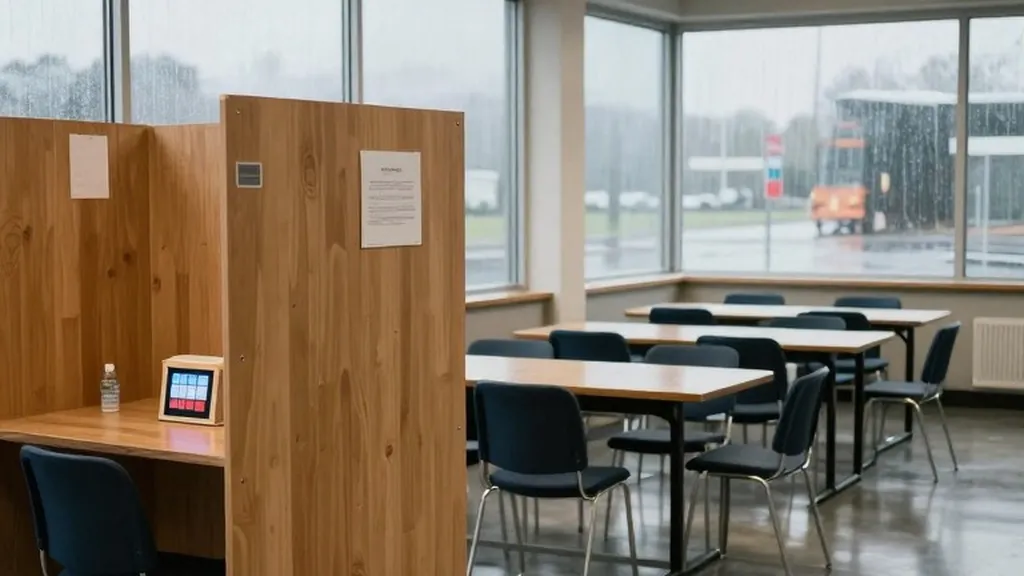
Voters across the nation are casting ballots on Election Day, Tuesday, November 3, 2026, to decide the control of Congress for the final two years of President Donald Trump's second term. The Associated Press describes the day as a referendum on the administration, with many voters expressing frustration over high prices and an unpopular war with Iran. More than 57 million people had already voted as of Monday, a figure that surpasses early vote totals from four years ago in many closely watched states. The outcome will determine whether the president's party retains its grip on power or faces increased oversight from the opposing party.
President Trump has been actively engaged in the campaign, holding dozens of rallies in the days leading up to the vote. His schedule included stops in Mississippi, South Carolina, and Texas, culminating in a rally in Salina, Kansas, on Sunday. During that event, he urged supporters to engage in a specific form of political theater, telling them to pretend he was on the ballot. This high-profile presence stands in contrast to the behavior of many Republican candidates, who have largely kept their distance from the president in recent weeks. This strategic distancing reflects a broader tension within the party as they face a challenging electoral landscape.
The political mood is shaped by stark polling numbers that favor the Democrats. An AP-NORC poll released on November 3 indicates that only 35 percent of U.S. adults approve of Trump's job performance. Approval of his handling of the economy is even lower, with only 25 percent expressing a positive view. Furthermore, about seven in ten adults say the country is heading in the wrong direction, and most of those voters blame the president for high prices. These figures provide a significant tailwind for Democratic candidates who are positioning themselves as the choice for change and economic relief.
Despite the favorable polling for Democrats, Republicans are bracing for a potential loss of the House while fighting to hold the Senate. The Associated Press notes that the margin of victory could be narrow, with one or two seats potentially tipping either chamber. Democrats, for their part, are described as cautiously optimistic. They need a net gain of three districts in the House and four seats in the Senate to achieve majorities. In the governorships, Democrats hope to hold a majority for the first time in two decades, having lost that control since 2010.
The administration has also been active in legal arenas, continuing to make claims about voting fraud that experts have labeled false. These claims include the assertion that noncitizens vote in large numbers. The Trump administration has sued in Alaska and California, and Democrats have expressed fear of interference and intimidation. This anxiety is compounded by the Justice Department's threats to prosecute local election officials. On Monday, a federal judge temporarily barred the administration from carrying out a plan to prevent noncitizen voting, a move critics say risks disenfranchising eligible voters and infringes on state authority.
Money plays a decisive role in these elections, which are likely to be the most expensive in history. Republican committees have outraised and outspent their Democratic counterparts, helped significantly by Trump-affiliated groups and billionaire Elon Musk. An analysis of AdImpact data by the Associated Press shows that 88.1 percent of Republican general election TV ad spending went to states and districts that Trump won in 2024. This includes more than 850 million dollars spent in areas where his margin of victory was ten points or more. However, at the candidate level, Democrats managed to outraise their opponents, suggesting a different dynamic in direct voter appeals.
The stakes extend beyond simple party control. If Democrats win even one chamber, investigations and possible impeachment proceedings become likely. House Democratic Leader Hakeem Jeffries has outlined a 100-day agenda focused on the cost of living and oversight, and he would become the first Black speaker of the House if his party secures the majority. A strong Democratic night would also boost potential 2028 candidates such as Gavin Newsom, JB Pritzker, and Pete Buttigieg. Conversely, it could complicate the path for Vice President JD Vance, who is seen as a key figure for the Republican future.
Redistricting has also played a role in shaping the competitive landscape. Six states, including California, Florida, Missouri, North Carolina, Tennessee, and Texas, are using new congressional maps after mid-decade redistricting. Ohio also uses a new map. Republicans tried to beat the traditional midterm pattern, which usually sees a president's party lose seats, by utilizing these redistricting efforts. However, the Associated Press notes that new districts in Florida and elsewhere may not vote as they were drawn, adding another layer of uncertainty to the results.
For voters in the field, the issues are personal and immediate. James Moore, a 57-year-old librarian in Raleigh, North Carolina, told the Associated Press that he is paying more in taxes, more for healthcare, and more for everything. His sentiment captures the frustration felt by many Democrats who view this election as a chance to address the cost of living. In contrast, Mark Barker of Palm Beach Gardens, Florida, said he has been following Trump the whole time and believes he is doing an awesome job. These divergent views highlight the deep divisions that will be reflected in the final tallies.
The U.S. Postal Service has added hours, staff, and special lines to ensure that mail ballots are counted on time, a crucial step in a cycle where early voting was so robust. Wall Street is also watching the results closely, with Reuters noting that the outcome could add to investor concerns about AI spending and debt ceiling negotiations. The election is not just a domestic political event but a significant economic indicator as well. As polls close across the country, the focus turns to the battleground states where the narrow margins could decide the balance of power for the next two years.