State admits Hebron shops were demolished without court hearing
Officials told the High Court that military urgency drove the removal of commercial structures near a recent attack site, a move petitioners call collective punishment.
By Elena Greco ·
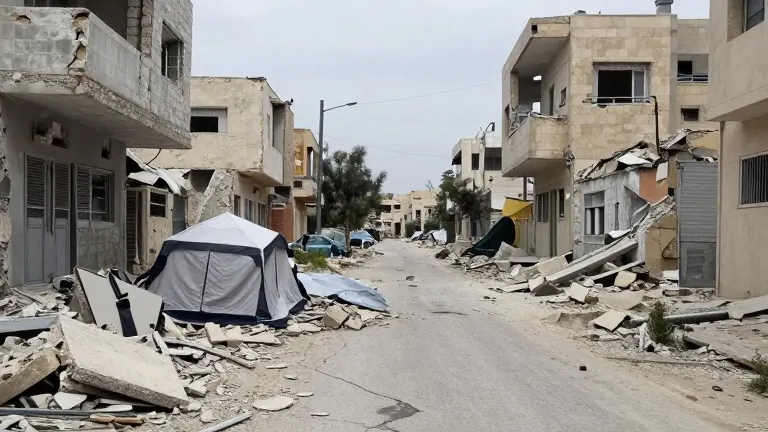
The Israeli state acknowledged on Sunday that military forces demolished parts of two business premises in Hebron without providing a prior court hearing. This admission appears in a legal response to the High Court of Justice regarding commercial property near the city's northern entrance.
The legal dispute began after an attack on October 23 resulted in the death of two IDF soldiers. In the days following the incident, the military implemented a broader evacuation of Palestinian residents and imposed movement restrictions across the city. The current petition focuses specifically on the destruction of commercial compounds rather than the residential displacement.
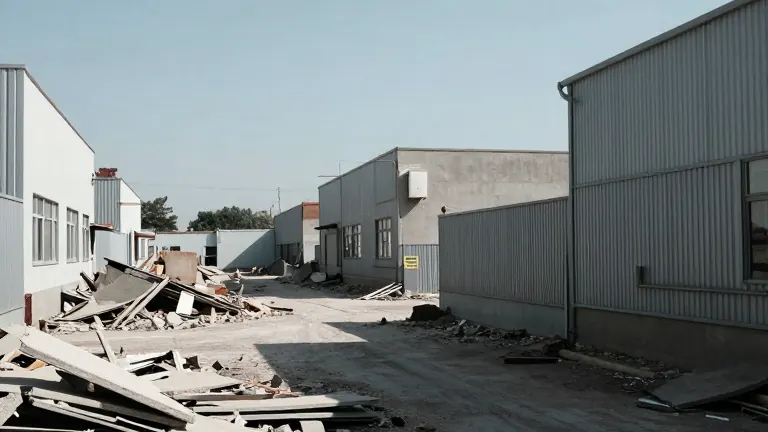
Mustafa and Sufian Qawasmeh, along with the Al-Quds ceramics and sanitary ware company, filed the petition through attorney Muhammad Dahleh. The property in question covers approximately 17 dunams and includes offices, display areas, and stored merchandise. The owners argue that the demolitions constitute collective punishment because their businesses had no involvement in the attack.
The state responded that the military commander considered the work urgently necessary. It stated that the terrorists used a factory at one of the premises as cover and fired from behind a corrugated fence and equipment. The military assessed that construction near the checkpoint posed an immediate security risk. The work included removing fencing at the site used by the attackers and demolishing a fence and an office container at the opposite compound.
The state explained the lack of a formal notice by citing an administrative error. Officials said they had orally explained the intended work to the owners and allowed them time to remove merchandise. The state also referenced a demolition order issued in August 2012 for the fence and office at the second compound, though it did not detail the enforcement history between then and now.
Petitioners countered that soldiers instructed the owners to remove goods ahead of the demolition without providing a written order. They claimed the business was closed on Friday except for a guard, and that the gunmen had climbed over a locked gate. The owners denied knowing about the attack in advance or assisting the attackers.
Justice Gila Canfy Steinitz initially directed the state to respond on Friday. She expected the state to refrain from changing the existing situation pending a further decision. The state confirmed that the demolition work took place before the petition and the court's decision reached the authorities. Work stopped immediately upon receipt of the court order.
The state said no further demolition is immediately planned at either compound. Any subsequent enforcement against unlawful construction would follow applicable procedures. This legal proceeding occurs amid a wider dispute over military actions in Hebron following the October 23 attack.
The Association for Civil Rights in Israel sent a separate legal letter to the military. It demanded that displaced residents be allowed to return and that movement restrictions be lifted. ACRI executive director Noa Sattath stated that no attack, however grave, gives the military license to punish an entire city. The group cited Palestinian authorities who reported that approximately 1,500 Palestinians had been forced from their homes.
The IDF described the civilian departure differently in information provided to reporters. It stated that residents who wished to leave temporarily were permitted to do so through designated checkpoints. The military estimated that approximately 2,000 people lived in the area and were part of the Jaba'a clan. It said forces had searched approximately 200 sites and arrested 10 suspects. The military characterized the demolitions as enforcement against unlawful construction and the removal of potential security risks.
Source: The Jerusalem Post