Syrians protest after incursions and death of disabled man
Public rallies across Syria highlight growing frustration with Israeli military activity in the south, driven by recent strikes and a high-profile killing.
By Kavya Kapoor ·
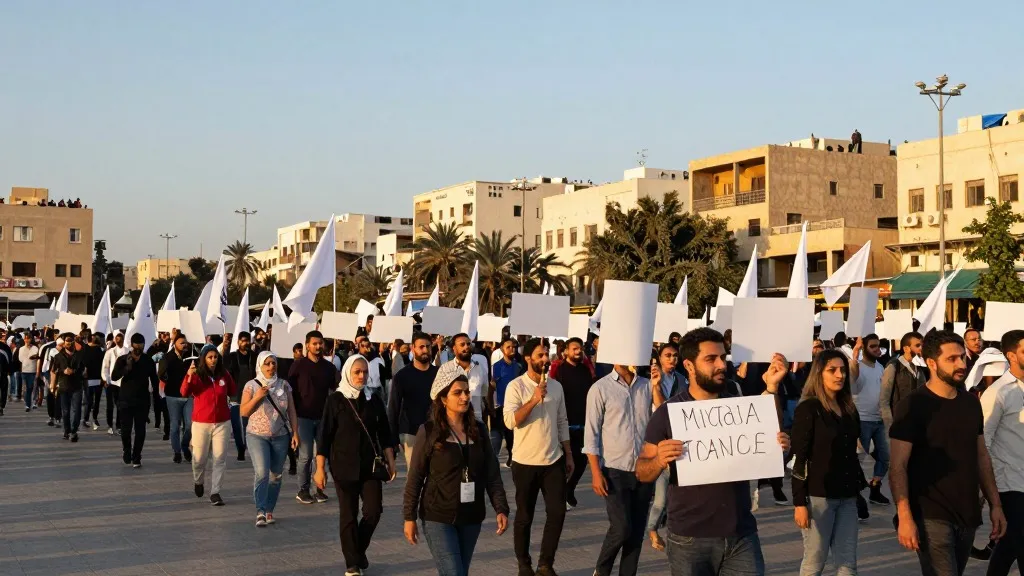
Syria has experienced a shift in its geopolitical standing since December 2024, when the new government took power after the fall of Bashar al-Assad, a transition that has coincided with increased military activity in the border regions. On Friday, this tension boiled over into widespread public demonstrations as citizens across the country gathered to voice their opposition to recent Israeli military operations.
The primary focus of these protests was the repeated incursions by Israeli forces into southern Syria, specifically in the provinces of Quneitra and Daraa. The rallies were triggered by a series of events earlier this week, most notably the killing of a man with a disability during a military operation. This incident has become a central point of contention for the demonstrators, who view it as a symbol of the broader impact of these incursions on civilian life.
State media reported that significant crowds gathered in the capital, Damascus, as well as in the central city of Homs. These groups came together to denounce what they described as aggressive actions by Israel in the southern provinces. The scale of the gatherings suggests a unified national response to the military developments on the ground.
In the city of Daraa, an AFP correspondent observed hundreds of participants at one of the rallies, with many waving Syrian flags to show their national unity. The atmosphere was marked by a strong sense of collective purpose. Taysir al-Hariri, a protester present at the event, explained to the agency that the group aimed to send a clear message to the international community. He stated that Syria stands united against Israeli incursions and against anyone tempted to tamper with national security.
Visual evidence from state television broadcasts showed marchers carrying posters with the slogan, We are all Moaz. This phrase refers to the man with special needs who, according to Syrian officials, was killed by Israeli fire a day before the rallies. His death has served as a rallying cry, humanizing the conflict for many citizens and emphasizing the personal cost of the military presence in the south.
Beyond the specific incident involving Moaz, other families were also making their presence known. Outside a United Nations building in Damascus, the family of a Syrian man who had been seized by Israeli forces called for his release. The scene included children holding up posters that read, I want my dad, adding a poignant human element to the political demands being made by the crowd.
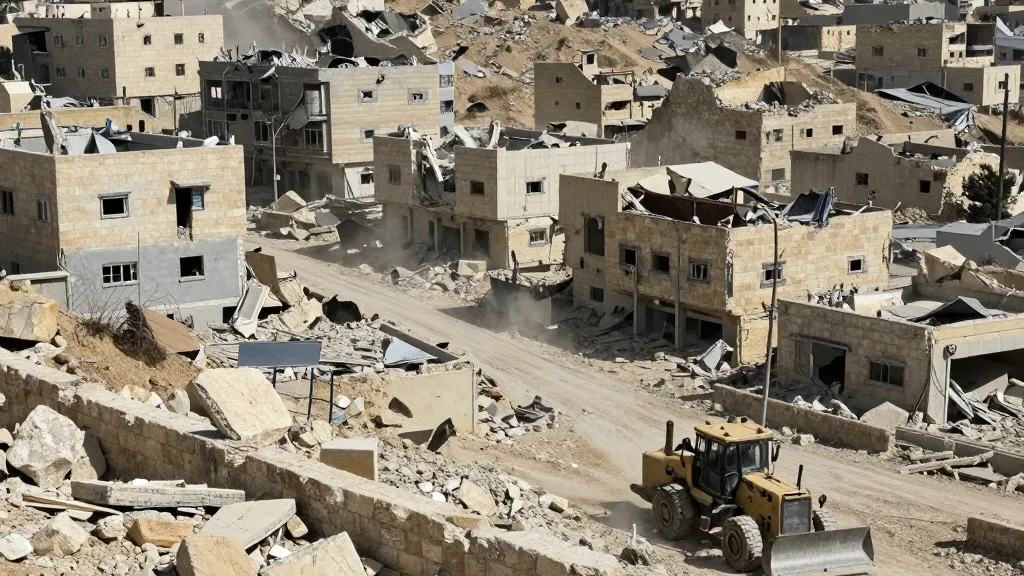
State media also reported on Friday that Israeli forces had advanced into part of Quneitra province, where they blocked several key roads. The military presence involved the bulldozing of olive groves, the establishment of checkpoints, and the detention of local residents. These actions have disrupted daily life and agricultural activities in the affected areas, contributing to the public's sense of urgency.
The current situation is part of a larger pattern of activity since the change in government. The Israeli military has carried out hundreds of strikes within Syria and made frequent incursions into the country's territory. Additionally, troops were sent into a United Nations-patrolled buffer zone that had separated Israeli and Syrian forces on the Golan Heights since 1974. This move signaled a significant shift in the strategic dynamics of the region.
Israel has maintained that it will keep troops in a designated security zone in southern Syria. The stated goal is to establish a broader demilitarized area to enhance its own security. However, the recent protests indicate that the Syrian public is closely monitoring these developments and is prepared to mobilize when they perceive their national sovereignty or the safety of their citizens to be at risk.
These rallies represent a significant moment in the early days of the new Syrian government, as it navigates the complex relationship with its neighbor. The combination of military actions, civilian casualties, and the detention of individuals has created a potent mix of grievances. As the situation evolves, the frequency and intensity of these protests may serve as a key indicator of domestic sentiment regarding the southern border.
Source: Middle East Eye