Thirteen dead at Yemen market as Houthis tighten grip on Taiz
Saudi-led airstrikes struck a crowded bazaar in al-Hazm, while government officials in Taiz reported a loss of 3 million liters of water and an encirclement by rebel forces.
By Yuki Melnyk ·
The conflict in the Arabian Peninsula expanded on Wednesday as multiple fronts reported violence, from a crowded bazaar in the north to a besieged city in the south. The day brought a mix of airstrikes, ground combat, and a diplomatic push by regional powers to manage the escalating tensions.
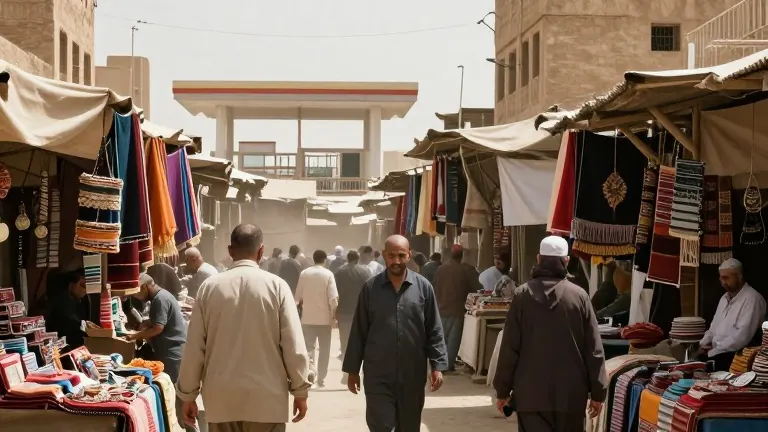
Houthi officials reported that Saudi-led airstrikes hit a central market in al-Hazm, the capital of al-Jawf province. The attack occurred while the market was full of shoppers and near a gas station. The Houthi-run Health Ministry stated that the strikes killed 13 people and wounded 16 others. Among the injured were three women. The ministry said that shops and nearby houses suffered heavy damage and called the attack a war crime that requires an international investigation. The Saudi-backed Yemeni government did not issue an immediate statement.
In the southern city of Aden, explosions shattered windows at the airport building and in nearby homes. An Associated Press reporter witnessed the blasts after Houthi military spokesman Yahya Saree urged airport staff to evacuate. Saree claimed a Saudi military cargo plane carrying weapons was at the airport, though he provided no evidence for the claim.
At the same time, the siege of Taiz intensified. Yemeni government officials appealed to the international community for help to protect civilians and reopen roads into the city. Taiz province has become a major battlefront in recent weeks. The city, which serves as a gateway to the south, has absorbed about half of the population displaced by the latest fighting. This influx has strained the city's limited resources.
Nabil Shamsan, the Taiz governor, said residents lost access to approximately 3 million liters of water, equivalent to 793,000 gallons, from wells in Wadi al-Dhubab. He stated that the area is now under Houthi control. The Associated Press was unable to independently verify that claim. Shamsan added that fighting had intensified across the province as Houthis deployed reinforcements to multiple fronts, leaving the city encircled on all four sides.
Eshraq al-Maqtari, a legal affairs minister in Yemen’s internationally recognized government, said more than 2,000 projectiles and explosives fired by Houthis had struck Taiz city districts in recent days. She called for measures to cut off the rebels' weapon supplies and funding.
In Gaza, two Israeli strikes in the south killed one person and wounded at least six others, according to health officials at Nasser Hospital. The first strike killed one man and critically wounded a woman. A second strike wounded at least five others. More than 1,550 Palestinians have been killed by the Israeli military since a ceasefire with Hamas began in October 2025, according to the territory’s health ministry.
In Belgrade, Serbia, a police officer guarding the Israeli Embassy shot and killed a man who attacked him with knives just after midnight. Police described the incident as a terrorist attack. Serbia’s Interior Minister Ivica Dacic said the attacker was a minor who shouted Allahu Akbar during the assault. Dacic said the officer, who was slightly wounded in the face, killed the assailant in self-defense. Police raised the terror threat to the highest level and increased their presence at key locations.
Diplomatic efforts continued in the region. Iranian Foreign Minister Abbas Araghchi said a Monday meeting in Tehran with Saudi Arabia, Pakistan, and Turkey provided an opportunity to advance dialogue. He argued that the countries should be responsible for their own security without the military presence of extraregional powers. In Egypt, Foreign Minister Badr Abdelatty held telephone calls with his Saudi and Emirati counterparts to discuss political solutions. Egypt recently approved military support for Saudi Arabia to defend against Houthi attacks.
Source: Boston Herald