Tulane professor tells Stony Brook scholars to create their own paths
A November 18 workshop at Stony Brook University pushed graduate students and postdocs to map their existing skills and networks rather than waiting for traditional academic jobs.
By Elena Greco ·
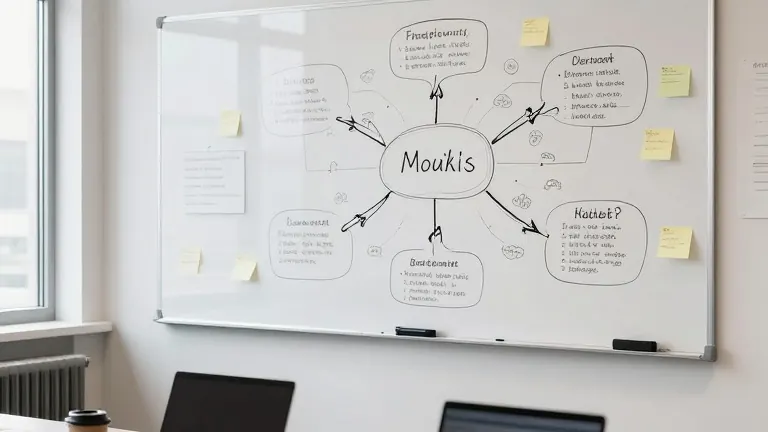
Ilana Horwitz, an assistant professor at Tulane University, told graduate students and postdocs at Stony Brook University on November 18 that their primary role is to produce knowledge instead of simply consuming it. The session was part of a workshop titled Becoming an Entrepreneurial Scholar.
More than 15 students from various degree levels, along with faculty and staff, participated in the event. Horwitz, author of The Entrepreneurial Scholar: A New Mindset for Success in Academia and Beyond, defined entrepreneurial work as creating ideas with limited resources while navigating uncertainty. She urged participants to stop waiting for ideal conditions or a perfectly mapped career path.
Instead of relying on traditional metrics, attendees were asked to answer a specific prompt: Given who I am, what I know, who I know, what opportunities can I create? Participants completed a personal asset map to identify their intellectual capital, human capital, and social capital. They then paired up to share these assets and practice giving and receiving feedback.
The workshop challenged attendees to view careers outside of academia as meaningful options rather than backup plans. Horwitz noted that fewer than two percent of people who begin a PhD will secure a tenure-track position. She encouraged scholars to consider how their skills translate into other fields of work.
Yashwanth Pateel, an electrical engineering student, said the session allowed him to pause and reassess his goals. After working in managerial roles at startup teams, Pateel had believed success required persevering through any circumstance. He said he had not previously stopped to reflect on his past experiences or give himself credit for those assets.
Kevin Chang, a postdoc in biochemistry, stated that the workshop helped participants step back from the usual busywork of academia. Chang said the exercise allowed researchers to think about how to use their skills and connections to achieve their specific goals.
Alexandra M. Good, a postdoctoral researcher in the School of Marine, Atmospheric, and Sustainability Sciences, found the path from PhD to postdoc uncertain. She left the workshop with manageable next steps, including sharing ideas and inviting feedback.
Horwitz’s visit included a breakfast with the inaugural Yardi Scholars, a honors program for first-generation College of Business students. Cindy Yang, a PhD candidate, said Horwitz’s response to questions about stress was inspiring because it acknowledged the difficulties successful women face. David Wrobel, dean of the College of Arts and Sciences, called the day a wonderful opportunity to reimagine the scale of opportunity for graduate students and faculty. Celia Marshik, dean of The Graduate School, noted that Horwitz’s book draws on more than 43 interviews with people at different career stages.