Anthropic's $900 Billion Compute Bill
The company behind Claude faces massive infrastructure costs and a changing market as open models challenge premium pricing.
By Elena Greco ·
Anthropic has priced its initial public offering at a valuation between $1.3 trillion and $1.4 trillion. This figure is lower than the $2 trillion peak suggested earlier this year. The company is preparing for its November 10 listing. The price tag raises questions about how the company will cover its massive future expenses.
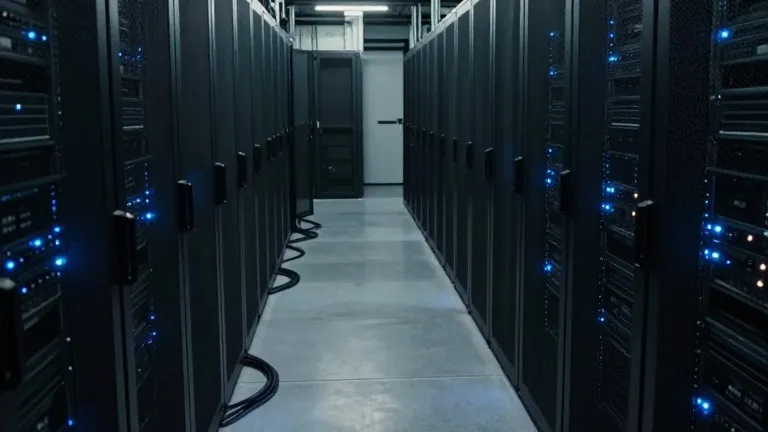
The path to this valuation involves significant financial commitments. Anthropic disclosed nearly $900.9 billion in purchase commitments and lease agreements. These are largely for computing infrastructure. About $70.7 billion is due within 12 months of September 30, 2026. A larger portion, roughly $451.6 billion, is expected to be incurred before the end of 2030. The remainder stretches out through 2045. These figures come from the company's own securities disclosures.
Revenue growth is rapid but not yet profit. The company's annualized revenue run rate reached approximately $81 billion in October. This is far above the $20 billion figure often cited in public discussions. However, revenue is not profit. The company must still pay for computing, research, personnel, electricity, and facilities. A trillion-dollar valuation requires a belief in future extraordinary profits. That belief has not yet been proven by cash flow.
The cost of hardware is a major factor in these calculations. A single high-end GPU can cost about $20,000 at retail. In an illustrative scenario, one such chip might serve 15 to 20 light users or a few heavy coding users. If 20 light users pay $20 monthly, that generates $400 a month. Recovering the $20,000 cost of the GPU alone would take 50 months. This calculation does not include electricity, servers, maintenance, or staff costs. Even at a hypothetical wholesale price of $4,000, the break-even period is ten months.
Nvidia holds a dominant position in this ecosystem. The company supplies the accelerators and software foundations that most AI models rely on. In September 2026, Nvidia agreed to acquire Hugging Face for approximately $12.93 billion. The deal is expected to close in 2027. Hugging Face is a central platform for developers to distribute models. Critics argue that Nvidia controlling both the hardware and the distribution channel could limit competition. Nvidia promises the platform will remain open, but regulatory scrutiny is likely.
Open-weight models are changing the market dynamics. Projects from companies like DeepSeek, Alibaba, and Moonshot AI offer advanced capabilities without a subscription fee. These models can be run on privately controlled infrastructure. This reduces dependence on expensive centralized services. A developer can run an AI assistant on local hardware. A business can deploy a coding tool internally. This accessibility challenges the assumption that customers will pay premium prices for proprietary access indefinitely.
Quantization technology makes local deployment more feasible. This process reduces the memory required to run large models. A model with 200 billion parameters needs about 400 GB of memory at 16-bit precision. At 4-bit precision, it needs only about 100 GB. This allows models to run on cheaper equipment. It does not guarantee the same performance as frontier models, but it gives users more choices. Choice is essential for a competitive marketplace.
The coming months will test Anthropic's financial strategy. The company must generate enough cash to meet its $900 billion in commitments. Investors will watch closely to see if revenue growth translates into sustainable profits. The rise of open models and the consolidation of hardware power will shape the industry's future. For working people and consumers, the key question is whether the cost of using AI will remain high or if local options will drive prices down. The answers will determine who benefits from this technological shift.