Manchester Guardian’s 1956 Suez Coverage Defied Government Pressure
The paper’s editorial opposition to the 1956 military campaign increased circulation despite Prime Minister Anthony Eden’s attempts to suppress its reporting.
By Elena Greco ·
The Manchester Guardian took a direct stand against the British government during the 1956 Suez Crisis, a position that led to increased readership despite political hostility. The paper opposed the military intervention in Egypt from the beginning, a stance that set it apart from much of the British press at the time.
The conflict began in July 1956 when Egyptian President Gamal Abdel Nasser nationalized the Suez Canal Company. This company had been a joint British and French enterprise since 1869. Britain and France, viewing the move as a threat to their interests, coordinated a military response with Israel. Israeli forces entered the Sinai desert on October 29, 1956. Two days later, British and French forces began bombing Egyptian military targets.
Under the leadership of newly appointed editor Alastair Hetherington, the Guardian voiced strong dissent against the campaign. The paper described the ultimatum given to Egypt as an act of folly. By early November 1956, the editorial tone had grown sharper. The paper labeled the government’s actions as hideously miscalculated and utterly immoral. It argued that the government ordered an attack without just cause, calling the situation a disaster of the first magnitude.
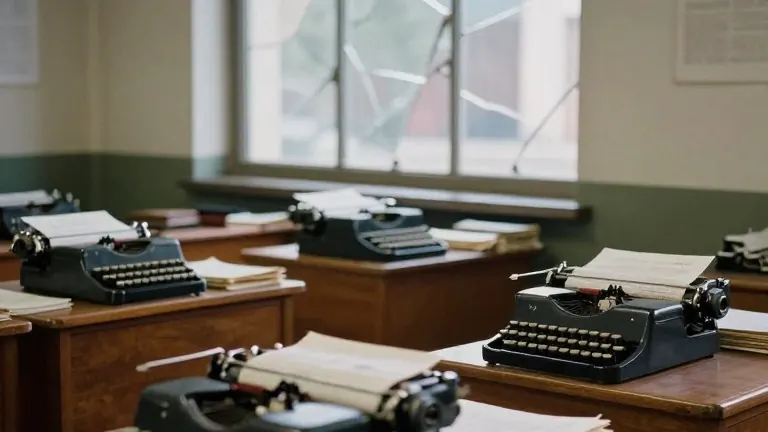
Prime Minister Anthony Eden felt the pressure of the paper’s criticism. He attempted to prevent the BBC from quoting the Guardian’s reports. Eden also sought to ban the paper’s diplomatic correspondent, Richard Scott, from appearing on the airwaves. The tension extended to the public, with a plateglass window in the paper’s Fleet Street office in London being smashed in a symbolic act of frustration. Historian David Ayerst noted that reporters often faced hostility while covering the story.
The diplomatic strain on the coalition forces led to a shift in the conflict’s trajectory. On November 6, 1956, Britain and France accepted a United Nations mandated ceasefire. The ceasefire took effect at midnight on November 7, following an announcement by the prime minister in the Commons. Allied troops had advanced to positions 30 miles south of Port Said by the time the fighting stopped. The prime minister stated that the ceasefire was subject to confirmation by Egypt and Israel, which the UN Secretary-General provided from New York.
Internal political dynamics in Britain shifted as the crisis unfolded. By November 7, 1956, both those who had wanted a full commitment to the war and those who wished it had never started were examining the government’s decision to halt. Conservative MPs expressed gloom, fearing that Arab states would claim Israel had beaten Egypt, while Egypt had beaten Britain. Loyalists felt relief that the government had reversed its antagonizing of the United States and avoided the risk of being bogged down in the Middle East.
The United Nations deployed an emergency peacekeeping force into Egypt on November 7, 1956, to solidify the halt in hostilities. Egypt was granted full ownership and sovereignty of the canal, which reopened to shipping in April 1957. The outcome validated the Guardian’s early skepticism of the military adventure.
Contrary to fears that the paper’s editorial stance would lead to a drop in sales, circulation actually increased. This growth was particularly notable in the south of the UK. The paper’s willingness to challenge the government during a time of national crisis cemented its reputation for independent journalism. The historical record shows that the Suez Crisis was a complex interplay of military action, diplomatic pressure, and domestic politics.
The Guardian’s coverage played a part in shaping the public narrative. The paper’s ability to maintain and grow its readership despite government disapproval demonstrated the value of a press that holds power to account. As historians look back at the events of 1956, the role of the media in informing the public and influencing policy remains a key example of journalistic integrity in a major international conflict.