Democrats seize Congress, pledge oversight blitz as Trump vows fight
New House and Senate leaders signal immediate investigations into the executive branch, while President Trump calls the move extortion and names Stephen Miller as chief of staff.
By Elena Greco ·

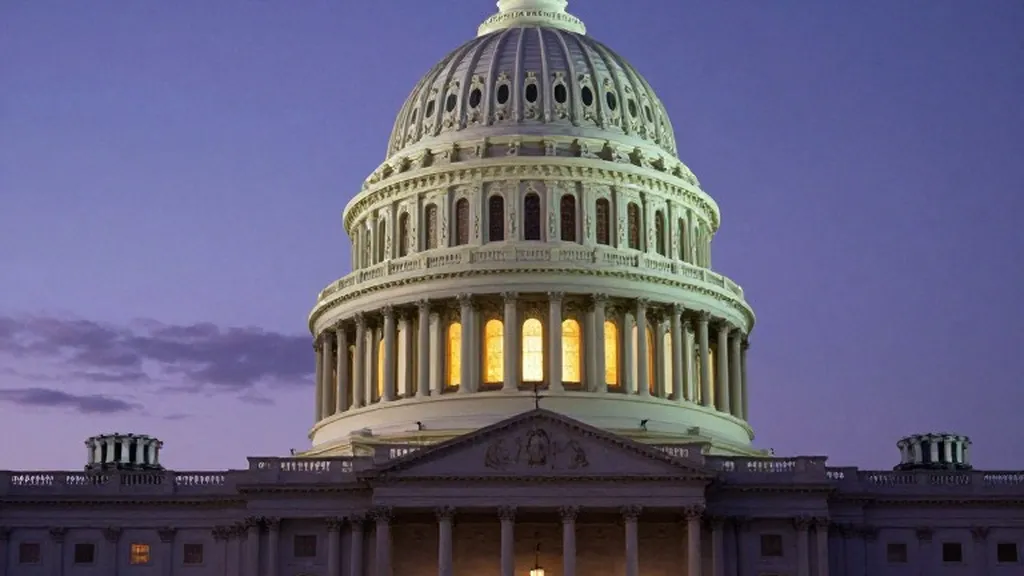
Democratic leaders who won control of both chambers of Congress on Tuesday are preparing an aggressive investigative agenda for the next two years, setting up a direct confrontation with the White House. Rep. Robert Garcia, who is poised to chair the House Oversight Committee, stated that Democrats are not going to be intimidated by the administration's combative stance. He described the executive branch as the "Trump crime family" and declared that the days of Democrats not fighting back are over. This rhetoric signals a shift from the cooperative tone often seen in previous midterm cycles to a posture of immediate accountability.
President Donald Trump responded to the election results with strong language on social media, declaring that the investigative requests already made by the new congressional majority are "extortion at the highest level." He argued that the lawmakers making these demands should be held accountable for their actions. Attorney General Todd Blanche echoed this sentiment in interviews on Sunday news shows, noting that criminal investigations of Democrats are possible. Blanche stated that the administration is worried about threats being made against existing members of the government and private companies, a concern he said President Trump shares.
The power struggle is likely to define the remainder of Trump's term and test the ability of Congress to check the presidency. National polling data indicates that about seven in ten voters believe Congress has not done enough to provide checks and balances on the executive branch. This sentiment appears to have driven the strong Democratic performance in the midterms. However, some incoming Democrats are cautious about letting conflict with the White House consume their entire legislative schedule. Sen.-elect Adam Hamilton, the first Democrat elected to the Senate from Kansas in 94 years, expressed skepticism about pursuing impeachment as a primary goal. He stated that his campaign was about bringing people together and that he does not want the next two years to be spent dividing the country further.
Hamilton, who represents a key swing state, emphasized that he is more interested in setting up guardrails than in impeachment proceedings. While he acknowledged that some investigations are necessary, he warned that Democrats must look at what has happened in Washington without letting partisan battles overshadow their policy agenda. Sen. Bernie Sanders, a Vermont independent who caucuses with Democrats, shared this concern. He said he wants to hold the President accountable but warned that there is only so much time available. Sanders emphasized the need to stand up for working-class families and make a real difference in their lives, rather than spending all their time investigating the administration.
The incoming Democratic leadership also cast doubt on the prospects for working with Stephen Miller, who was chosen to succeed Susie Wiles as White House chief of staff. Hakeem Jeffries, who is on the cusp of becoming the nation's first Black House speaker, called Miller an "awful choice." Jeffries stated that there is not going to be an opportunity to work with Miller and what he represents. He said Democrats are committed to forcefully pushing back against the extremism that the administration may try to continue to unleash on the American people. This assessment reflects a broader Democratic view that Miller, an architect of the administration's mass deportation policies, represents a hardline approach that will make bipartisan cooperation difficult.
Jeffries also indicated support for a pending resolution from Rep. Thomas Massie, a Republican from Kentucky, to impeach Defense Secretary Pete Hegseth. Jeffries said he is a "hard yes" on the Hegseth resolution and that Democrats would be discussing it when they return to the Capitol this week. Defense Secretary Hegseth dismissed the impeachment push in a video, calling it "all about the politics of personal destruction." He stated that the move won't work with him. This exchange highlights the intensity of the personal and political dynamics that will shape the early days of the new Congress.
The election results also brought historic milestones for Native American women, a demographic that has played a significant role in the Democratic coalition. Crystalyne Curley was elected the first woman president of the Navajo Nation, narrowly defeating attorney Justin Jones according to unofficial results. Curley said she faced sexist rhetoric while campaigning and expects to be held to a higher standard. She plans to transition the Navajo Nation away from coal development and reassert its role in national discussions around federal Indian policy. This victory is part of a broader wave of milestone wins for Native women in government this election cycle.
Peggy Flanagan became the first Native American woman elected to the U.S. Senate, winning a seat in Minnesota. Flanagan, a citizen of the White Earth Nation, credited supporters from her community for her victory. She noted that more than 230 years after the Senate was established, only four Native people have served in the chamber, all of whom were men. Her win adds to the representation of Native Americans in federal leadership. In the House, new members including Claire Valdez of New York and Sean McCann of Michigan became the first Native Americans elected to represent their states in Congress, further expanding the diversity of the new Democratic majority.
Deb Haaland, a citizen of Laguna Pueblo, will become the first female Native governor of a U.S. state in New Mexico. Haaland, who previously served as Secretary of the Interior, is tasked with making life more affordable for struggling New Mexicans and addressing poor education outcomes in the state. She reflected on the support she has received from Native voters and other Native women in politics, stating that it matters that people feel represented. These victories illustrate the growing political power of Native communities and their alignment with the Democratic Party's focus on representation and economic justice.