Midterm Results Show Trump's 'On the Ballot' Strategy Failed to Save GOP
Despite a record spending advantage and dozens of rallies, Republicans lost control of both chambers as voters punished the administration over cost of living and the Iran war.
By Yuki Melnyk ·
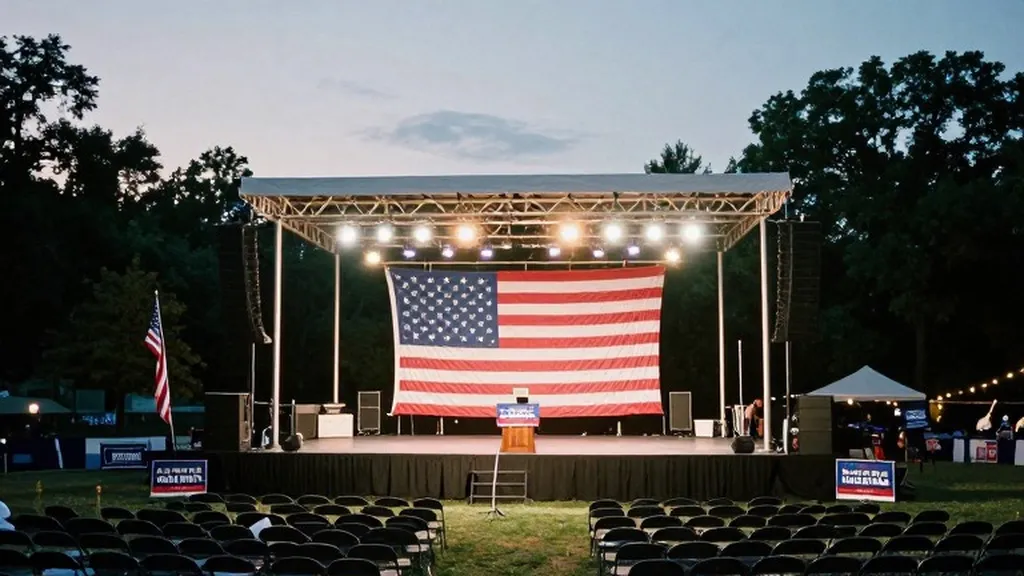
President Donald Trump has spent the final weeks of this campaign cycle urging voters to treat him as if he were on the ballot, a strategy that relied on his personal brand to carry down-ballot candidates across the country. He made this appeal explicitly in an interview with Fox News Channel on election day, where he also declared that inflation was solved despite recent data showing consumer prices had risen 3.6 percent in September. His aggressive schedule included visits to the reddest states, such as Kansas, Mississippi, and South Carolina, underscoring the party's struggle to maintain its hold on key territories. However, the results indicate that this direct association did not prevent a historic loss for his party in the midterm elections.
The Republican Party faced a significant obstacle in the form of a massive financial advantage that ultimately failed to translate into seats. According to OpenSecrets, the 2026 midterm elections were expected to be the most expensive in history, with outside groups spending at least $2 billion in the Senate race alone. Republican-affiliated groups spent roughly 60 percent more than their Democratic counterparts, and Elon Musk contributed nearly half a billion dollars to the effort. Despite this record expenditure, the money edge did not stop the tide of voter dissatisfaction, leading to a net loss of at least seven Senate seats for the GOP. This outcome places the election in the top 20 percent of election years in terms of seat swings against a president's party, a threshold often defined as a wave election.
Voters expressed deep frustration with the direction of the country, with about three-quarters stating they felt angry or dissatisfied with the current trajectory. This sentiment was widespread, appearing in both blue states like California and Massachusetts and red states where a majority of voters reported at least some dissatisfaction. The economy, once a core strength for the president, became a primary liability as three-quarters of voters described it as not so good or poor. Approximately eight in ten voters reported that inflation had caused a moderate or severe financial hardship for their households, making it difficult to afford basic essentials like gas and groceries. This economic pressure, combined with concerns over the war in Iran and perceptions of government corruption, drove the electorate to punish the incumbent party.
Democratic figures noted that the campaign focused heavily on the cost of living and oversight of the administration, themes that resonated with a frustrated electorate. Rep. Suzan DelBene, chair of the Democratic Congressional Campaign Committee, stated that the American people were angry and wanted change, asserting that momentum was on her party's side. The AP Voter Poll highlighted that government corruption and the cost of living were cited as crucial issues by roughly half of voters, surpassing other topics such as immigration enforcement and AI data centers. This focus on tangible economic impacts and administrative accountability helped Democrats connect with voters who felt their pain at the pump was being ignored in favor of gilding the nation's capital.
Republican candidates found themselves in a difficult position, often keeping their distance from the president despite his active campaigning. This strategic distancing was evident in states where the party was fighting to hang onto seats, as candidates tried to appeal to moderate voters who were skeptical of the administration's direction. The president's own statements, such as his claim that inflation was solved, sometimes created friction rather than unity, as voters pointed to the rising prices they faced in their daily lives. The disconnect between the administration's messaging and the lived experience of voters contributed to the low-propensity voters not turning out for the GOP, a demographic that has historically fueled Trump's victories when he is running for office himself.
The final results show that Democrats won majorities in both the U.S. House and the U.S. Senate, marking a dramatic shift in power in Washington. Democrats picked up at least 43 House seats, 42 of which were previously held by Republicans and one by an independent, securing at least a 250-157 majority in the chamber. In the Senate, Democrats gained seven seats, all previously held by Republicans, resulting in a 54-44 majority. This net loss of seven Senate seats for the Republicans was a decisive defeat, as the party had hoped to retain control of the chamber despite a map widely seen as favoring them earlier in the year. The loss of both chambers means that the new Democratic leadership will have significant oversight powers over the Trump administration in its second term.
Beyond the federal chambers, Democrats also achieved historic gains in state government, winning a majority of governorships for the first time since before the 2010 elections. As of the latest results, Democrats had won 22 governorships compared to 12 for Republicans, with five offices changing party control from Republican to Democratic. The party also secured 20 state government trifectas, compared to 16 for Republicans, indicating a broad-based victory that extends beyond the national stage. These state-level wins provide Democrats with additional avenues to implement policies and conduct oversight, further complicating the administration's ability to push its agenda without legislative cooperation.
The election results also highlighted the impact of redistricting and special elections on the balance of power. In the U.S. House, Democrats won 248 seats while Republicans won 150, with 37 races remaining uncalled as of the latest updates. The new maps in states such as California, Florida, and Texas played a role in shaping these outcomes, with some districts shifting in favor of the Democratic Party. In the Senate, the party's gains included seats in states like Kansas, which had not sent a Democrat to the chamber since 1932. This geographic spread of victories suggests that the discontent with the administration was not limited to traditional Democratic strongholds but extended into the political heartland, where the party had previously struggled to make inroads.