Eisenkot Gets First Shot at PM Post
The former military chief will attempt to build a coalition despite his bloc holding fewer seats than Netanyahu's camp.
By Justin Barnes ·
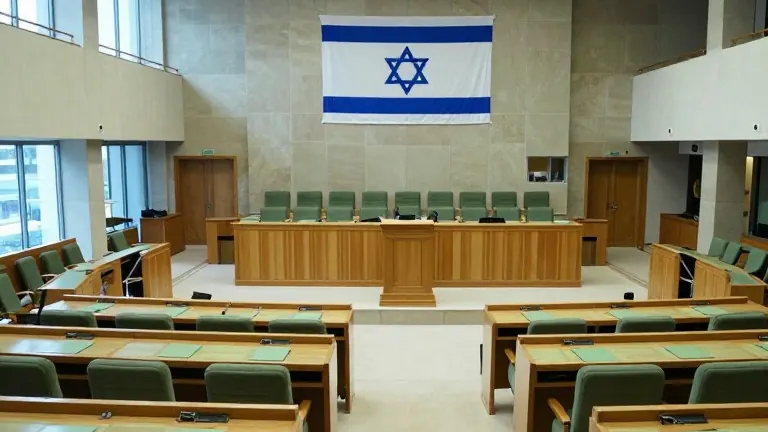
Israel’s president named Gadi Eisenkot as the candidate to form the next government on Saturday, handing the first opportunity to the prime minister’s main rival. President Isaac Herzog made the decision after the October 27 election left parliament without a clear governing majority. Eisenkot now holds the mandate to begin coalition talks immediately.
Benjamin Netanyahu remains the leader of the largest parliamentary bloc. His Likud party won 27 seats in the 120-member Knesset. However, his wider religious-nationalist alliance secured only 53 seats. That total falls eight seats short of the 61 needed for a majority. Netanyahu has served as prime minister for a record duration and seeks to retain power despite the loss of his coalition’s majority status.
Eisenkot’s Yashar party emerged as the second-largest political force. It captured 21 seats. His broader coalition of four center-left and right-wing Jewish-led parties won 48 seats in total. Two parties representing Israel’s Arab minority secured 19 seats. Arab leaders nominated Eisenkot first because they view his policies as less hostile than those of Netanyahu and his far-right allies. Eisenkot has previously declined to form a full coalition with these Arab parties.
The former military chief of staff now faces a 28-day window to construct a viable government. He may receive a 14-day extension if needed. Analysts describe his path to power as difficult. His options include leading a minority government supported by Arab parties on specific issues, allying with ultra-Orthodox groups he has previously rejected, or creating a unity government with Netanyahu. Eisenkot has stated he would not serve in a cabinet with the current prime minister, making the last option challenging.
If Eisenkot fails to form a government, the president will invite another candidate to try. The process has an overall deadline of approximately 100 days. If no candidate succeeds within that timeframe, Israel will return to the polls for another election. Eisenkot wrote on the social media platform X that he aims to form a national emergency government. He stated he would do everything possible to ensure the country is worthy of that effort.
Eisenkot, 66, would become the first prime minister from Israel’s Mizrahi community. He is the son of Moroccan immigrants and entered politics in 2022. He served briefly in Netanyahu’s wartime cabinet after the October 7, 2023, attack by Hamas. He later returned to the opposition, where he criticized the management of the military campaign in Gaza. A son and two nephews of Eisenkot were killed fighting in Gaza since 2023.
During the campaign, Eisenkot emphasized his security record. He cited his “Dahiyeh doctrine,” which calls for disproportionate force in response to attacks. He applied this strategy as a commander during the 2006 war with Hezbollah in Lebanon. He has also criticized the surge in settler violence against Palestinians since 2023. This stance contrasts with his rivals Itamar Ben-Gvir and Bezalel Smotrich, who have faced sanctions from some Western countries for inciting violence.