MTA could cut $2.5 billion in annual costs by removing conductors from trains
A new report from the Citizens Budget Commission details how specific operational changes and labor negotiations could close the transit agency's projected budget deficit.
By Elena Greco ·
The New York City transit authority could save $2.5 billion every year by implementing a series of operational reforms, according to a report released on Monday by the Citizens Budget Commission. The watchdog group identified specific changes to subway operations and maintenance that would close the gap between rising expenses and stagnant revenue.
The MTA projects its deficit will reach $897 million by 2030. Ana Champeny, the commission's vice president for research, stated that the agency's spending is growing faster than its operating revenue. She argued that the current trajectory requires a sustainable, long-term financial strategy to prevent further shortfalls.
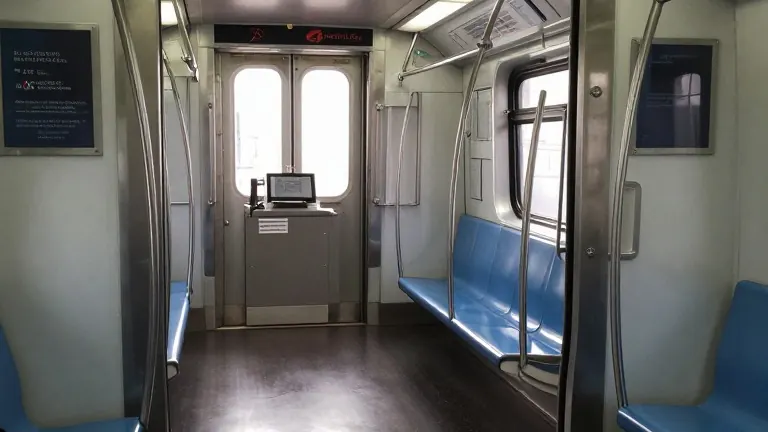
The report recommends expanding One Person Train Control, or OPTO, to more subway lines. This system automates door functions and announcements, allowing a single operator to manage the train. Currently, OPTO is only used on the least busy lines. The commission estimates this change would save the agency $238 million annually. Other recommendations include increasing productivity at maintenance facilities and raising the share of health insurance premiums paid by unionized employees and retirees.
MTA Senior Adviser Mitch Schwartz acknowledged the agency's existing cost-cutting efforts. He noted that the MTA has already achieved $576 million in annual efficiencies and plans to save another $174 million by 2029. Schwartz praised the commission for supporting the city's joint plan to speed up buses on 50 priority corridors by at least 20 percent. He did not comment on the other proposals in the report.
The union representing 40,000 MTA workers, TWU Local 100, has firmly opposed expanding OPTO. John Samuelsen, president of the parent union, argued that conductors are essential for guiding riders during emergencies. He cited a 2022 incident on the N train in Brooklyn where a shooter injured passengers, stating that no computer system could evacuate workers in that situation.
Local 100 and the MTA are currently negotiating a new three-year contract after the previous one expired in May. State legislation backed by the union to block the expansion of OPTO is currently with Governor Kathy Hochul. The governor vetoed a similar bill last year but has not yet acted on the current version.
The commission identified maintenance productivity as the area with the highest potential for savings. It estimates that improving the ratio of train miles per maintenance hour could generate $971 million in annual savings. The MTA's current ratio is 0.97, while the national median is 1.12. The group suggested that work rule changes and the agency's $32 billion capital plan for infrastructure upgrades could help achieve this target.
Samuelsen rejected the proposal to require retirees to pay their own health insurance premiums. He criticized the commission for relying on outdated advice that shifts costs to workers and riders. Instead, he urged the agency to examine its spending on outside consultants and contractors.