Democrats take seven Senate seats in wave election
The party flipped North Carolina, Georgia, Ohio, Michigan, Texas, Maine, New Hampshire, Minnesota, Kansas, and Alaska, securing a 54-44 majority.
By Yuki Melnyk ·
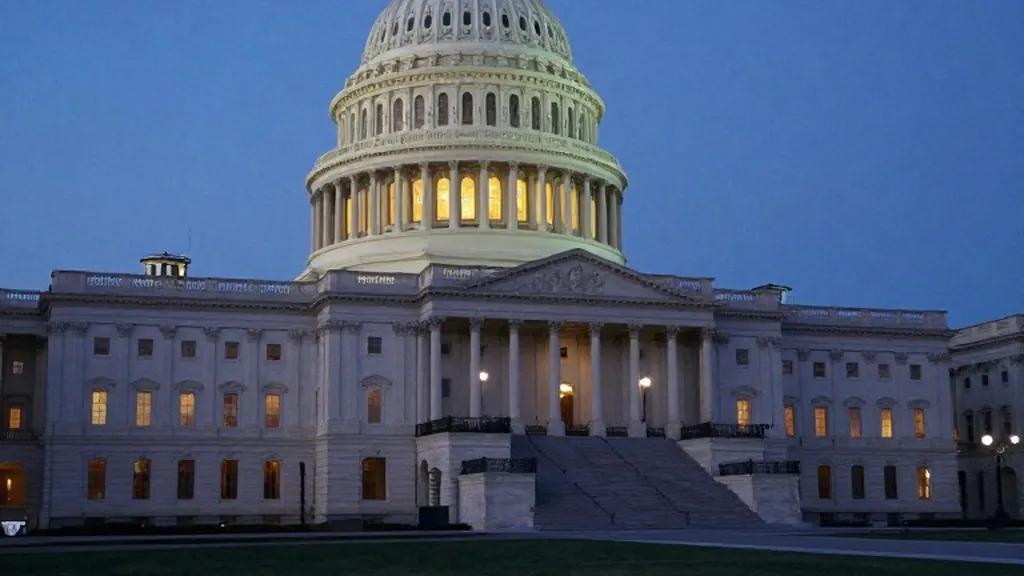
Democratic candidates claimed seven previously Republican-held U.S. Senate seats in the midterm elections held on November 3, 2026. According to election results compiled by Ballotpedia and updated as of 4:00 PM ET on November 6, Democrats will hold a 54-44 majority in the upper chamber. This shift places the party in control of the Senate for the first time in two terms, reversing a two-year Republican hold.
The net loss of at least seven Senate seats for Republicans qualifies this election cycle as a wave election. Ballotpedia notes that this magnitude of seat change against a sitting president's party places the results in the top 20% of election years historically. The victories occurred across ten competitive states, including North Carolina, Georgia, Ohio, Michigan, Texas, Maine, New Hampshire, Minnesota, Kansas, and Alaska.
Democrats also secured a commanding majority in the U.S. House of Representatives. The party picked up at least 43 House seats, resulting in a 250-157 majority. Of the seats gained, 42 were previously held by Republicans and one was held by an independent. While the Senate result met the threshold for a wave election, the House loss of 42 seats is slightly short of the 48-seat threshold required for that classification, though uncalled races may still alter the final count.
President Donald Trump addressed the political landscape following the elections, specifically regarding the war in Iran and the administration's leadership. In a White House briefing, he commented on the investigation into Nvidia CEO Jensen Huang, stating that he expected Huang to be in good shape. This remark came as the House prepared to vote on an impeachment resolution for Defense Secretary Pete Hegseth, a move driven by the war in Iran.
Rep. Thomas Massie, a Kentucky Republican, introduced the resolution to impeach Hegseth on Monday, the first day of sessions after the midterms. Massie argued that the secretary's actions in the Iran war and military operations in Yemen and Venezuela amount to high crimes and misdemeanors. House Speaker Mike Johnson had warned against impeaching a Cabinet secretary during active hostilities, calling it a terrible look for allies and enemies alike.
Democrats in the new Congress are preparing to use their oversight powers to scrutinize the administration's education policies. Rep. Bobby Scott of Virginia, who will lead the House Committee on Education and the Workforce, stated he plans to leave no rock unturned in investigating the dismantling of the U.S. Education Department. Sen. Elizabeth Warren of Massachusetts called on her colleagues to hold the administration accountable for these changes.
The party also aims to use the power of the purse to establish guard rails against the administration's agenda. Sen. Chris Van Hollen of Maryland noted that Democrats are exploring conditions on spending bills to prevent abusive practices in education funding. This strategy is seen as a way to stop the bleeding of federal education functions, even if reversing all dismantling is difficult through appropriations alone.
Statewide results further solidified the Democratic wave. The party won a majority of governorships for the first time since before the 2010 elections. In California, Xavier Becerra became the state's first elected Latino governor, continuing a streak of five consecutive Catholic governors. Catholic voters, particularly Latinos, played a significant role in his victory, with about 6 in 10 supporting him according to the AP Voter Poll.
The election results mark a significant shift in the balance of power, giving Democrats control of both federal chambers. This change allows the party to implement oversight investigations and budgetary checks on the Trump administration. The new Congress convenes in January, where Democrats will take the helm of key committees and begin their legislative and investigative agenda.
The outcome of the Senate races in states like Texas and Ohio signals a broad appeal for the Democratic ticket. The party's gains in both chambers provide a unified front for the next two years, focusing on cost of living, health care, and oversight of the Iran war. The Republican majority, which held both chambers since 2024, now cedes control to the Democrats as the new term begins.