MLB Proposes $258.2 Million Salary Cap Ahead of 2027 Lockout Threat
League executives argue a hard spending limit prevents dynasties, while players cite recent championship diversity as proof the current system works.
By Elena Greco ·
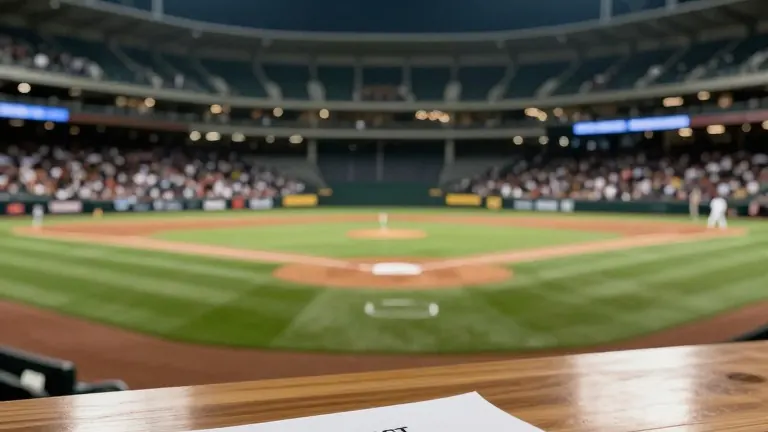
Major League Baseball is preparing for a potential work stoppage in 2027 as negotiations over a salary cap intensify.
MLB executives formally proposed a maximum payroll of $258.2 million and a minimum of $180.2 million for the 2028 season. This structure would replace the current system where teams can spend unlimited amounts on players without facing financial penalties. The proposal aims to narrow the economic gap between wealthy franchises and smaller markets. Currently, the New York Mets and Los Angeles Dodgers each spent more than $335 million on their 2026 rosters. In contrast, the Miami Marlins and Cleveland Guardians spent less than $90 million, according to USA Today data. The disparity in spending drives the current labor dispute.
League leadership maintains that the proposal is not an attempt to eliminate successful teams but rather to ensure financial stability. Morgan Sword, MLB’s executive vice president of baseball operations, told CNBC Sport that dynasties achieved through well-run organizations are beneficial. "We don't think dynasties are bad," Sword said. He added that such teams engage fans outside their home cities. The league argues that capping spending makes the competition inherently fairer by limiting the financial advantage of large-market clubs. This approach mirrors strategies used in other professional leagues to manage competitive balance.
Players, however, argue that the current system already produces a wide variety of champions. Bruce Meyer, head of the Major League Baseball Players Association, points to the ten different World Series winners in the past thirteen years. He cites the recent success of mid-market and small-market teams like the Cleveland Guardians, Tampa Bay Rays, and Milwaukee Brewers. Meyer contends these teams succeed with low spending, proving that a hard cap is unnecessary. The players' side views the current open market as a meritocracy where talent determines success.
The debate over competitive balance has historical precedent in other major sports. NBA Commissioner Adam Silver stated in 2024 that data shows more competition drives league interest. He later clarified on The Dan Patrick Show that fans accept dynasties only when they believe the rules are fair. Silver noted that fans lose enthusiasm when one team spends drastically more than another. Before the 2024-25 season, the NBA implemented a second apron in its salary cap structure. This mechanism imposes harsh penalties on teams that exceed a spending threshold, restricting free agency and trades. Only the Denver Nuggets exceeded this limit last season. The second apron is set at $221.7 million for the 2026-27 season. The NBA has produced eight different champions in the past eight seasons.
NFL executives often cite their hard cap as the gold standard for balance. Silver said the goal for the NBA is to be more NFL-like, ensuring every team believes it has a shot regardless of market size. He noted that three teams won 60% of NBA championships during the league's first 65 years. However, the NFL has produced its own long-running dynasties, most notably the New England Patriots from 2001 to 2021. Teams like the Kansas City Chiefs, Buffalo Bills, and San Francisco 49ers remain frequent contenders, while the Arizona Cardinals and New York Jets struggle consistently. This suggests that a hard cap does not automatically guarantee parity.
Bruce Meyer criticized the NFL model in an interview with The Athletic last month. He argued that a cap takes competition out of the hands of clubs and prevents teams from getting better. Meyer stated that caps do not guarantee better balance, pointing to dynasties in other sports. Sword countered that football's dynasties are a selling point for fans. He expressed frustration that the Kansas City Royals do not have the same opportunity to build a dynasty as the Kansas City Chiefs due to baseball's economic system. Sword believes fans love excellence and enjoy the construction, reign, and fall of a dominant team. The league fears that uncapped rules allow well-run teams to sustain success without ever facing a decline. The coming months will determine if the proposed caps and floors deliver a better fan experience or if players feel disadvantaged by the new limits.
More Sports · National news · Report a business · Got a Story?