Supreme Court Blocks Trump Bid to Set Aside 20,000 California Ballots
The high court declined to intervene in a case involving disputed mail-in votes on the eve of the midterm elections, while a federal judge ordered the administration to stop its demands.
By Justin Barnes ·
The Supreme Court rejected the Trump administration's emergency appeal on Monday, refusing to set aside approximately 20,000 disputed mail-in ballots from California the day before the midterm elections. The high court declined to intervene in a case where the executive branch sought to pause voting rights for individuals on a federal list of suspected noncitizens. This decision leaves the ballots in play for counting on Tuesday.
A federal judge in Washington, D.C., also ruled against the administration on the same day. Chief Judge James Boasberg ordered the government to stop demanding that California election officials separate the contested votes. Boasberg wrote that the executive branch likely violated the Constitution's Elections Clause. He stated that the clause commits authority over election rules to the states and Congress alone, not the president.
California election officials argued that the federal list was riddled with errors. They warned that setting the ballots aside so close to the election could disenfranchise legal voters. Millions of ballots have already been cast in the largely Democratic state. The administration had asked the court to hold the ballots until citizenship status could be verified.
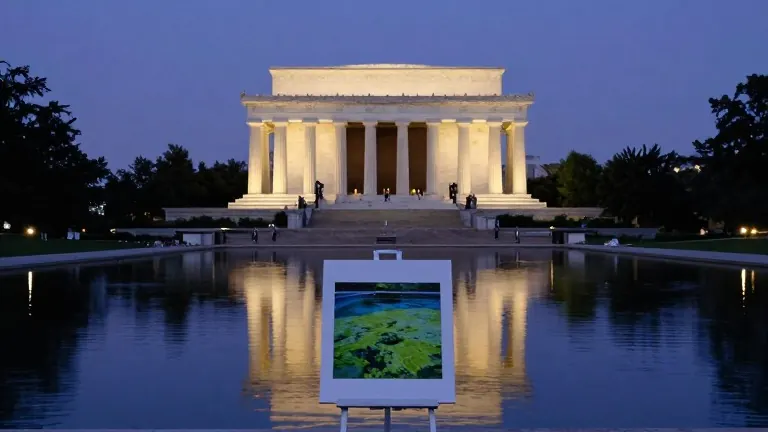
President Donald Trump concluded his final weekend of campaigning with rallies in two states he won previously. On Monday afternoon, he delivered his closing speech at the Lincoln Memorial Reflecting Pool in Washington, D.C. Trump stood before a poster showing an algae-clogged pool while triumphant music played. He used the address to promote his renovations of the memorial and highlight a sharp drop in oil prices.
During the speech, Trump told voters to consider the "plunge" in oil prices as they cast their ballots. Brent crude was down about 7.5% on Monday, trading around $104.98 per barrel. That price remains well above the $70 level from before the war with Iran began. Trump said the price drop occurred because the U.S. stopped Iran from having a nuclear weapon.
Republican strategist Doug Heye criticized the choice of venue for the final pitch. He called the setting bizarre and self-focused. Heye noted that the visual aids did not help undecided voters in their final day of decision-making. Robert C. Rowland, a rhetoric professor at the University of Kansas, said he was surprised Trump did not visit working-class districts with difficult races. Rowland described the renovations as widely viewed as a failure.
The White House released a schedule for Election Day showing no public appearances for the president. Trump will participate in private meetings, including a closed-door session with the U.S. ambassador to Portugal. The schedule also lists signing time and an election night reception in the East Room, both of which are closed to media coverage unless results dictate otherwise.